Charge-Framing Hearing in Yamin Murder Case Adjourned Until October 27

The International Crimes Tribunal-2 has adjourned until October 27 the charge-framing hearing in the crimes against humanity case over the killing of Ashabul Yamin, who was thrown off a police armoured vehicle in Savar, Dhaka, during the July mass uprising. There are a total of 19 accused in the case, including Saiful Islam, former member of parliament for the Dhaka-19 constituency.
On Sunday (October 18), the tribunal gave this order in response to a time petition from the accused side. Prosecutor Gazi MH Tamim conducted the hearing for the prosecution. After his hearing concluded, lawyer Amir Hossain conducted the hearing for the accused side. Later, the hearing was adjourned in response to the accused side's petition.
According to court information, of the 19 accused in the case, 13 are absconding and six are in prison. This division between absconding and imprisoned accused has become a major reality of the case's proceedings.
The absconding accused are former MP Saiful Islam, former Deputy Inspector General (DIG) of Dhaka Range Syed Nurul Islam, former Superintendent of Police Asaduzzaman Ripon, former Officer-in-Charge (OC) of Savar Police Station Shahzaman, former OC of Ashulia Police Station AFM Sayeed, former chairman of Savar Upazila Parishad Manjurul Alam Rajib, upazila Chhatra League president Md. Atikur Rahman, Dhaka district Awami League joint general secretary Fakhrul Alam Samar, Mehdi Hasan Tushar, son of former Savar municipality mayor Abdul Gani, Rajib's personal assistant Raju Ahmed, Md. Farid, Zaman Khan and Sharif Ashraful Alam Babul.
The six accused in prison are former Additional Superintendent of Police (Crime and Ops) of Dhaka district Md. Abdullahil Kafi, former Additional Superintendent of Police (Savar Circle) Md. Shahidul Islam, Assistant Sub-Inspector (ASI) Mohammad Ali, Nayek Suhel Mia, Constable Mahfuz Mia, and Dhaka district Jubo League president Mizanur Rahman, alias GS Mizan.
The tribunal took into cognizance the formal charges against the 19 accused, including Saiful Islam, in the Yamin murder case on July 26. Arrest warrants were also issued against the absconding accused on that day. Since then, the case has been at the charge-framing hearing stage.
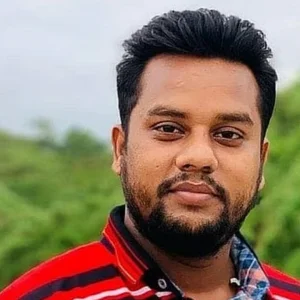
Ashabul Yamin was a fourth-year student of the Computer Science and Engineering Department of the Military Institute of Science and Technology (MIST). His death is known as one of the most discussed and tragic incidents of the July movement.
According to the prosecution's allegations, on July 18, 2024, while a programme of the Anti-Discrimination Student Movement was under way in the Savar Bazar Bus Stand area, police and leaders and activists of the Awami League attacked. At around 1:30 p.m. that day, Yamin was seized and dragged to a police armoured vehicle.
It is stated in the allegations that he was then shot in the left side of his chest. Numerous splinters pierced his chest. Later, he was dragged and left lying on top of the armoured vehicle, the allegations mention.
According to the prosecution, with the aim of frightening the protesting students and public, the police members on duty kept moving the armoured vehicle back and forth with Yamin on it. At one stage, he was thrown onto the road in an almost lifeless state.
It is further stated in the allegations that at that time, a police member was taken out from inside the armoured vehicle and ordered to shoot Yamin in the leg once again. However, that police member, thinking Yamin was dead, did not shoot him in the leg. Rather, he dragged him from one end of the road to the other and left him beside the road divider.
According to the prosecution's allegations, the shot Yamin was still breathing at that time. Later, local people rescued him and took him to Enam Medical College Hospital in Savar, where doctors declared him dead. The prosecution has described the whole incident as a crime against humanity.
At the next charge-framing hearing on October 27, when the accused side's arguments are finished, the tribunal will move towards a decision on the framing of charges. On that decision depends when the case proceeds to the stage of a formal trial.