Governor Walz takes responsibility for Minnesota fraud scandal, says it prompted his decision not to seek re-election
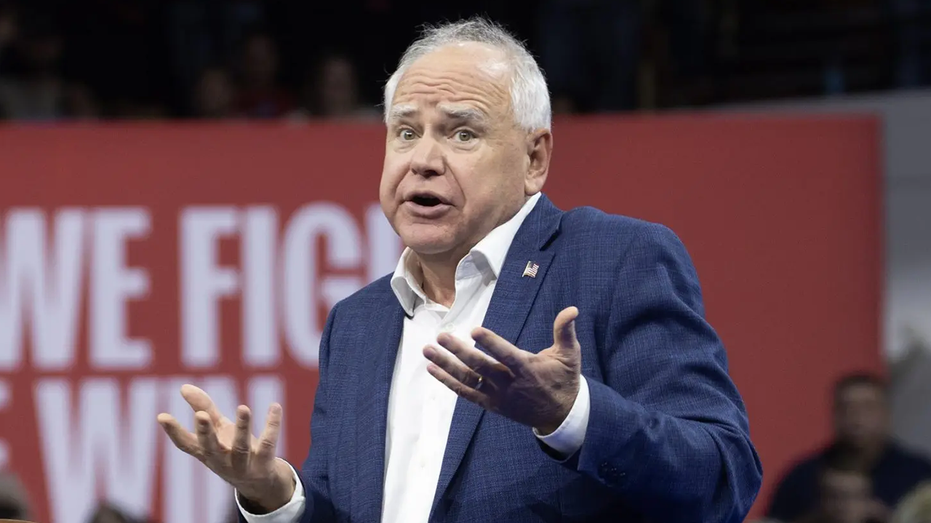
Tim Walz, governor of the US state of Minnesota, has taken the responsibility for the failure to handle the state's fraud scandal on his own shoulders. On Friday, in an episode of 'The Liver' podcast, he said it was because of this scandal that he decided not to stand for re-election. At the same time he also made several barbed comments against the Trump administration.
According to Walz, he did not himself have the power to stop payments to suspected fraudsters; legislative action was needed to obtain that power. Nevertheless, he admitted his administration should have taken action earlier.
On the amount of the fraud, he said even one dollar of fraud is too much; but the amount of money for which the fraud has been prosecuted and people have gone to jail is less than the amount of money President Donald Trump is asking for his ballroom — he drew such a comparison.
In answer to the host's question as to how harmful the fraud allegations could be for him, Walz said yes, these destroy people's trust in government. That is why he is accepting this responsibility, he said.
Regarding the decision not to stand for re-election, Walz said that after the Melissa Hortman murder, at least before Christmas, he had already decided that he would not stand in the election again. In his words, he had said at the time — this issue will be used to attack others and the whole system. Walz had announced at the beginning of 2026 that he would not be a candidate for a third term as governor.
He further claimed this kind of fraud exists in all states, and in most states the amount is even greater. His allegation is that the Trump administration has deliberately singled out Minnesota — he believes this was done with the aim of blaming Somalis, blaming the person who ran against him, and punishing this prosperous state. But he admitted this does not diminish their responsibility. In his words, in some cases the loopholes should have been closed earlier; now other states are learning from their experience.
Walz alleged that fraud and corruption destroy trust in government and hand the advantage to the Republicans. He claimed the Republicans get from this the argument to shut down social programmes — he commented that they dislike programmes that feed children or work with autistic children. In his words, this scandal has arrived like a 'gift' for the Republicans.
However, his critics are not satisfied with Walz's explanation. Julian Epstein, former chief counsel to the House Judiciary Democrats, said these excuses are an insult to intelligence. In his view, if there is evidence of fraud, the governor has sufficient power to stop payments; he can also send the evidence to state and federal prosecutors. Epstein alleged that this systematic fraud continued for more than a decade and officials like Walz did almost nothing; he also raised the question of whether eyes were kept shut because the beneficiaries of the fraud gave them votes and campaign funds.
Similarly, Theo Olde, former chief counsel to the House Judiciary Democrats, said that while in charge, foreigners and criminals looted billions of dollars of government money and the Democrats let it happen; now they are avoiding the issue and blaming the Republicans. In his view, Republicans want the government to work for US citizens.
Governor Walz was asked for a reaction to the comments of Epstein and Olde. The White House was also asked for comment, but no immediate response was received.
This Minnesota fraud scandal is now not merely an incident of administrative failure of one state — it has become a central issue in the ongoing debate in US national politics over social programmes, government spending and accountability. Walz's acceptance of responsibility has freshly fuelled that debate.