
France Turned into a Battlefield in Protest Violence, at Least 2,400 Arrested, Harsh Criticism of Macron in the Press
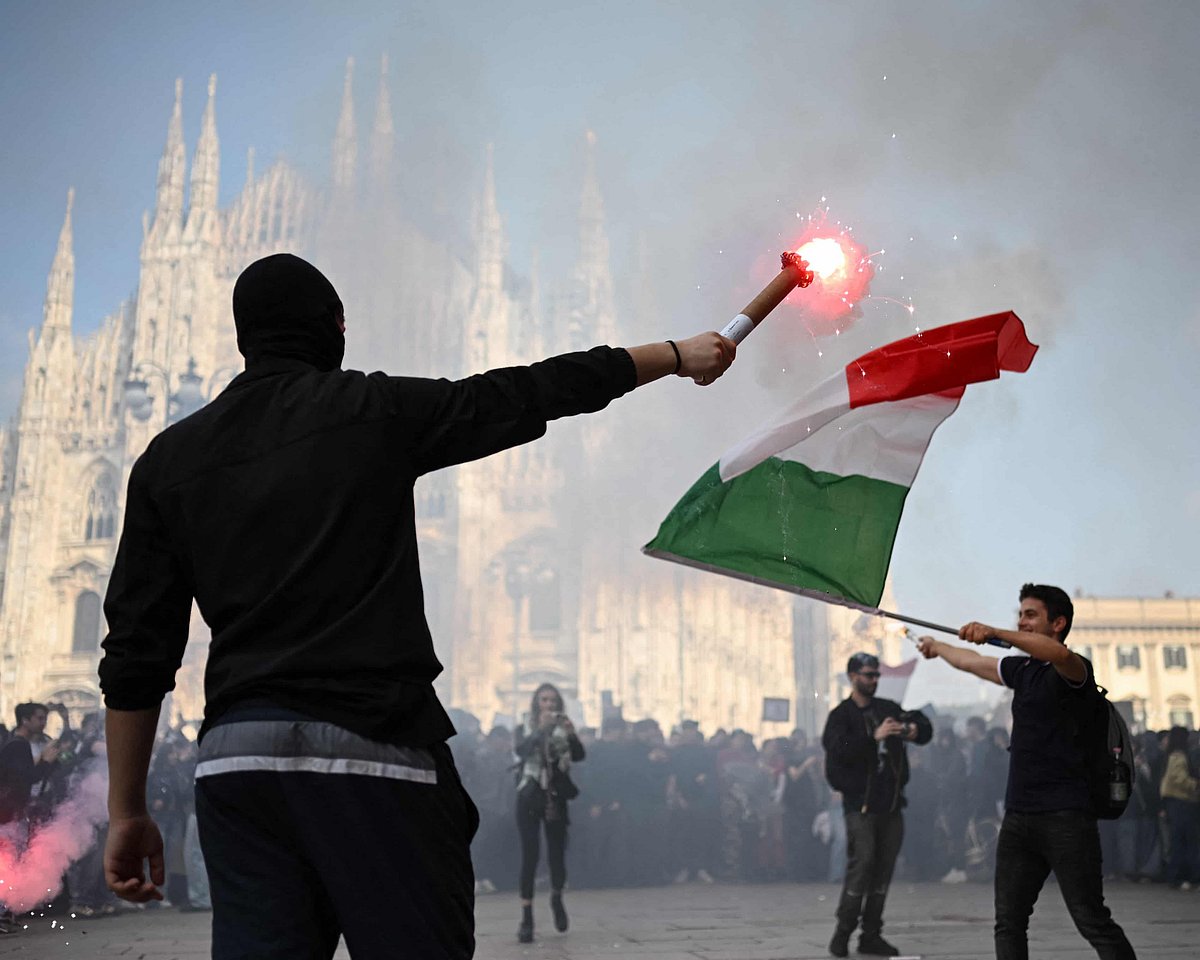
France has turned into a battlefield as protests across the country turned to violence. In Saturday's protests, masked groups clashed with the police, looted shops, set fires and attacked government buildings, according to the news agency Associated Press (AP). After this violence, the country's influential newspaper Le Figaro made sharp criticisms of President Emmanuel Macron and the country's leadership, which has increased the political pressure further.
By the authorities' count, about 550,000 people took part in Saturday's protests; the organisers claim the number of participants was 800,000. At least 2,400 people have been arrested across the country, of whom 855 were arrested in the Paris region alone. Citing Interior Minister Laurent Nuñez, AP reported that more than five hundred members of the police, gendarmerie and fire service were injured.
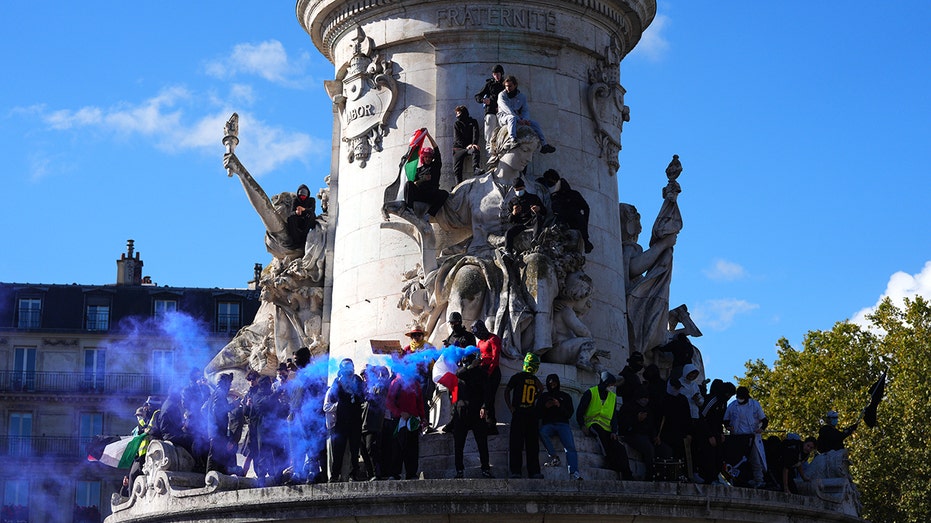
Hundreds of businesses have been looted across the country. The unrest did not stop in Paris on Sunday either; as tension spread around the Place de la République area, the police used tear gas. In other words, the unrest rolled into a second day beyond a single day's programme, which has increased the gravity of the situation even more.
Behind this protest lies many-layered anger. It is learned that the rising cost of living, the condition of schools and discontent with government services have fuelled this movement. That anger turned violent on Saturday — and as a consequence, questions are now being raised about the country's system of governance and the direction of its leadership.
In an address to the nation on Sunday, President Macron condemned the violence and pledged to bring those responsible to account. He said: 'There will be no excuse for their actions. Tonight we are all angry. We also feel shame.' He also said: 'This must be answered. Those who looted must pay the price of their crimes.'
In the same address, Macron also acknowledged the concerns of young people. He said the country's youth are expressing deep anxiety and pain about their economic prospects and future — the anxiety is about where their working lives will take them and what role they will be able to play in society. In his words: 'I am listening to what they are saying; I have fought for them for the last ten years, so attention must be paid to their words.'
Security arrangements have also been strengthened. Macron has instructed officials to increase security around government buildings and businesses; he has also mentioned the possibility of restricting or banning protests in some places. In this televised address, alongside the message of restoring order, the attempt to acknowledge the causes of the anger was also clear.
Meanwhile, an article published in Le Figaro on Sunday afternoon heated up the situation further. In the article written for the conservative newspaper by Vincent Trémolet de Villers, years of political failure were blamed for this unrest and President Macron was directly targeted. The article accused the justice system of being 'soft on criminals'.
The language of the article was sharp. It said: 'A justice system that is soft on criminals, but merciless towards honest citizens. Even after destroying, setting fires and killing, these far-left militias are getting incredible leniency.' Uncontrolled immigration was also blamed in the article — it was said that a section of immigrants is rebelling against the very country that gave them shelter.
Macron's past comments about the police did not escape either. Drawing on the context of his advice that the police should be more 'sympathetic', the article said that rebuke, addressed to officials under attack from bolts, stones and mortar fireworks, will remain 'a stain that cannot be wiped away'.
The article's main argument is that this unrest is not a sudden explosion; it is the result of a deeper failure. In the author's words, if the far left, criminals and looters can turn France upside down within a few hours, the principal reason is that a self-absorbed, machinery-like monarchy has consistently broken down the moral, security, cultural and economic protective rings that keep society standing.
The debate has grown further around one decision of Macron. On the Friday night before the protests across the country, he attended a Celine Dion concert with his wife Brigitte. After the violence, he has faced fierce criticism over that attendance — many cannot reconcile that engagement on the night before the protests with responsible behaviour.
The scale of the violence can be understood from the incident in Limoges. There, far-left rioters set fire to the historic town hall building; the building has reportedly been 'almost completely destroyed'. People walking past looted shops in Paris, fires burning with the Eiffel Tower behind them and scenes of stones being thrown at the police — these pictures from Saturday have spread across the world.
Fox News Digital tried to contact Macron's office and Le Figaro but received no immediate comment. That is to say, from the government's side, the President's television address remains the official reaction so far; and from the newspaper's side, its position is clear in the article itself.
All in all, France is now under pressure from two directions — anger and violence on the streets, and open allegations of leadership failure in the political arena. Combined with the numbers of arrests and injuries, hundreds of looted establishments and the destroyed historic building, this unrest has become one of the most difficult tests for Macron's presidency. Attention is now on how successful the government will be in restoring order and what steps are taken in response to the anger of young people.