Young engineer dies a day before his wedding; family in Gaibandha demand probe into alleged medical negligence
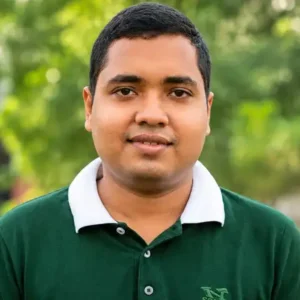
He was supposed to sit as a groom on Friday. Instead, 22-year-old engineer Arif Shaharia Soumik died the day before his wedding — and his family in Gaibandha has raised serious allegations about the care he received at a private diagnostic centre and at the district's general hospital. At a press conference on Sunday, the family demanded a neutral investigation to establish the real cause of death, and legal action against anyone found negligent.
The allegations were laid out in a written statement by Soumik's elder sister — his only sibling — Sharmin Sultana, at a press conference held on Sunday (18 October) at the Deshi Bhoj hallroom in Gaibandha town. She demanded that every step of the treatment, from the tests at the diagnostic centre to what happened after he was taken to hospital, be examined, and that anyone responsible for negligence or irregularities be held to account.
According to the family, the sequence began on Thursday morning (15 October). The day before his wedding, Soumik walked on his own to Maisha Diagnostic Centre in Gaibandha town for some necessary tests. He spent about four hours there undergoing tests and taking a doctor's advice — and, his sister alleges, he was given several injections during that time.
After he returned home, the family says, his condition began to deteriorate. He was eventually taken to Gaibandha General Hospital, where, Sharmin alleges, treatment in the emergency department was also delayed. On Thursday night, when he was brought to the hospital in a sick state, the duty doctor in the emergency department declared him dead.
Recalling her brother at the press conference, an emotional Sharmin Sultana said Soumik — the family's only younger son — was deeply loved. The family had many dreams and plans around the talented young man, who had just completed his engineering degree. Alongside building a career after his studies, he was about to begin a new chapter of married life. Instead, everything ended the day before the wedding; the family cannot accept the death of the young man they were preparing to see dressed as a groom.
The wedding was to take place the next day, Friday. A decorated, illuminated gate had been built at the bride's home to welcome the groom, and preparations were under way at his own home too. That celebration turned to mourning within hours: after Friday's Juma prayers, Soumik's funeral prayer was held at the Rail Station Jame Mosque in Gaibandha town — a funeral on the wedding day itself, a contrast that has made the story one of deep public emotion across the area.
Soumik lived in the David Company Para neighbourhood of Gaibandha town. He had graduated in Electrical and Electronic Engineering (EEE) from North South University, finishing second in the first class — an academically outstanding young man whose sudden death has cast a shadow of grief over his family, relatives and acquaintances.
Responding to the allegations, Kaiyum, owner of Maisha Diagnostic Centre, rejected the family's claims. He said Soumik had come for some routine tests and a doctor's advice and stayed about an hour and a half — not the four hours the family claims — and that no injection was given to him.
Kaiyum added that after observing Soumik's condition, the centre clearly advised him to go quickly to Gaibandha General Hospital. He alleged that an unfortunate death is being used deliberately to damage the institution's reputation. On the duration of the visit, the injections and the advice given, the accounts of the family and the centre now directly contradict each other.
Dr Md Mehedi Hasan, the doctor on duty at Gaibandha General Hospital that day, said Soumik had died before he was brought to the hospital. Hearing the family's description of the illness, he said, dengue or typhoid fever seemed possible to him — but he stressed that the actual cause of death can only be confirmed by reviewing the medical documents and test records.
At the press conference, the family also questioned the diagnostic centre's past operations. They said the institution previously operated in Sundarganj upazila before winding up there and relocating to Gaibandha town. They demanded that the authorities verify whether the centre has the necessary approval, manpower, treatment capacity and proper management, and that other complaints against it also be brought under investigation.
Other family members and relatives joined Sharmin Sultana at the press conference. Their hope is that intervention by the district civil surgeon, the health department and the administration will bring the true facts to light through a fair investigation.
The incident has also revived older questions about the quality of care at private hospitals, clinics and diagnostic centres. There are long-standing allegations that, despite periodic drives imposing fines and sealing institutions, some resume operations later. A recent allegation that a diagnostic centre in Palashbari upazila resumed activity after being sealed also came up in the discussion.
For now, the family has a single demand: a swift, neutral investigation. If any negligence, error or irregularity in treatment is proven, they and local residents expect legal action against those responsible. Which of the two contradictory accounts is true — and what actually caused Soumik's death — can only be answered once the documents and test records are reviewed.