Water cannon and tear gas on sixth day of protests in Albania, 28 injured
Anti-government protests in Albania's capital Tirana entered a sixth day and turned into violent clashes on Sunday. Police used water cannon and tear gas to disperse protesters. The movement, which began with anger over university conditions and corruption, has raised a demand for the prime minister's resignation.
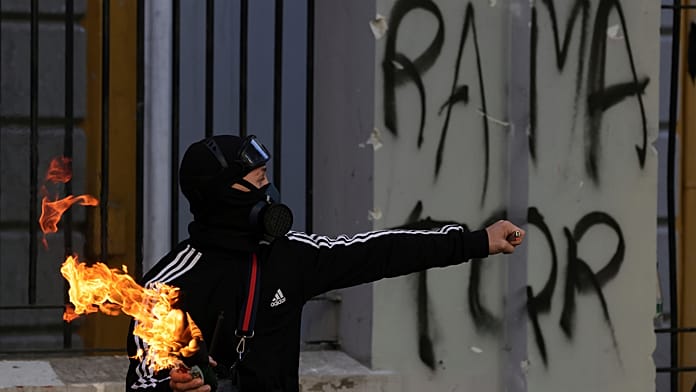
On Sunday hundreds of people gathered outside the education ministry. They chanted 'Rama, resign'. Clashes then spread across the city centre. Tension appeared over a wide area beyond the ministry area that was the centre of the protest.
Protesters were reported to have thrown rocks and Molotov cocktails. Officers responded with rubber bullets. As the intensity of the clashes increased, the security situation in the city deteriorated rapidly.
Amid the violence, a police station was set ablaze. The entrance to the interior ministry was also damaged by fire. These attacks and arson on government installations made the day's clashes more serious than those of previous days.
The health ministry said 28 people were injured on Sunday. Of the injured, 19 were police officers. That figure indicates members of law enforcement were the majority of those injured in the clashes, although protesters were also among the injured.
Prime Minister Edi Rama rejected calls to step down. He described the unrest as the 'work of an outside hand'. The head of government's position reflects a firm government stance against the demonstrators' demand.
Demonstrators say they are angry about poor conditions at universities, high tuition fees and corruption. Their gathering in front of the education ministry is also linked to these education-centred demands. Dissatisfaction over tuition fees and the university environment has emerged as the main driving force of the movement.
This unrest did not begin suddenly. The country had also seen anti-government protests in earlier months. It is within that continuing discontent that the current movement has reached its sixth day and taken a violent form.
The spread of clashes across central Tirana naturally affects ordinary movement and city life. The burning of a police station and damage to a ministry entrance have also created a major challenge for the administration.
No sign of compromise between the government and protesters has been found for now. On one side is the demand for resignation and street movement, on the other the prime minister's rejection of the demand and allegation of an outside hand — the distance between the two sides is clear.
As long as the three issues of university conditions, tuition fees and corruption remain unresolved, the anger behind the protests is likely to remain. Demonstrators have turned their demands into a broader protest against the government rather than confining them to the education sector alone.
Attention now turns to which direction the movement takes after the sixth day's violence and whether the government takes any initiative to calm the situation through dialogue or another path. The picture on Tirana's streets in the coming days will show whether this unrest grows further or gradually subsides.