Bangladeshi Medicines Now Reach 162 Countries as Exports Nearly Double in Five Years
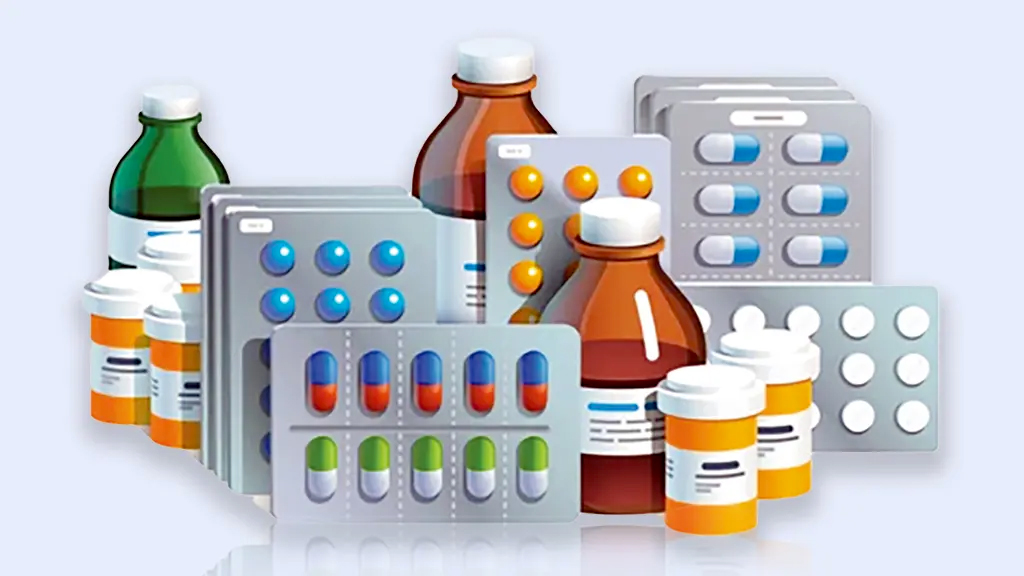
Medicines made in Bangladesh are now reaching more than one and a half hundred countries. According to the Directorate General of Drug Administration, Bangladeshi medicines are currently exported to 162 countries, and exports from the sector have nearly doubled over the past five years. Alongside meeting domestic demand, the country's pharmaceutical industry is steadily building a stronger position in the global market.
Over the past few decades, Bangladesh's pharmaceutical industry has made remarkable progress. Around 98 percent of the country's total medicine demand is now met by locally produced drugs. Sector insiders say that growing production capacity, a wider range of products and access to new markets have created the possibility of expanding this presence even further.
According to the drug administration's figures, in the 2021-22 fiscal year Bangladeshi drug makers exported medicines worth Tk 1,773.96 crore. Exports have risen notably every year since then, reaching Tk 3,250.17 crore in the 2025-26 fiscal year. Entrepreneurs hope medicine exports will reach one billion US dollars by 2030.
There are 323 registered units for allopathic medicine production in the country, of which 251 are currently operational. In addition, there are more than five hundred further units producing Unani, Ayurvedic, homeopathic and other categories of medicine, according to the directorate's data.
Among the top exporters in 2025-26, Square Pharmaceuticals ranked first with export earnings of Tk 403.76 crore, followed closely by ACME Laboratories at Tk 401.85 crore. Nipro JMI earned Tk 372 crore, Incepta Pharmaceuticals Tk 317.67 crore and Renata Tk 257.53 crore. The rest of the top ten are Aristopharma, SK+F Pharmaceuticals, Beacon Pharmaceuticals, Healthcare Pharmaceuticals and General Pharmaceuticals.
Sector insiders say Bangladeshi medicines are now exported even to markets with strict conditions such as the United States, the United Kingdom, the European Union and Australia. To sustain this progress, they say, the product range must widen and capacity in research, innovation and the production of complex, high-value medicines must grow. Reducing dependence on imported raw materials, building internationally accredited laboratories and dealing with the cost and complexity of drug registration abroad are also essential, they added.
Pharmaceutical technology specialists and health economists say Bangladesh has succeeded in producing generic versions of patented medicines abroad by using the World Trade Organization's special intellectual-property privileges. But to remain competitive in the long run, dependence on that privilege must fall while domestic capacity in technology, raw material (API) production and innovation rises. A study by the Centre for Policy Dialogue (CPD) identified import dependence for raw materials and limited investment in research and development as the sector's main weaknesses. There is also a risk of losing the intellectual-property privileges after graduating from the list of least developed countries (LDCs).
Professor Dr Syed Sabbir Haider of Dhaka University's Department of Pharmaceutical Technology said, 'To increase medicine exports, internationally accredited laboratories need to be built alongside market-based research and product development. At present, local companies have to depend on foreign facilities for bioequivalence testing. If laboratories meeting international standards are established in the country, costs will fall and export capacity will rise.' He also stressed ensuring the effective use of export incentives.
Two terms matter in discussions of the global drug market: PIC/S and RoW. PIC/S is a cooperation arrangement among regulatory authorities of different countries on medicine manufacturing quality and factory inspection, whose participating agencies include the US FDA, Australia's TGA and Singapore's HSA. RoW, or Rest of the World, refers to markets outside the specified major ones, which can include various Asian and African countries. Most of Bangladesh's medicine exports currently go to RoW markets. Entrepreneurs say the experience of entering the European market can help entry into markets such as Singapore, Australia and South Africa, because those markets' standards share some similarities. Conditions for entering the US market, however, are comparatively tough. They also see export potential in large South American markets such as Brazil.
Muhammad Halimuzzaman, secretary general of the Bangladesh Association of Pharmaceutical Industries and deputy managing director of Healthcare Pharmaceuticals, said, 'Export earnings must exceed what is spent on importing raw materials. We want Bangladesh's pharmaceutical industry to build a bigger market in the world than the ready-made garment industry. Registering companies and medicines in different countries costs a large amount of money. There are regular fees and audit costs depending on the product. The government can subsidise these areas. Loans for product development could also be given on easy terms.'
Abdul Muktadir, president of the Bangladesh Association of Pharmaceutical Industries and chairman of Incepta Pharmaceuticals, said, 'The foundation for a position in the world market has been built. If export barriers are removed, this market will grow further. Government policy support is needed for this.' Alongside removing policy barriers, he also emphasised ensuring a 'logical alignment' between production costs and selling prices to increase producers' capacity.
Director General of the drug administration Alamgir Hossain said, 'We are trying to complete the necessary regulatory processes, including registration and approval, quickly in order to increase medicine exports.' He added that efforts are under way to achieve the World Health Organization's Maturity Level-3 (ML3) to expand vaccine export opportunities. The recognition requires proving the capability of the national drug regulatory system in areas including vaccine approval, factory inspection, quality verification and post-marketing safety monitoring. 'Achieving ML3 can help increase international confidence and expand vaccine export opportunities. We are working to ensure production quality according to World Health Organization standards,' he said.
Bangladesh began exporting medicines in 1985. The domestic medicine market is now worth about Tk 37,000 crore. Although almost all demand is met by local production, around 85 percent of raw materials still have to be imported. Gonoshasthaya Pharmaceuticals began the country's first raw material production in 1988. Some progress has followed in local production, but import dependence for raw materials remains. Although an initiative was taken to establish an industrial park for raw materials, it has not yet started operating at the expected level. Expanding exports while building local raw material production capacity therefore remains the industry's biggest challenge.