Bangladesh Fully Ready to Supply Skilled Manpower to South Korea's Needs, State Minister Nur Presses in Seoul for More Jobs for Bangladeshi Workers
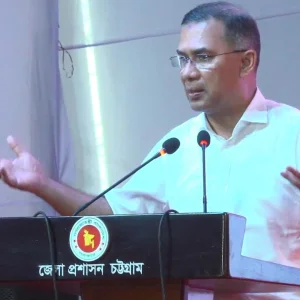
Bangladesh is fully ready to produce skilled, qualified and trained manpower according to the demands of South Korea's local labour market, State Minister for Expatriates' Welfare and Overseas Employment Md Nurul Haque Nur has said. In a series of meetings in Seoul, he pressed for expanding job opportunities for Bangladeshis in Korea and for improving workers' skills.
On Tuesday (20 October) in Seoul, the state minister made the remarks at bilateral meetings with representatives of the National Employment Service Association of Korea (NESA) and the Construction Association of Korea (CAK). At the centre of the discussions with both organisations was creating a larger place for Bangladeshi workers in the Korean labour market.
At the meeting with NESA representatives, the state minister placed special emphasis on increasing job opportunities for Bangladeshi workers under the South Korean government's Employment Permit System (EPS). The EPS is the system through which foreign workers receive regular employment opportunities in various sectors in Korea.
Praising South Korea's outstanding success in industry and human resource development, the state minister said Bangladesh is fully prepared to create skilled, qualified and trained manpower according to the needs of Korea's local labour market. In other words, his message was that Bangladesh is ready to prepare and send workers with exactly the skills Korean employers need.
The meetings were not limited to regular employment alone. Alongside regular employment, the state minister called for joint cooperation in new areas such as seasonal employment, technical skill development, Korean language education and vocational training. Opening these areas would widen the path for Bangladeshi workers to go to Korea.
At the meeting, the NESA side highlighted the contribution and potential of Bangladeshi workers in Korean language education, occupation-based training and international development cooperation — meaning the Korean side, too, viewed the capacity and future potential of Bangladeshi workers positively.
One practical issue received special importance in the discussion — ensuring that workers acquire practical Korean language skills and workplace-based training before they depart. This was discussed in detail so that workers can adapt quickly to Korea's working environment.
Having language and job training in advance makes it easier for a worker to adjust in a new country, and easier for the employer to make use of the worker as well. The emphasis placed on this preparation at the Seoul meetings shows that both sides value not just the number of workers sent, but also their quality and ability to stay the course.
The meeting with representatives of the Construction Association of Korea carries separate significance — construction is one of Korea's biggest employment sectors, and demand for skilled workers in this sector continues almost all year round. Talks with this association mean efforts are under way to create opportunities for Bangladeshi workers in construction as well.
Remittances sent by expatriate workers play a huge role in Bangladesh's economy, and sending skilled workers brings higher earnings as well as greater security and dignity for the worker. Expanding opportunities in an advanced labour market like South Korea's would create a major chance for Bangladeshi workers to gain skills alongside income.
Through the state minister's Seoul visit and these meetings, a clear initiative to increase job opportunities for Bangladeshis in South Korea has come to the fore. It remains to be seen how far the discussions on expanding opportunities under the EPS, seasonal employment and joint training translate into reality, and how quickly their benefits reach the workers.