Iran's enriched uranium again becomes the biggest obstacle in US talks: 'Not a particle will leave the country'
Iran's nuclear enrichment has once again become the biggest obstacle in talks with the United States. The diplomatic push to end the war has intensified, but the deadlock centres on Tehran's nuclear programme — the very issue the US and Israel invoked to launch the war in February.
Nearly eight months into the war, which has caused a global energy crisis, a deal to ensure a permanent ceasefire remains elusive. The war has since spilled into a regional conflict, with Yemen emerging as its latest theatre.
The reopening of the Strait of Hormuz, a global oil chokepoint, was the focus of the June Memorandum of Understanding (MoU) signed between the US and Iran.
The MoU had stated that Iran shall not procure or develop nuclear weapons, but a comprehensive deal, including the nuclear issue, could not be thrashed out within the stipulated 60-day period. Analysts said differing interpretations of the agreement's clauses caused the MoU to fall apart.
Now the nuclear issue has once again emerged as the central point of contention, with Tehran insisting that uranium enrichment is a right guaranteed under the Non-Proliferation Treaty (NPT).
US President Donald Trump, on the other hand, has called for zero uranium enrichment. His ally, Israeli Prime Minister Benjamin Netanyahu, on Sunday reiterated his pledge to topple the Iranian government, which he said is key to preventing it from developing nuclear weapons.
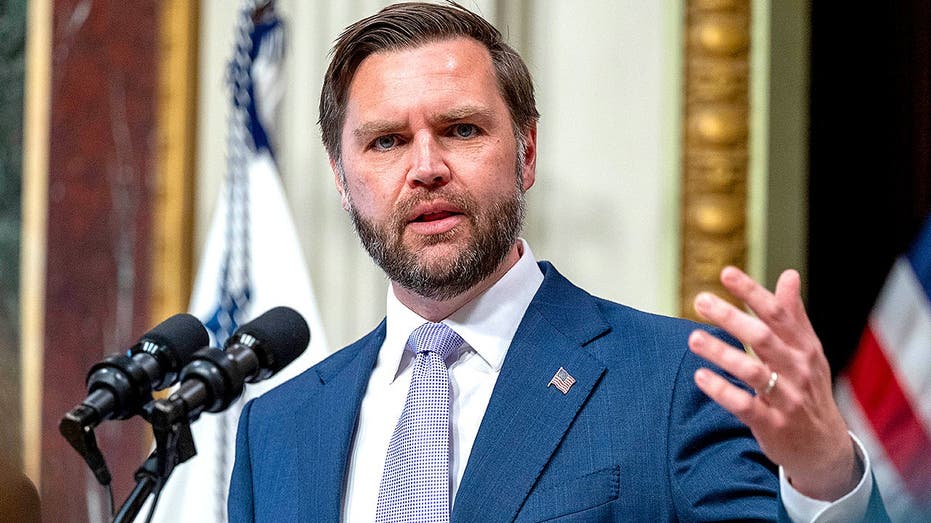
Earlier this week, however, US Vice President JD Vance appeared to offer concessions on the nuclear doctrine to reach a deal. Qatar and Pakistan are engaged in mediation efforts.
Pakistan's army chief Asim Munir, who is also a key negotiator in the conflict, is currently in Tehran, where he met Iran's security chief Mohsen Rezaei on Tuesday.
In the meeting, Rezaei said, according to Iran's semi-official Fars news agency, that even a particle of enriched uranium will not exit Iran at all, describing the material as a major national asset that would remain in the country for domestic use.
His response came amid media reports that the US wants Iran to transfer part of its enriched uranium out of the country. Trump has previously called for the removal of the enriched uranium stockpile from Iran.
Rezaei also said negotiations with the US would not begin until Washington fulfils trust-building measures, including meeting the latest conditions Iran has set. Iran wants the US to lift its naval blockade of Iranian ports, waive sanctions, and release frozen Iranian assets; in return, Iran has promised to reopen the Strait of Hormuz.
Another Iranian lawmaker, Alaeddin Boroujerdi, a member of the Iranian parliament's National Security and Foreign Policy Committee, reiterated that Iran is not seeking the production of nuclear weapons. He said Iran's enrichment activities are unrelated to the US, and Washington should focus on fulfilling its own obligations regarding nuclear arms reduction.
Addressing a Republican Party campaign rally this week, Trump claimed that US bombing had destroyed Iran's nuclear facilities and that he would not allow Tehran to rebuild them. 'They cannot have a nuclear weapon,' he told supporters at a rally at Northern Kentucky University.
Vice President Vance said this week that the US has in some ways decisively won the war on Iran and has destroyed the country's nuclear programme. He told a CBS News town hall that the US was now focused on ensuring Iran makes a long-term and verifiable commitment not to rebuild its nuclear programme.
US Secretary of State Marco Rubio also said this week that a decision to end the war finally rests with Trump. 'The US will not support any deal that creates a pathway for Iran to have a nuclear weapon. As long as President Trump is in office, they will not have a nuclear weapon,' he reiterated.
The MoU signed on June 17 left the future of Iran's enriched uranium stockpile to further negotiations, but identified downblending under international supervision of the International Atomic Energy Agency as the minimum approach. Downblending involves mixing highly enriched uranium with lower-enriched material, making it less suitable for rapid conversion into weapons-grade material. However, it did not specify the quantity to be downblended, a target enrichment level or a detailed timetable, and the final deal was never reached as the MoU expired in mid-August. Mostafa Najafi, a foreign policy analyst based in Iran, noted that despite Washington's insistence on nuclear negotiations and tangible concessions in this area, it is unwilling to offer significant concessions such as lifting sanctions — and from Tehran's perspective, lifting the blockade and releasing assets is no longer a noteworthy concession.