

Rain Fails in Pirganj: Aman Fields Crack Open as Farmers Face Soaring Irrigation Costs
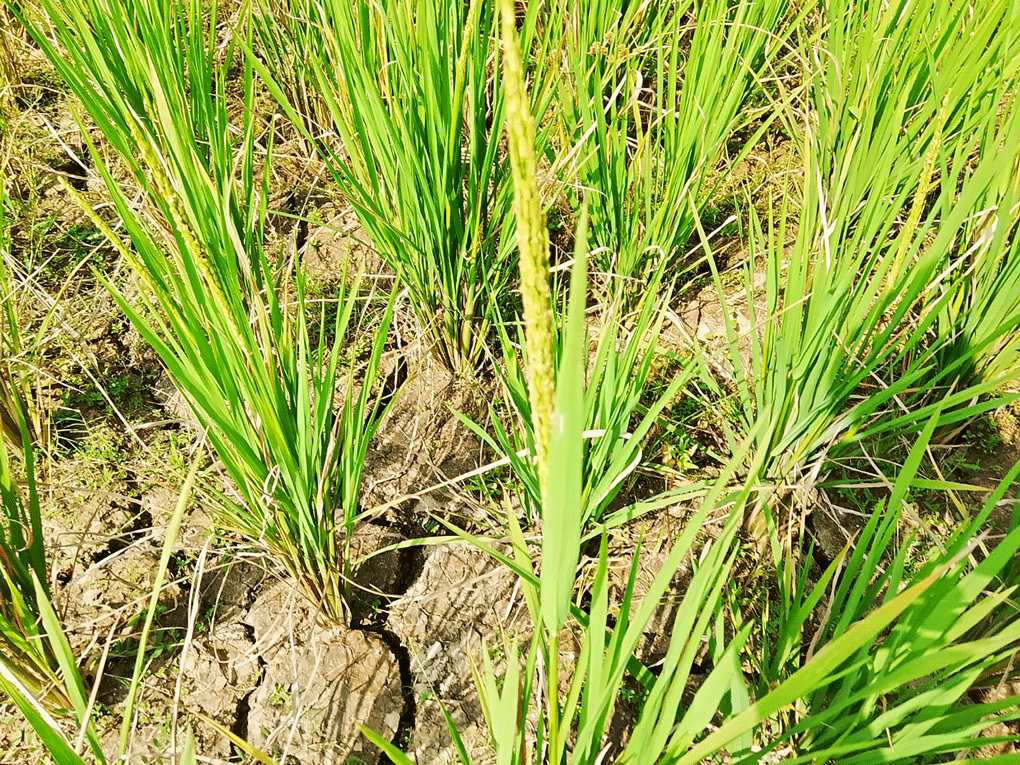
Farmers in Pirganj, Rangpur, are in deep trouble as intense heat and a long spell without rain leave their Aman paddy fields parched. Across the upazila's 15 unions and one municipality, the fields face a severe water crisis; in places the soil has cracked wide open.
Visits on Wednesday to Raipur, Bara Darga and the municipal area showed that Aman growers normally depend heavily on regular monsoon rain. This year, with the expected rainfall missing, the soil's moisture has drained away quickly, and under fierce sun and heat it has become harder by the day to keep the paddy plants fresh.
Many farmers are trying to irrigate their plots to supply water. But extra irrigation means extra production cost — and that burden worries small and marginal farmers the most. If rain does not arrive in time, they fear this season's yield will fall.
According to the agriculture department, Pirganj upazila has 32,800 hectares of cultivable land. This season, farmers planted transplanted Aman on 25,595 hectares of it — meaning the bulk of the upazila's crop is now at risk from the water shortage.
Abdur Razzak, a farmer from Bara Darga union, said: "There is no water in the paddy fields. I am forced to irrigate, and the cost has gone up a lot. If it does not rain soon, I will be in trouble over the yield. If the fields do not get water at this stage, the paddy will be badly damaged."
The picture on Majnu Mia's land in Raipur is grimmer still. "The soil of my field has cracked. The paddy plants are not growing the way they did before. Now I see no way other than rain by Allah's mercy," he said. "Aman paddy is one of our main supports for food and income all year. So we need rain quickly."
Mahamudul Hasan, a farmer from Alampur, said Aman fields need plenty of water at this time, and water is most crucial when the ears are emerging from the plants. With rainfall low, the land has dried out, forcing irrigation and pushing up production costs.
Nazrul Islam of Kabilpur said: "In the monsoon season we usually grow Aman depending on rainwater. But when rain does not come on time, a water crisis appears in the fields. Then we have to arrange irrigation by other means. It costs extra money, and takes more time and labour too. If irrigation water could be arranged at low cost, it would help a lot."
Ranu Mia, a farmer in the municipal area, voiced the same anxiety. At this stage, with ears emerging, water in the fields is essential, he said; farmers cultivate paddy with great hope, but unfavourable weather turns that hope into worry.
Asked about the situation, Upazila Agriculture Officer Sumon Ahmed said: "In the current situation, farmers will have to irrigate as needed and retain moisture in the soil. We are giving necessary advice to farmers at field level. We hope that if it rains in the coming days, the damage to the paddy will reduce a lot."
Farmers say that if the water crisis persists at this stage of the Aman season, not only will yields drop, the quality of the grain may suffer as well. For now, every eye in Pirganj is on the sky — one good spell of rain could ease the anxiety of thousands of farming families.



