

After Resignation, Mayor Race Opens Up for Ishraq: BNP Split Between Strategy and Discipline Debate
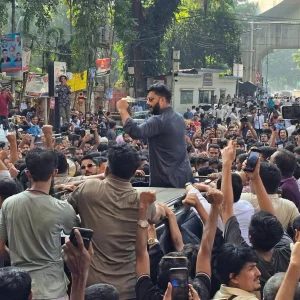
Ishraq Hossain's resignation from the cabinet over displaying a firearm during an anti-drug raid has stirred debate across the country. Inside the ruling BNP there has been a mixed reaction — one section sees it as a tough message on accountability and discipline, while another suspects a strategy behind it: early preparation for the upcoming Dhaka South city mayoral election.
Supporters argue that although Ishraq was a cabinet member, his heart was set on becoming mayor of Dhaka South. His father, Sadek Hossain Khoka, was mayor of undivided Dhaka. Because of his clean image and familiarity, most grassroots leaders and activists want to see Ishraq as the mayoral candidate, they claim.
Since entering politics, Ishraq had been preparing himself in exactly that way, moving regularly through the city's lanes and neighbourhoods. His activism after the High Court ruled in his favour as Dhaka South City Corporation (DSCC) mayor during the interim government period made that intention even clearer.
The opposition picture also matters in this calculation. Against young prospective candidates such as Jamaat's DUCSU vice-president Sadik Kayem and the NCP's Nasiruddin Patwary, this section of the BNP sees Ishraq as the only alternative.
Discussion inside the BNP is not limited to Ishraq, however. Current administrator Abdus Salam and BNP central joint secretary general Habib Un Nabi Khan Sohel are also being discussed as possible mayoral candidates, so the nomination contest will clearly not be simple.
Supporters add another argument: other nomination seekers can campaign freely, and opposition prospective candidates are working openly, but as a cabinet member Ishraq could not bend the rules. Now, without a major office, he can work in the field in his own way — so the resignation has smoothed the path to contesting the mayoralty. From that angle, some see the move as a form of strategy by the BNP high command.
The episode began on October 17, when Ishraq, displaying a firearm, joined police in a raid on what was described as a drug den in a slum beside the railway line in Ward 45 of Gandaria, Old Dhaka. The video he posted from his verified Facebook account spread within moments. He deleted it under criticism, but by then thousands of copies had circulated through media and social platforms. The question arose: can ministers and state ministers conduct raids brandishing weapons in this way?
After intense criticism, Prime Minister Tarique Rahman called Ishraq in and told him to resign. On Monday (October 19) at noon, Ishraq stepped down as state minister at a press conference at the National Press Club. His resignation gave the government some relief, but discomfort remains inside the BNP. On the very day of the resignation, the prime minister's positive message and Ishraq's interest in the mayoral election returned to discussion.
Ishraq himself said after resigning that he is one hundred percent ready for the mayoral election. At the same time, he said that if the party selects someone else as candidate, he is equally one hundred percent ready to work to make that person win; he will not be unsettled by anything and will keep working according to the expectations of ordinary people in all circumstances. The Dhaka-6 MP has also recently said Prime Minister Tarique Rahman will decide on the mayoral election. He has long harboured the ambition to be mayor of the South city and has declared it publicly several times.
Prime Minister's adviser and spokesperson for his office Mahdi Amin has viewed the resignation positively. On Monday (October 19), writing on his verified Facebook account, he called Ishraq's resignation a historic and courageous decision, saying it is not the end of a chapter but could open a new path for him to take on even greater political responsibility in future.
BNP standing committee member Selima Rahman, however, rejects the strategy theory. She said the prime minister asked Ishraq to resign in the interest of maintaining discipline, and the campaign suggesting it was done to make him mayoral candidate is not correct. Her argument: the election is still far away — if the BNP had wanted that, it could have asked him to resign just before the election schedule. Ishraq is an emerging leader, she said, and if he plays a devoted role for the party, greater responsibility could come to him in future.
Dhaka Metropolitan South BNP joint convener A N M Saiful Islam said it is difficult to speak definitively on such matters. But the double standards of some media over Ishraq are clear, he said — his anti-drug raid was widely criticised on the first day yet viewed positively on the second. On whether a strategy could lie behind the resignation, he said supporters may well hold that view and some members of the public may judge it that way; anyone can try to establish themselves in a position, and there is nothing wrong in that. What actually happened behind the resignation, he said, time will tell.
A senior Dhaka Metropolitan South BNP leader, speaking on condition of anonymity, pointed instead to internal division. In his view, current administrator Md Abdus Salam does not get along well with Ishraq, while there is also a camp around Mirza Abbas and Habib Un Nabi Khan Sohel — altogether, this division could become a liability for the BNP in the city corporation election, and the opposition will seize the opportunity. Salam is preparing for the mayoral election from the administrator's chair, he said, while Ishraq had fallen somewhat behind managing the ministry; now he will take to the field in full. Much will depend on who receives the party nomination, but preparing the ground early is now Ishraq's task.
The 39-year-old Ishraq's political base also rests on his father's legacy. Freedom fighter Sadek Hossain Khoka was an influential BNP leader, a minister and the last mayor of undivided Dhaka City Corporation, with a strong political base in Old Dhaka — a base against which former prime minister Sheikh Hasina lost in the 1991 national election. After his father's death on November 4, 2019, Ishraq built his own position in politics on that foundation. He formally joined active politics during the 2018 national election; in 2020 he was the BNP's mayoral candidate for Dhaka South, losing that time to Sheikh Fazle Noor Taposh of the Awami League, whose activities are now banned. After he challenged the result in a legal battle, an election tribunal declared him mayor on March 27, 2025 and the Election Commission published a gazette, but a dispute with the interim government over his oath meant he ultimately could not take the mayor's chair. Earlier, on February 13, 2023, he came into wide discussion when a video spread of him rescuing a BNP activist injured in a police baton charge in front of the Press Club.
All told, many see the resignation not as an end for Ishraq but as the start of a new fight. Whether the correct explanation is a message of discipline or an early mayoral strategy will depend on the BNP's nomination and the mayoral election schedule in the days ahead. For now, one thing is certain: having left the cabinet, Ishraq is now fully in field politics, and the Dhaka South mayoral contest is heating up most around him.

