King Charles Urged as a 'Human Brother' to Back Reparations Talks at Caribbean Summit
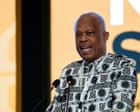
The head of the Caribbean's reparations commission has appealed to King Charles III as a 'human brother' whose family he said had benefited from slavery to support reparations talks at next month's Commonwealth leaders meeting in the Caribbean. Professor Hilary Beckles wants the king to ensure the Commonwealth becomes a moral institution committed to human justice.
Speaking at a press conference ahead of the Commonwealth heads of government meeting (Chogm) in Antigua and Barbuda next month, Beckles urged the king to use his influence to advance slavery reparations talks between Britain and the Caribbean.
Beckles, the chair of the Caribbean Community (Caricom) Reparations Commission, said: 'My personal appeal to King Charles III, not so much in his role as head of the Commonwealth, not so much in his role as the constitutional monarch of the United Kingdom … I'm appealing to Charles Windsor, a parent, a grandparent, a man today who reflects upon the history of his family, and he can see the enrichment that slavery has presented to his family.'
He declared that he believed the king was aware that the wealth he is passing on to his children and his grandchildren came from chattel slavery.
Referring to the king as 'a man, as a human brother', he urged Charles to ensure the Commonwealth, historically 'the site of this crime', becomes a 'moral institution committed to human justice'.
Beckles's appeal comes amid growing calls from Caribbean leaders and groups for Charles to formally apologise for slavery when he visits Guyana and the Bahamas next week ahead of Chogm, which he will attend in Antigua.
On Thursday, Commonwealth secretary-general Shirley Ayorkor Botchwey told Sky News that a formal apology for slavery from King Charles 'wouldn't hurt' and that the 'time has come' for a serious conversation regarding reparations.
Eric Phillips, head of Guyana's reparations committee and vice-chair of the Caricom Reparations Commission, joined the calls for an apology from the king. 'The king is a decent monarch based on his lifelong commitments to the world in which the environment for him is sacred. We Africans are also part of that sacred environment. As an enlightened monarch, I strongly believe King Charles will want to promote a conversation of decency that reflects his character and values,' he said.
'The citizens of the United Kingdom say, long live the king. We in Guyana say, long live the king, so he can apologize and call for reparations,' he added.
Last month, when Jamaican officials lodged a landmark petition to King Charles for legal advice on its claim for slavery reparations, which will be heard by the privy council in March, a palace spokesperson said Charles 'has on many occasions expressed his personal and wholehearted commitment to promoting greater understanding around the issue of slavery and finding ways to address historic wrongs for the benefit of communities today'.
But David Comissiong, the deputy chair of the Barbados National Task Force on Reparations, said he was concerned about a lack of unanimous agreement on commitments on reparations in a draft of the 2026 Chogm communique, which records agreements made by leaders.
Comissiong said a paragraph that referenced the commitment to dialogue made at the previous Commonwealth summit in Samoa and highlights subsequent developments at the UN, African Union and Caricom, was confirmed, but there was disagreement about a second paragraph mandating Commonwealth foreign ministers to advance discussions on historical harms from the transatlantic slave trade through 'structured, inclusive, and good faith dialogue'. 'It is very peculiar, to say the least, that the second paragraph which speaks about the Commonwealth foreign affairs ministers coming together to engage in these discussions … has not been unanimously agreed upon,' he said.
Dorbrene O'Marde, chair of the Antigua and Barbuda reparations commission, said that campaigners are expected to raise the issue of reparations during the conference's major forums, and that discussions between governments are expected to take place at their meetings. He said the reparations movement will launch a 'Global Reparations Caravan', described as an international movement combining reparations advocacy, demonstrations and culture, at a separate event on 3 November.
O'Marde added that, while there will be stringent security measures around the event, he expects physical demonstrations from groups who are 'inflamed' by the blanket statements of no apology coming out of the UK. 'Blanket no apologies from both government and monarchy reek of gross insensitivity to the demands of the citizens of the Caribbean,' he said.
Beckles stressed that the absence of a dedicated official event at Chogm does not mean that reparations would remain peripheral to the summit. He described the meeting as 'the Chogm of reparations' and the 'first round of reparations negotiations'. 'This is the meeting of the Commonwealth in the Caribbean, and the number one item in the Caribbean as far as this gathering is concerned is reparatory justice,' he said. 'I can assure you that [for] everyone in the Caribbean right now, everyone's going to be at that meeting from the Caribbean, with an interest in the Caribbean, from Africa, and an interest in the global African movement, this will be the number one item on the table.'