Two Bangladeshis Executed in Saudi Arabia Without Any Prior Notice: Jeddah Consulate's Letter Reveals Riyadh's Silence
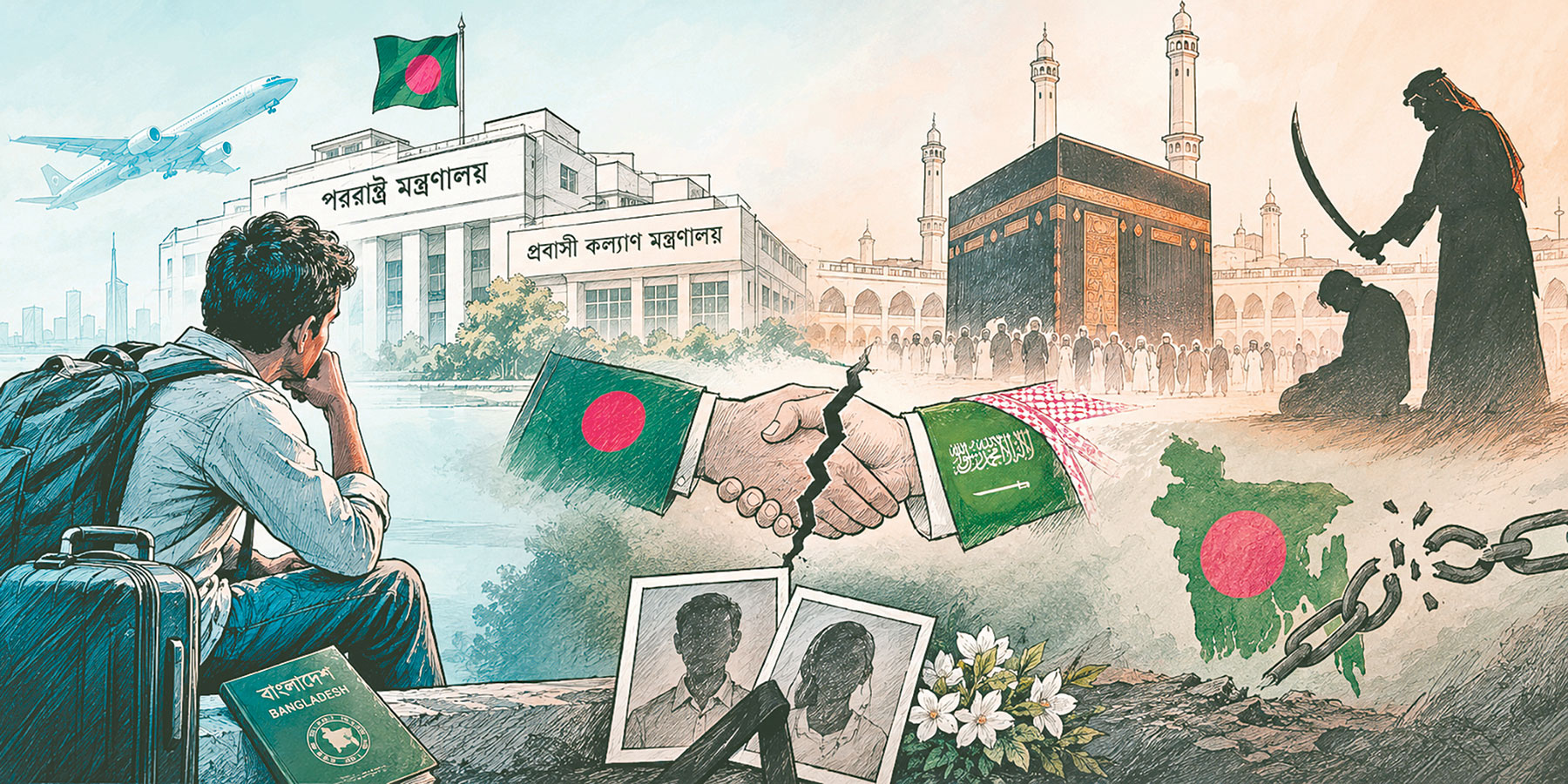
The execution of two Bangladeshis, Nazrul Islam and Sweety Akter, in Saudi Arabia has raised fresh questions about the entire system of diplomatic communication and expatriate protection. According to a letter exchanged between the foreign ministry in Dhaka and the Bangladesh Consulate in Jeddah, the Saudi authorities gave the consulate or the embassy no prior notice at all before carrying out the death sentences.
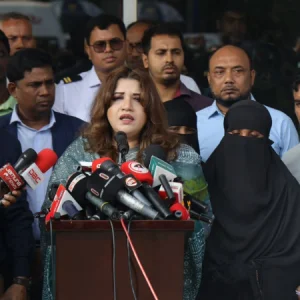
On 14 October, a Bangladeshi man and woman were beheaded in Saudi Arabia on charges of an immoral act; one was Nazrul Islam and the other Sweety Akter. The state minister for foreign affairs initially told journalists that the Bangladesh embassy in Saudi Arabia had not known about the matter — it learned only after the incident, that is, after the two Bangladeshis had been beheaded.
According to the Jeddah consulate's letter, the consulate learned of the whole matter through Saudi media reports. Nor was the consulate told whether the condemned prisoners would be able to apply for any legal assistance.
The letter further states that the Saudi government had sent the Bangladesh consulate a general list of 2,500 prisoners in which the names of these two prisoners appeared, but without any detailed information. In other words, the list carried no specific information that they were death-row inmates or about the current status of their cases. The Bangladesh embassy is also said to have expressed concern over the matter in the letter.
The nature of the alleged offence remains unclear. The charge says the two were beheaded for an immoral act in a mosque, but nothing clear or specific has been said about what that act was. Most people commenting on social media say the information circulating there does not describe an offence that merits beheading.
Even the duration of the case is reported differently. Various social media sources say the case ran in Saudi Arabia for four long months, while media reports citing Nazrul's family say the case had been running for two years. Until specific information is exchanged between the Bangladesh and Saudi governments, speculation-based reports are bound to keep spreading.
There is no indication that the Saudi government informed the Bangladesh government or the families of the accused in detail before carrying out the punishment. Critics allege that no opportunity for self-defence was given — which they describe as an extreme violation of human rights and a failure to follow the Vienna protocol.
In the critics' view, one of two things must be true: either the Saudi government did not consider it necessary to inform the embassy, which they see as conduct outside diplomatic norms; or the Saudi government did inform the embassy but the embassy failed to act in time, which would amount to a grave failure of duty. Clarifying which happened is now Dhaka's responsibility, they say.
The incident has also raised big questions about the role of two ministries at home. For valuing expatriates' contributions and ensuring their safety, the country has both the foreign ministry and the expatriate welfare ministry — and the foreign ministry alone has three ministers and state ministers. Yet within that structure, an event as grave as the beheading of two Bangladeshis took place without the ministries knowing, prompting public questions about what the diplomatic relationship between the Bangladesh and Saudi governments is really like.
The matter grew more controversial over a state minister's remark. A state minister of the foreign ministry was heard saying, about this incident, that the Saudi event would remain a 'lesson' for the expatriate workers there. His comment has already drawn a storm of criticism and protest. Many have asked who actually received the lesson from this incident — the Bangladeshi workers in Saudi Arabia, or the Bangladesh consulate and the foreign ministry?
Behind the debate lies the long-standing picture of insecurity faced by migrant workers, whose remittances keep Bangladesh's remittance economy alive. Yet most Bangladeshi men and women who go abroad for work are subjected to some form of abuse, as media reports have repeatedly shown. Many women working in Saudi homes face regular sexual abuse, according to allegations, and some are even killed after abuse. Many say that even when the Saudi police are informed, they take little initiative and instead arrange for the complainant to be sent back to the employer. Some women, caught by broker rings, never get to work in the profession they were recruited for. And the story of workers in the Middle East returning home as corpses is not a short one either.
The questions are therefore now specific: what activities do the foreign ministry, the expatriate welfare ministry and the Bangladesh consulates and embassies in various countries actually run to protect the lives of these remittance warriors; do they have any means of knowing their detailed information, condition and location; and is there any way to ensure accountability in the host country for citizens' protection?
There is no room for disagreement that crime must be punished — that applies to every country. But what the crime was, whether it was a crime at all, whether the accused were given a chance to defend themselves, and whether the matter was considered through diplomatic channels — those questions are now sharply in focus. Those concerned say that how the foreign ministry handles the issue will determine the safety and future of the hundreds of thousands of Bangladeshis working in Saudi Arabia, and above all, Bangladesh's standing.