

Safety Worries Shadow Cox's Bazar as Tourist Management Comes Under Scrutiny
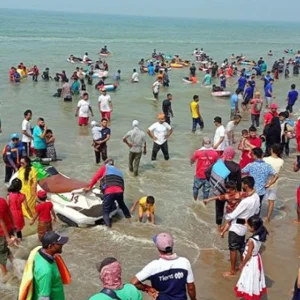
Cox's Bazar, the world's longest sea beach, is the heart of Bangladesh's tourism industry and a major driver of its economic activity. Every year, hundreds of thousands of tourists visit from home and abroad.
But a series of fatal accidents has recently raised fresh concerns about tourist safety. Ten tourists died in a resort fire in Inani, and two days later four tourists — including members of the same family — drowned while bathing at Himchhari beach. The question now: how prepared is Cox's Bazar to keep tourists safe?
Tourism stakeholders say these cannot be dismissed as isolated accidents. Long-standing mismanagement, lack of coordination, weak oversight, and failure to enforce safety rules are causing such tragedies again and again.
They fear that without swift, effective action, domestic and foreign tourists could lose confidence in one of the country's prime tourist destinations.
Businesses, local residents and concerned citizens in the tourism sector complain that countless hotels, motels and resorts have sprung up in Cox's Bazar in recent years.
Yet many establishments lack fire-safety systems, emergency exits, trained staff and regular safety drills. Questions also surround building construction, environmental clearances and quality control in some cases.
The worry extends beyond accommodation to beach safety. Risky stretches reportedly lack warning signs, adequate lifeguards, modern rescue equipment and effective surveillance.
As a result, tourists drown at sea almost every year while bathing.
Tourist couple Sajedul Alam and Samiha Akter, visiting with family from Mirpur in Dhaka, told Bangla Tribune: 'We never imagined we would have to worry about safety while traveling in Cox's Bazar. It is essential to ensure an environment where families can travel without anxiety.'
Shamim Chowdhury, a tourist from Sylhet, said: 'Every time, we hear news of some accident. There are drives after an accident, but after a few days everything returns to how it was. We must break out of this culture. Since so many tourists come here each year, maximum safety must be ensured.'
Women tourists Jaya, Neha and Yasmin, visiting from Rajshahi, said the beach's risky spots must be marked more clearly, and fire-safety systems must be made mandatory in resorts.
Concerned citizens of Cox's Bazar allege that although investigation committees are formed and action against culprits is announced after every major accident, there is little visible progress in publishing reports, implementing recommendations, or ensuring accountability. The same accidents keep recurring.
Md Mahbubur Rahman, president of the Cox's Bazar district branch of Bangladesh Sujon, said: 'Not after an accident — regular monitoring and strict enforcement of the law must be ensured to prevent accidents. Unless visible action is taken against establishments violating safety rules, the situation will not improve.'
Anwar Kamal, president of the Tour Operators Association of Cox's Bazar (TUAC), said: 'Cox's Bazar's tourism industry is extremely important for the country's economy. If insecurity creates a negative perception among tourists, it will affect the entire tourism industry. So all parties, public and private, must work together.'
The Cox's Bazar Development Authority (CoxDA) has acknowledged the coordination gaps in tourism management. Officer Fazle Rabbi said: 'Although notices have been issued one after another since 2023 over illegal structures and safety lapses, they have not been implemented in many cases. There are even cases of new hotels, motels and resorts coming up in the dark of night, which requires coordinated action by all concerned agencies.'
Tourism experts say every hotel and resort must undergo mandatory fire-safety audits, regular drills, modern firefighting systems, effective emergency exits and strict supervision to make Cox's Bazar a safe destination of international standard.
They are also calling for more lifeguards on the beaches, scientific marking of risky areas, drone-based surveillance, modern rescue equipment, and an effective warning system for tourists.
According to experts, Cox's Bazar is not just a tourist spot — it is a symbol of Bangladesh's international image and tourism economy. That is why each accident must bring permanent, visible change in safety arrangements, not just condolences or an investigation committee.
Otherwise, one tragedy after another will not only deepen the pain of bereaved families but also gravely damage public trust in the country's tourism industry.



