Iran changes strategy amid fears of a new war as details emerge of a halted strike plan and warnings of a wider conflict

Iran is preparing amid fears of a renewed military conflict with the United States and Israel. Iranian officials have warned that if attacked again, Iran’s retaliation will be broader and more unpredictable. Tehran is moving forward with a revised military strategy, upgraded weapons and plans to strike new targets beyond the sites hit in previous rounds of conflict.
Amid this situation, reports have emerged that earlier this month Israeli Prime Minister Benjamin Netanyahu moved to launch a major new bombing campaign against Iran. US President Donald Trump, however, objected to the plan.
Iranian military expert Mohammad Sadek Alizadeh told the London-based, Middle East-focused outlet The New Arab that, based on lessons from the 12-day war in June 2025 and the 40-day war that began on 28 February, changes have been made to the strategy of the Islamic Revolutionary Guard Corps’ (IRGC) aerospace and naval forces as well as the army’s air defence system.
He said Iran has also upgraded some weapons in its missile arsenal. Among them, some missiles capable of reaching Israel have been converted to a modular system. Under the new arrangement, these missiles can be activated more quickly and with fewer logistical complications.
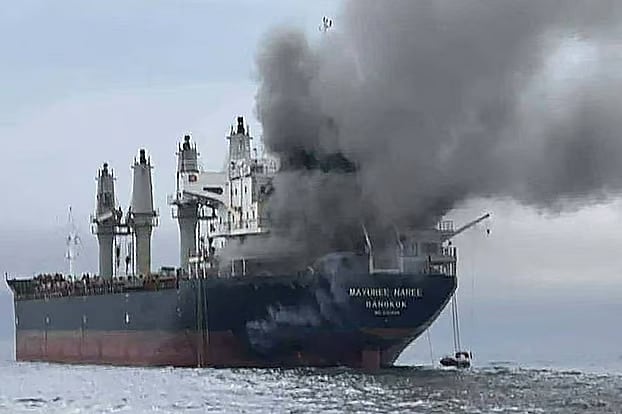
Technological improvements have also been made to anti-ship missiles used in coastal areas. One purpose of recent military exercises was to test the capability of these missiles, the military expert said.
Alizadeh added that reports have also been published about the possibility of buying weapons from allied countries. Those weapons reportedly include hypersonic anti-ship missiles. In his view, such weapons will follow more complex trajectories, making them harder to intercept mid-flight, though their range is shorter than Iran’s ballistic missiles.
Former IRGC commander Hossein Kanani Moghaddam said that if a new attack comes, Iran’s response will not be limited to the tit-for-tat strikes seen in previous conflicts. He warned that Iranian operations would not target only US military bases and Israeli positions across the Middle East, but could also hit installations further away. He specifically mentioned the possibility of strikes on Israeli cities such as Haifa and Tel Aviv and on the country’s Dimona nuclear facility.
He also spoke of Iran using weapons that have never been deployed before, including what he described as a powerful electromagnetic bomb and a missile known as ‘Rastakhiz’ or ‘Resurrection’. These claims could not be independently verified. Iran’s military chief Ali Abdollahi separately warned that a new attack would draw an even harsher response, claiming Tehran has built missiles that cannot be detected or intercepted.
Senior Iranian security official Mohsen Rezaei said Iran has prepared a plan more destructive than in the previous two wars, though he did not disclose its details. IRGC spokesperson Hossein Mohebbi also hinted that Iran could target seven important undersea internet cables passing through the Strait of Hormuz, warning that even a limited US military operation could trigger a major global energy crisis. Rezaei, secretary of Iran’s Supreme National Security Council, added that if the US and Israel attack again, Iran will strike oil installations, undersea communication cables, data centres and artificial intelligence (AI) facilities in seven Gulf countries.
Meanwhile, diplomatic efforts led by Qatar and Pakistan have intensified to avert a renewed US-Iran conflict and reach a negotiated agreement. Alongside fears of conflict, this diplomacy is now receiving equal attention.
A report published on Wednesday by the British newspaper the Financial Times said Israel had prepared to bomb Iran for several days over the weekend of 10 October. Under the plan, strikes were to hit power plants, nuclear facilities and various sites linked to the Iranian government. But with the US midterm elections approaching, Trump opposed reigniting the conflict, and the operation was ultimately postponed. The US midterm elections are scheduled for 3 November.
It is still unclear whether the United States was to take part directly in the new operation. However, a person familiar with Netanyahu’s plan said a resumption of joint US-Israeli strikes in the coming weeks is “not an unreasonable scenario”, adding: “Either there will be a deal, or there will be strikes.” The Financial Times, citing sources, said that during US Defense Secretary Pete Hegseth’s visit to Israel last Monday, Israeli officials presented an updated list of targets in Iran to US officials. White House deputy spokesperson Anna Kelly, however, rejected the possibility of a US strike on Iran before the midterms, saying the United States will not attack Iran at any point before the elections.
If a new war begins, the conflict could spread across multiple fronts as before. Yemen’s Iran-backed Houthi forces and Lebanon’s Hezbollah could become involved. Netanyahu and Israeli government ministers have warned Lebanon of serious consequences if Hezbollah joins the war on Iran’s side, and armed groups in Iraq could also be drawn in. All in all, diplomacy and war preparations are now advancing side by side, and which way the final decision goes will depend on events over the coming weeks.