

Dhaka-Gazipur BRT Project Running for 14 Years to Be Scrapped: Infrastructure to Be Removed, Road to Become Six Lanes
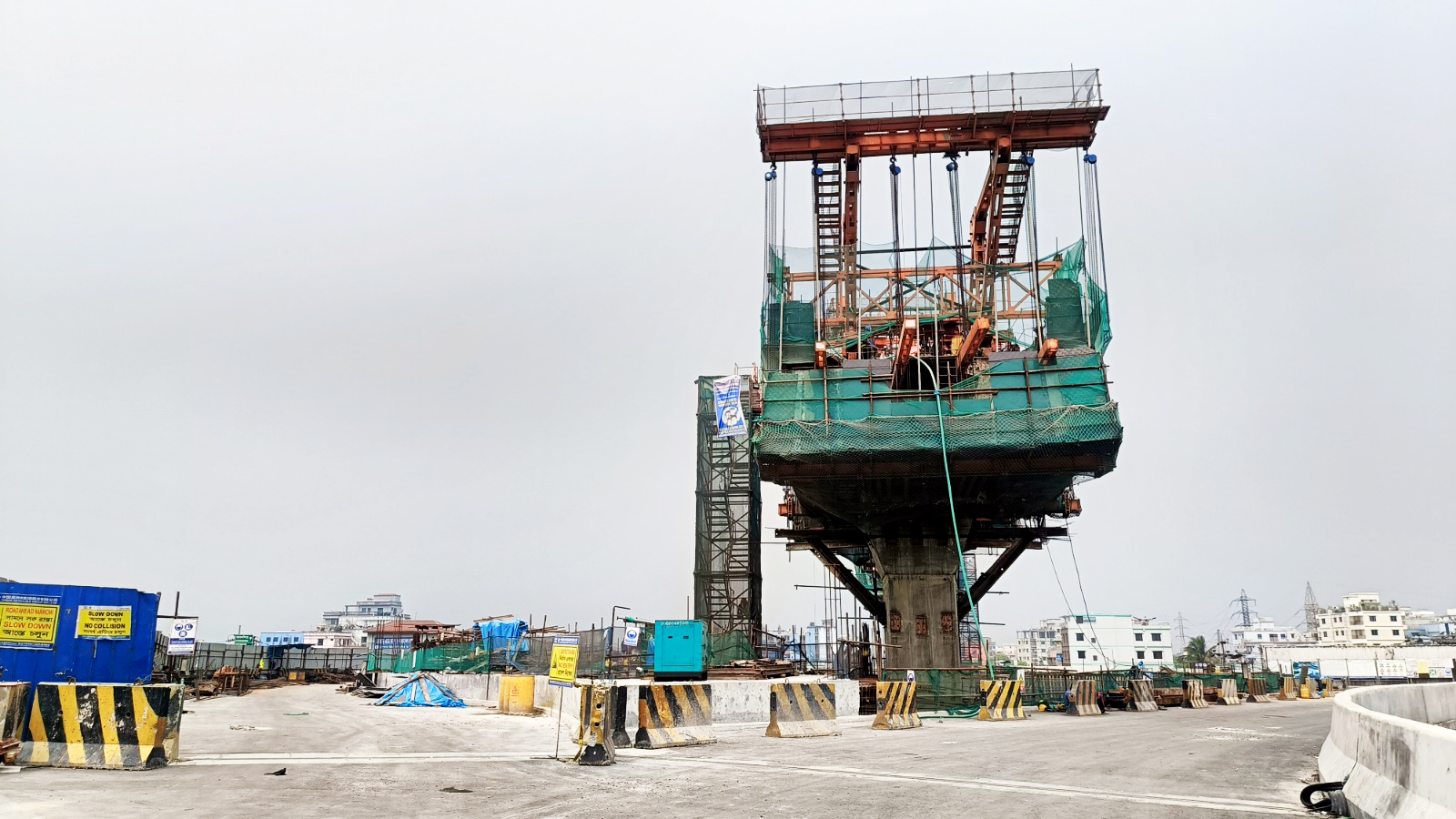
The Dhaka-Gazipur Bus Rapid Transit (BRT) project is set to be formally closed. The government has decided to remove the dedicated lanes and station infrastructure built from Shahjalal International Airport in the capital to Gazipur and convert the road into a six-lane general highway. Instructions have been given to implement the decision urgently after resolving legal complications in discussion with development partners.
A progress report on project implementation has been asked to be submitted within the next 15 days. Until the work is finished, the concerned offices must submit progress reports by the 3rd of every month.
The BRT project was first approved in November 2012 at a meeting of the Executive Committee of the National Economic Council. Aiming for fast travel in less time, the initial plan was to build a BRT lane from Chandana Chowrasta in Gazipur to Keraniganj in Dhaka. Later, to manage time and cost, the Keraniganj part was dropped and the project was limited to 20.5 kilometres up to the airport — 15.07 kilometres of road and the rest elevated, with special buses planned to run on two separate lanes in the middle of the road.
When the project was launched, it was said BRT would take passengers from Chandana Chowrasta to the airport in 30 minutes, and that 20,000 passengers would be able to travel per hour. Special BRT buses would run on separate lanes without traffic jams, signals or other obstacles — that was the promise of the plan.
In 2012, the project's initial cost was set at Tk 2,039.84 crore, with a deadline to finish construction by 2016. The Government of Bangladesh, the Asian Development Bank, the French Development Agency and the Global Environment Facility were jointly involved in financing. Implementation was the responsibility of the Roads and Highways Department, the Bridges Division and the Local Government Engineering Department; three Chinese firms won the construction contracts, and Dhaka Bus Rapid Transit PLC was formed in 2013 to operate the BRT.
Starting the project without completing a full survey and design created complications from the beginning. No drainage system was kept to resolve waterlogging, there was no prior plan to shift utility lines, no alternative traffic arrangement was kept on the busy highway during construction, and there were no street lights or footpaths. Amid slow progress, land acquisition and design-change complications, large-scale field construction began only in 2018, long after the scheduled time.
Over 14 years of disorganised construction, cement barriers and iron fencing placed in the middle of the road narrowed it. Every day, hundreds of thousands of people and garment workers on the airport-Gazipur route suffer dust and long traffic jams. During construction, at least seven pedestrians and workers, including security guard Ziaur Rahman, were killed in crane accidents and girder collapses, blamed on authority negligence and contractor irresponsibility.
When the work was not finished by 2016, the project period was extended to June 2022 and the cost was revised to Tk 4,268.32 crore — more than double the original. In 2025, a proposal was made to extend the period to December 2029 and raise the estimated cost to Tk 6,597 crore; the extended proposal was rejected at the ECNEC meeting on July 27 that year.
Fifteen station structures have been built in the middle of the road from the airport to Gazipur, but no station's work has been fully completed. Several footbridges built for passengers have escalators and lifts; none of these structures can be used now — machinery has rusted in places and infrastructure is collapsing in others.
Opinion on the decision is clearly divided. Gazipur city resident Burhan Uddin Aranya said: 'Everyone accounts for every penny when spending their own money. This is public money, so there is no accounting or planning. After spending thousands of crores, now it has to be demolished, and that too will cost crores. Whose money is this? Why will a project be cancelled even after 97 percent of the work is done?' Gazipur city Jamaat ameer Professor Jamal Uddin said demolishing it would show a lack of foresight and that launching BRT under better management would be preferable. Gazipur district Shujon general secretary Iftekhar Shishir said wasting public revenue and then closing and demolishing the project at the last moment is extremely disappointing and irresponsible, and the ultimate price is paid by ordinary people. Sachetan Nagarik Oikya, Gazipur, held a sit-in and human chain at Bhogra Bypass on the Dhaka-Mymensingh highway protesting the cancellation, and NCP leader Ali Naser Khan demanded the remaining work be finished and the service launched quickly.
On the other hand, Gazipur City Corporation administrator Shawkat Hossain Sarkar said: 'The present government has taken a realistic decision. This BRT project was a sector of looting by the fascist government and has been a thorn in ordinary people's throats. People travelling through Gazipur on the Dhaka-Mymensingh highway have suffered for nearly 14 years. If the present government's decision is implemented, relief will return for buses and passengers through Gazipur.' There are arguments both for and against demolition, and various social organisations have also held sit-ins demanding the BRT infrastructure not be demolished.
Gazipur Roads Division executive engineer Tanvir Ahmed said: 'We have not received any written letter yet; we have seen it in newspapers. Once we receive an official letter, we will understand what to do. We will act as instructed.' He added that after Monday's meeting, the Puja holiday began on Tuesday, a letter is circulating on Facebook, and whether it is genuine will be confirmed when offices reopen on Sunday.
Two questions now lie ahead: how the legal complications will be settled in discussion with development partners, and how quickly the removal of the built infrastructure, including 15 unfinished stations, and the conversion to six lanes will begin. The instruction for a progress report in 15 days and monthly reports by the 3rd shows the government wants an account of implementation, not just a decision on paper — the final chapter of the 14-year project now depends on the pace of that implementation.


