Holiday Trips Turning Fatal: At Least 25 Dead in Tourist Areas in Two and a Half Months as Safety Faces Big Questions
At Cox's Bazar, the country's main tourist centre, 15 people have died while on holiday within just four days. Ten of them died in a resort fire and five drowned in the sea. Before the shock of those incidents had faded, nearly 3,000 tourists stranded in Sajek, Rangamati, had to return after hearing gunfire. In the past two and a half months, at least 25 deaths have been reported in accidents of this kind in tourist areas across the country.
Are these deaths mere accidents, or is there also blame in negligence over tourist safety and management failures? That question is now being asked forcefully. People concerned are raising questions about safety gaps at tourist centres, the reality of surveillance and the preparedness of the authorities to prevent accidents. Alongside this, incidents of tourists being held hostage and of gunfire by banned organisations in the hills have also occurred.
However, Tourist Police headquarters spokesperson Superintendent of Police Md Marufat Hossain has claimed there is no shortage in tourist safety. He said various agencies work alongside the police for safety in tourist areas and there is no gap in the police's safety arrangements. Extra police have been deployed in Cox's Bazar for the Puja holidays and the start of the main tourist season, he said, while noting that accidents often happen because of tourists' unawareness and disregard for warnings.
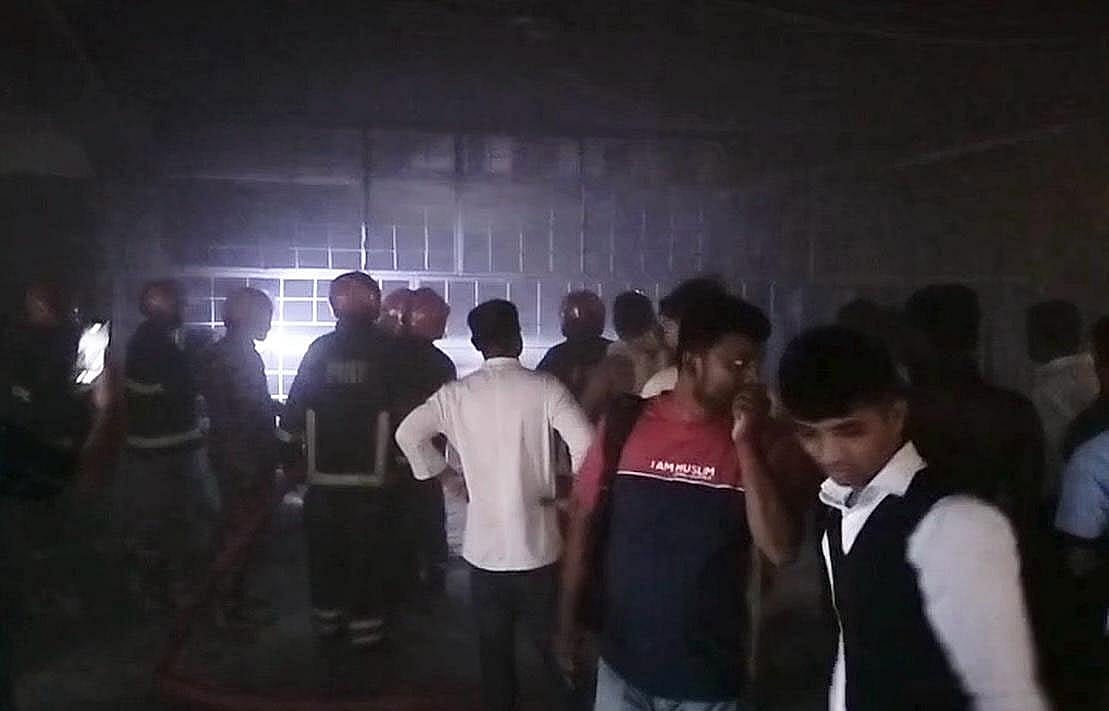
The largest loss of life occurred at Inani in Ukhiya, Cox's Bazar. There, 10 tourists, including women and children, died in a fire at a resort named Tuptup on the morning of October 17. After that incident, major questions have been raised about the safety of hotels, motels and resorts in Cox's Bazar.
Cox's Bazar district has more than 2,000 hotels, resorts and cottages. Like the Tuptup resort, the number of unauthorised hotels, resorts and cottages in and around Cox's Bazar town is more than six hundred. According to the government departments concerned, only 115 hotels and resorts in Cox's Bazar district have fire safety certificates, and only 44 establishments have environmental clearance. All the remaining establishments are unauthorised or have been built illegally.
Ziadul Kabir, father of Fariha Kabir, who died at the Tuptup resort, said: 'The government departments that are supposed to look into irregularities and risks in tourist areas are not doing so. That is why people are losing their lives. Illegal resorts are being built, and unfit, risky chander gari vehicles are running in tourist areas.' His allegation is that a lack of oversight is behind the repeated loss of life.
Jasim Uddin, chairman of the Cox's Bazar Development Authority, said notices have been served on more than 150 illegally built structures. More establishments will be inspected in person and listed, he said.
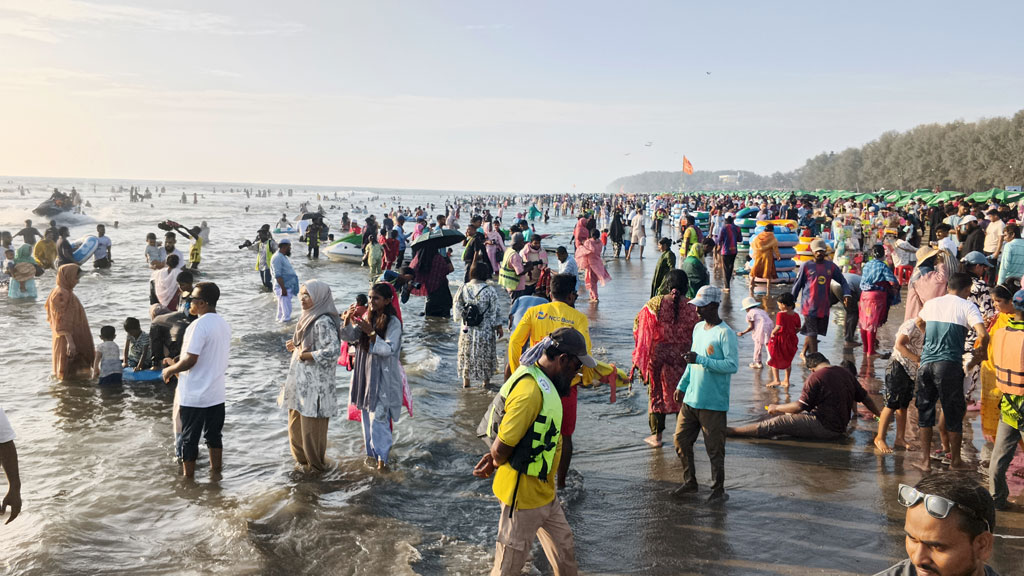
The day after the fire, on October 18, seven friends travelled from Dhaka to Bandarban. After two days in the hills, they reached Cox's Bazar last Wednesday and stayed at a resort near the Pechardwip museum at Himchhari. As they bathed in the sea for enjoyment at the beach, two of them were swept away. Two more friends who had come from Chattogram also lost their lives at the same beach. Finally, another body was recovered last Thursday. Five people died in total in the incident; the deceased include university students and jobholders from Chattogram. On Wednesday afternoon, as they bathed in knee-deep water at Himchhari beach, large waves suddenly crashed over 12 people from two groups and the sand shifted from under their feet, sweeping one group away. The body of missing university student SM Nafisur Rahman Nibir washed ashore at Kalatali Bhangarmukh beach at about 8pm on Thursday, nearly 26 hours after he went missing.
Meanwhile, thousands of people had gone to Bandarban and Sajek in Rangamati for the long Puja holiday. Last Wednesday, two organisations — the Sajek Gana Adhikar Rakkha Committee and the Sajek Karbari Association — announced an indefinite blockade of the Sajek tourist road and told all tourists to leave Sajek that very day. Nearly 3,000 tourists were stranded in Sajek. During efforts to evacuate them, gunfire was exchanged with law enforcement forces and the blockaders. Those tourists have returned with a terrifying experience from what was meant to be a holiday.
Alongside such security risks in the hills, there are also allegations of tourists suffering because of road accidents and local syndicates. On October 5, a tourist chander gari lost control and fell into a gorge at Tindu, a tourist centre in Thanchi upazila of Bandarban; two people were killed and five more tourists injured. Earlier, on September 27, a tourist chander gari lost control and hit a tree on the Himchhari Marine Drive in Cox's Bazar, killing one tourist. On August 24, another tourist was killed in a collision between a bus and a CNG-run auto-rickshaw at Haripur on the Sylhet-Tamabil highway on the way to Jaflong in Sylhet. Two more people were killed in a head-on collision between a passenger bus and a vegetable pickup at Nayapara in Khutakhali union of Chakaria upazila on the Chattogram-Cox's Bazar highway at about 12:30am on Thursday night.
Earlier, on August 1, a man named Shouvik Roy died after falling into the sea while parasailing at the Darianagar parasailing point in Cox's Bazar. The incident caused much uproar at the time and unsafe parasailing was banned. In addition, three people drowned in separate incidents at Laboni Point and Sugandha Point in Cox's Bazar on August 26 and September 18. One person drowned while bathing at the watchtower area of Tanguar Haor in Sunamganj on August 7, and another drowned at Sadapathor in Companiganj, Sylhet, on August 15.
Saidur Rahman, executive director of the Road Safety Foundation, believes the loss of life is happening because of inadequate surveillance at tourist centres, risky infrastructure, administrative indifference and tourists' unawareness. He said many establishments at tourist centres are extremely risky, lacking firefighting arrangements, emergency rescue arrangements and road infrastructure, alongside allegations of irregularities and corruption in administrative management. He added that many people bathe in the sea despite not knowing how to swim, and many places lack adequate lifesaving equipment and life jackets. An effective strategy at the government's policy level is needed to ensure safety at tourist centres, he said.
Meanwhile, on Friday afternoon a fire also broke out at a hotel at Sugandha Point in Cox's Bazar. A Fire Service unit brought the fire under control; more than two hundred guests staying at the hotel came out safely and no one was injured. A fire at another hotel within a week of 10 people dying in one blaze has spread fresh fear among tourists.
Just as the main tourist season begins, the succession of deaths has raised a large question: hundreds of unauthorised establishments, hotels and resorts without fire certificates, a lack of lifesaving at the beach and unrest in the hills — none of this is new. Yet because no effective action has been taken, holiday travel itself has become risky. Those concerned say that without an effective policy-level strategy and strict surveillance, this procession of deaths cannot be stopped.