Months-Long Wait for Heart Surgery at National Institute: Two Theatres Idle, Child Patients Suffer Most
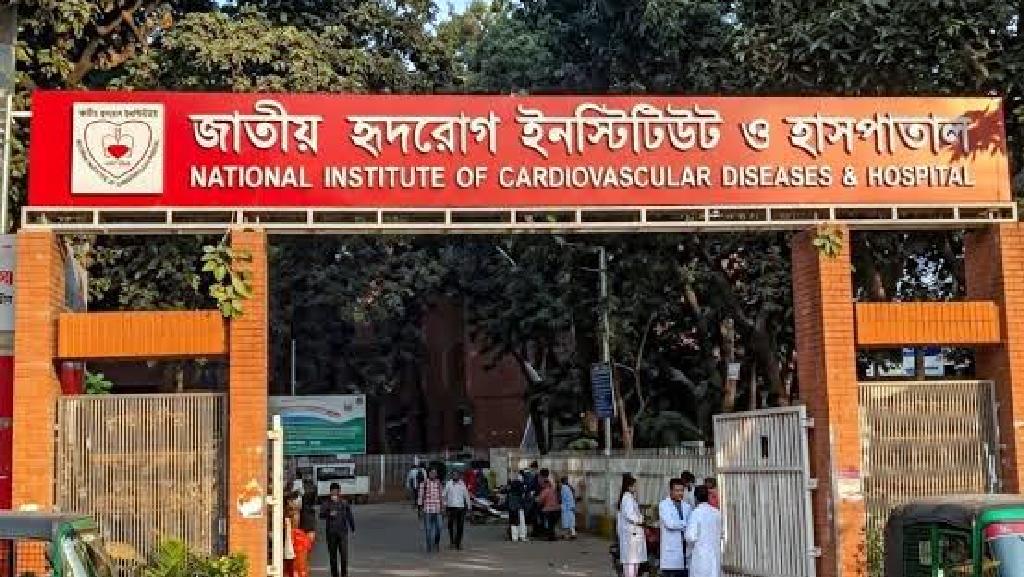
The National Institute of Cardiovascular Diseases (NICVD) is the government's only specialised institution for heart treatment in the country. Yet patients there are having to wait months for heart surgery, with children born with congenital heart disease facing the longest waits. A shortage of operation theatres (OTs) means fewer operations can be performed than demand requires, leaving many patients admitted in hospital for months, waiting their turn.
It is not only children: adults, too, wait a month or more for heart surgery. Spending that time admitted in hospital raises daily costs and mental stress for patients and their families, on top of the treatment itself.
According to the Directorate General of Health Services, the institute has 1,250 beds. Last year, more than 225,000 patients received consultations at its outpatient department, nearly 175,000 were treated in the emergency department, and 112,000 were admitted. Some 5,909 patients died at the hospital during the year. There were 1,972 major operations and 16,269 minor ones, and admissions ran at 120 percent of bed capacity — the hospital is handling more patients than it was built for.
Established in 1978 in the capital's Sher-e-Bangla Nagar, the hospital has 11 departments, including cardiac surgery, paediatric cardiology, vascular surgery, anaesthesiology, radiology and imaging, pathology, a blood bank, and physical medicine and rehabilitation, alongside adult and child cardiology. It also offers higher training, including MD (Cardiology), MS (Cardiovascular and Thoracic Surgery) and a Diploma in Cardiology.
Hospital authorities say the NICVD has 10 operation theatres in total — seven for cardiac surgery and three for the vascular surgery department. But two of the seven cardiac theatres can no longer be used because their service lifetime has expired. In effect, surgery runs on just five theatres: one for child cardiac surgery, three for adult cardiac surgery and one for infection control and prevention (IPC).
Different units operate in these theatres by rotation. There are 10 units in cardiac surgery, two in child cardiac surgery and four in vascular surgery, each led by a professor or associate professor.
A man from Chandpur brought his two-year-old daughter to the NICVD. On 5 October the child was admitted to the child cardiac surgery department in ward 21 for open-heart surgery, but doctors told him the wait for the operation could exceed two months. He had first come in early August to admit her, but no bed was free then; after a long wait he finally secured admission — and now faces the wait for surgery itself.
A seven-year-old from Goshai village in Dashmina upazila of Patuakhali was admitted to the same ward on 31 August. Born with congenital heart disease, the child has a hole in the wall between the heart's upper chambers, known as sinus venosus atrial septal defect (SVASD), along with partial anomalous pulmonary venous connection (PAPVC), in which a vein from the right lung connects in the wrong place. The child also has mildly raised pressure in the lung artery — mild pulmonary hypertension. Doctors say the child needs surgery quickly, but with patient pressure so high no date has been fixed yet; relatives expect to wait another month.
According to the authorities, the child cardiac surgery department has 44 beds. Its single dedicated theatre performs one operation a day, making 20 to 24 operations a month excluding Fridays. A separate ICU for children after surgery has 10 beds, four of them with ventilators. The department's head, Dr. Md. Zahidul Islam, told Ajker Patrika that with their existing surgeons and staff, they could run one more theatre.
Most child heart operations correct congenital defects, including atrial septal defect (ASD), ventricular septal defect (VSD), tetralogy of Fallot (TOF) correction, arterial switch, and Glenn and Fontan procedures for complex disease. Depending on the type and complexity of disease, catheter-based treatment is also given in some cases.
Staff shortages are another major obstacle. Doctors say the hospital lacks perfusionists and critical care medicine and anaesthesiology specialists. Of six perfusionist posts, not one is currently filled. Perfusionists perform the vital task of keeping blood and oxygen circulating through a heart-lung machine during heart surgery; at present, heart-lung technicians are covering that work.
The cardiac surgery department's 10 units have 150 beds between them, 14 to 17 per unit. In the three adult cardiac theatres, 10 units rotate and manage about 70 operations a month excluding Fridays. Of the department's 38 ICU beds, 24 are functional, with ventilators on 11. Mechanical faults in the ageing infrastructure and equipment sometimes force operations to stop altogether, further reducing effective theatre capacity and adding to the waiting pressure. The vascular surgery department's three theatres are used for one emergency and two regular operating lists.
At least five NICVD doctors, speaking on condition of anonymity, said limited theatre capacity makes it impossible to operate according to demand, creating long delays for complex patients — and for those needing urgent surgery, delay risks worsening complications. To reduce the waiting pressure, they say, idle theatres must be reactivated quickly, old theatres modernised and surgical capacity expanded, alongside ICU and HDU capacity, manpower and equipment.
NICVD director Professor Dr. Abdul Wadud Chowdhury acknowledged that long hospital stays raise treatment costs and infection risks, while relatives lose working time and come under added pressure. Asked why the number of theatres is not being increased, he told Ajker Patrika that the theatres in question have reached the end of their lifetime; a Development Project Proposal (DPP) is being prepared to install three new theatres, and another DPP is under preparation for the vascular surgery department. On manpower, he said the worst shortages are among class-four staff, cleaners and the anaesthesiology department, noting that a hospital must run 24 hours in three shifts and is hard to operate without enough cleaners and security staff.
Until the new theatre proposals are approved and implemented, there is little sign that the suffering of waiting patients will ease. Until then, thousands of patients — including children born with heart defects — must count the days at the country's only government specialised heart hospital.