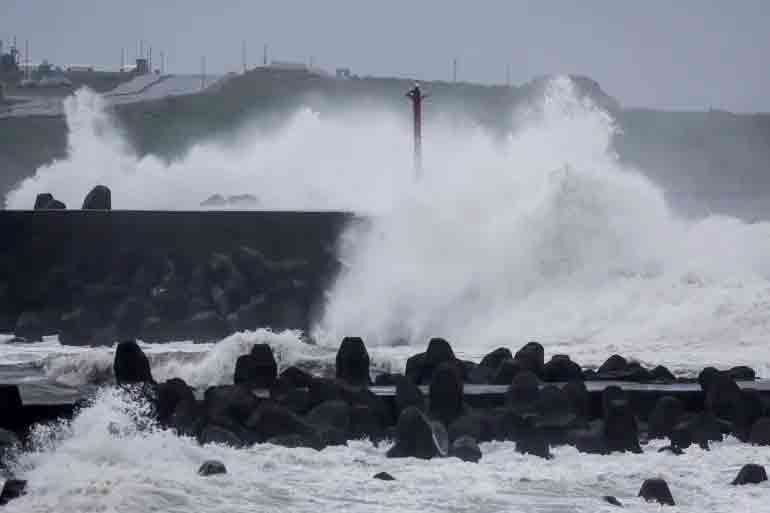
Met Office Warning: Well-Marked Low to Become a Depression Today, May Turn Into a Cyclone on Sunday

Amid the calm of the Kartik season, the Bay of Bengal has turned turbulent. A low-pressure area over the sea has gathered strength and become a well-marked low, and according to a warning from the Meteorological Department it may become a depression today and, passing through a deep depression, turn into a cyclone tomorrow, Sunday.
In Saturday's warning, the Met Department said the low over the east-central and adjoining southeast Bay of Bengal had intensified into a well-marked low by 6am today (October 24) and was positioned over the east-central Bay and adjoining areas. It may move further west-northwestwards and intensify.
The warning asked fishing boats and trawlers operating in the north Bay of Bengal not to venture into the deep sea until further notice. As the sea grows rougher, this caution is now the most urgent instruction for fishermen and vessel movement.
Meteorologist Dr Mohammad Bazlur Rashid of the Met Department said at 11am on Saturday that the low over the Bay had now become a well-marked low. It could turn into a depression by this afternoon, and on Sunday it may pass from a deep depression into a cyclone.
This picture of step-by-step intensification also matches the forecast of the private weather research organisation Bangladesh Weather Observation Team (BWOT). According to the organisation, the system is likely to become a depression within 6 to 12 hours, a deep depression within the following 24 to 36 hours, and a full cyclone within 48 hours, and it may keep gaining strength steadily over the next three to four days.
According to BWOT, the average maximum wind speed within 100 kilometres of the well-marked low's centre is now 35 kilometres per hour, rising to 45 kilometres per hour in gusts. As a result, the sea over the central Bay and adjoining areas has begun to turn rough.
Asked where it might strike if it becomes a cyclone, Dr Bazlur Rashid said that for now it could hit India's Odisha and Andhra Pradesh coasts. Afterwards it may turn into a land depression over Bihar and Jharkhand. BWOT's forecast likewise says the cyclone could cross India's north Andhra Pradesh or south Odisha coast around October 28, and that on its current track there is no sign of a direct hit or major devastation on the Bangladesh coast.
Even without a direct strike, Bangladesh will feel its effects. According to Dr Bazlur Rashid, rain is likely from Sunday in the country's south as well as in the Dhaka, Rajshahi and Rangpur regions because of the system. The Sylhet region, however, may not receive rain.
BWOT's forecast paints the rain picture in broader detail — by its account, a wide 'rain belt' may become active over the country from October 27 or 28, bringing rain to most areas until November 1. Barisal, Khulna, Dhaka, Mymensingh, Rajshahi and Rangpur divisions are expected to receive more rain, while Chattogram and Sylhet may receive comparatively less.
For now, the capital's weather remains dry. Dhaka and adjoining areas are expected to have clear skies and mainly dry weather for the six hours from 7am. During this time wind may blow from the north or northwest at 5 to 10 kilometres per hour.
No official warning signal has yet been issued for the country's seaports, but BWOT says a signal is likely soon. For that reason, fishing trawlers and boats have been advised not to go into the deep sea more than 150 kilometres from the coast, and fishermen have been asked to operate carefully close to the coast until further instructions.
Once the depression's influence passes, temperatures will fall further across the country, Dr Bazlur Rashid said. October is nearly over; from November, winter will set in across the country. The gradually falling temperatures and gathering fog are already signalling that arrival.
All told, this Bay of Bengal system will dominate the weather for the next several days. Whether the stages — depression today, cyclone tomorrow — unfold as forecast, when the official warning signal comes, and how much rain falls from Sunday and where, is what the whole country, especially coastal residents, will now be watching.