Fresh Wave of Protests Across France: Louvre and Major Paris Museums Closed, 70,000 Police Deployed Nationwide
Public life in France has again been hit by large-scale protests. Fearing a fresh round of demonstrations across the country on Saturday, authorities kept world-famous Paris landmarks including the Louvre closed to visitors, while up to 70,000 law enforcement personnel were deployed nationwide.
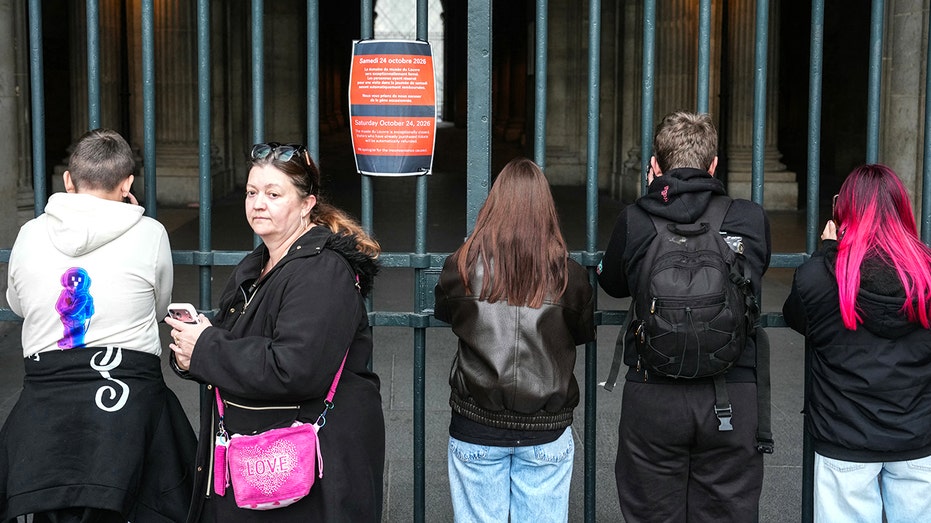
Alongside the Louvre, the institutions shut on Saturday included the Musée d’Orsay, the Picasso Museum and the Grand Palais. Visitors were seen peering through the locked gates of the Louvre, home to Leonardo da Vinci’s famed ‘Mona Lisa’, where a posted notice announced the temporary closure.
As part of the security preparations, helicopters, armoured vehicles and water cannons were kept ready. To avoid violence, Paris’ main march was rerouted away from the city centre, and police stood guard beneath the Arc de Triomphe.
Behind this round of protests is a coalition of the ‘Yellow Vests’ movement, trade unions and students. Their demands include questions over study conditions and people’s purchasing power — with the cost of living rising, ordinary people’s anger is the main driving force of these demonstrations.
Shopkeepers also took precautions in advance. Across Paris, traders were seen boarding up their storefronts to avoid damage from vandalism or looting. In the previous weekend’s violent demonstrations, around 3,000 businesses across France were damaged or looted — that experience is a major reason for this time’s caution.
The protests have also affected the cultural sphere. The weekend programme of Art Basel Paris, the major international art fair under way at the Grand Palais, was cancelled over security concerns; the fair had opened to the public on Friday. A fan event planned around the NFL’s international game was also cancelled because of the unrest.
This is not the Louvre’s first disruption. Earlier in the week, student protesters blocked access to the museum, forcing officials to turn visitors away. Repeated closures of the attraction, which can draw as many as 20,000 visitors on its busiest days, have caused deep frustration among tourists — one Dutch couple called the closure ‘shameful’ and said it was giving Paris a terrible image.
Tensions have been heightened further by a shooting in a Paris suburb. Authorities are investigating the incident as a potentially racist and Islamophobic terrorist attack; one person was killed and five others injured. President Emmanuel Macron has condemned the attack.
French authorities have taken a hard line to control the situation. President Macron has banned illegitimate protests and curfews have been imposed in various areas. The US Embassy has also warned American citizens in France to steer clear of violent protests, saying in a statement that partial curfews had been introduced in several French cities, with additional restrictions possible.
Travellers have been advised to avoid well-known protest gathering spots — including squares such as Place de la République, Place de la Bastille and Place de la Nation, and major thoroughfares such as Boulevard Voltaire, which are frequently used for demonstrations.
Preparations for protests and police activity were also visible in other major cities, including Lyon. The last-minute rerouting of the Paris march itself shows that the authorities are unwilling to take any risks this time.
A week after destructive riots, the whole of France is now on alert over fears of renewed violence. Between the protesters’ demands and the government’s tough stance, which way the situation turns in the coming days remains to be seen.