Volunteers Clean and Arrange 500 Years of History Buried Under Dust in Kishoreganj
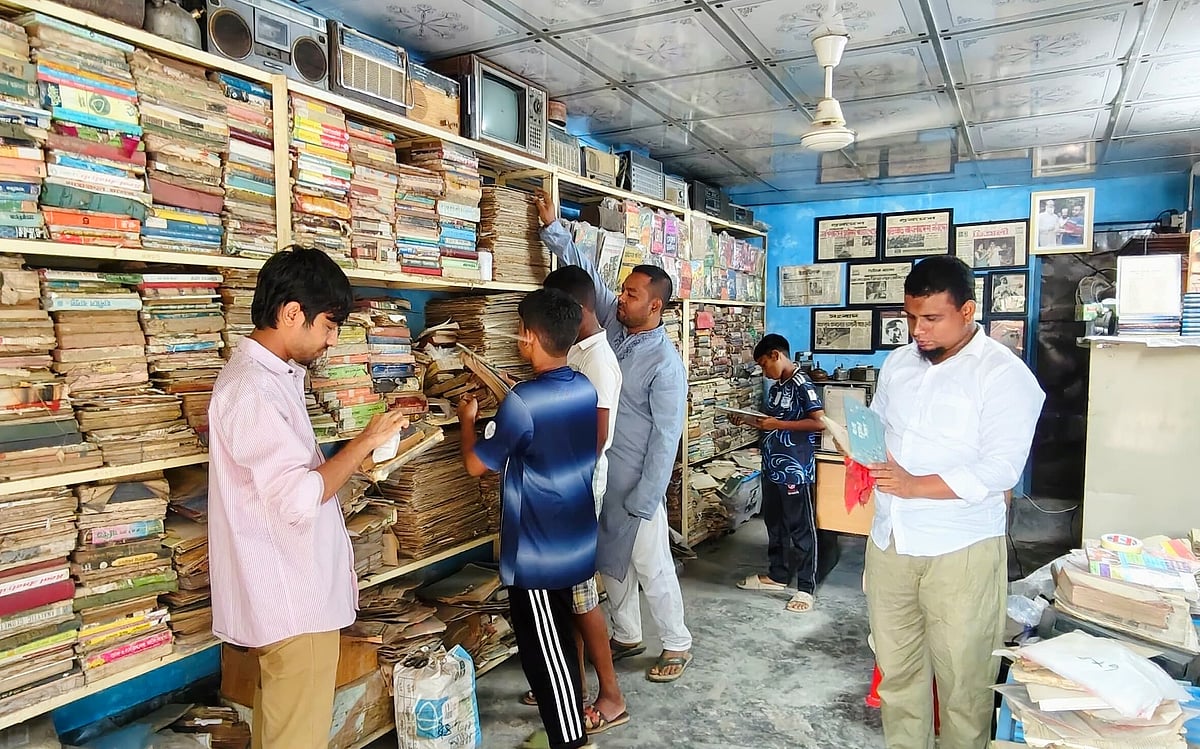
Old books, newspapers, magazines and handwritten manuscripts lay covered in dust. Their pages hold the history, literature, culture and everyday memories of the past. Members of the Kishoreganj Bondhushava have carefully cleaned that increasingly rare collection and arranged it back in order.
The work took place on October 24 at the 'Old Collection' library, located beside the Kasaikhana culvert in the Harua area of Kishoreganj town. During the programme, which ran from 9am to 1pm, the volunteers cleaned the books, newspapers, magazines and manuscripts in the collection one by one.
The work did not end with cleaning. The items were then arranged neatly on their designated shelves according to the catalogue. Alongside tidying books kept in different parts of the collection, the volunteers also tended to and helped preserve the valuable items.
The initiative was taken as part of the 'Ekti Bhalo Kaj' (One Good Deed) programme marking the 28th founding anniversary of Prothom Alo, with the aim of preserving valuable evidence of history and heritage. Linking the anniversary programme to the care of an old collection meant the day's work was not limited to cleaning; it also carried a message about preservation.
The collection, built through the personal initiative of its owner Sharif ul Islam, holds rare books, old newspapers, magazines, handwritten manuscripts and historical materials from different periods. It includes manuscripts around 500 years old, as well as other items that help people learn about the education, literature, culture and social life of the past.
Sharif ul Islam, the owner of the collection, said old books, newspapers and manuscripts are valuable assets of our history and heritage. These collections contain information about past society, culture, literature and people's lives. Collecting, preserving and displaying them means holding on to the materials of history for future generations, he said.
He added that the Bondhushava members had given their time to help with cleaning the collection and arranging the books. He said their initiative had inspired him. His words reflected gratitude for the voluntary labour given to a collection built through personal effort.
Tafsilul Aziz, an adviser to the Kishoreganj Bondhushava, said we often talk about history and heritage, but we rarely think about what our own role in preserving them could be. Working at the Old Collection, he said, he had realised that a single old book or manuscript can also be an important source for knowing the past.
In his words, caring for these collections can strengthen the relationship between history and the new generation. He did not see preservation merely as keeping old things safe, but as a link between generations and the past.
Mozahidul Islam, general secretary of the Kishoreganj Bondhushava, said it felt good to be part of such an initiative under the Bondhushava's good deed programme. In his view, it was also an opportunity to express a sense of responsibility towards history and heritage.
Mozahidul Islam said they want young people not only to read books but also to take an interest in preserving rare books, manuscripts and historical artefacts. He believes meaningful work for society and culture is possible through small initiatives as well.
The task of clearing dust from a personal collection has therefore raised an important question without any grand ceremony: how will rare books and manuscripts survive if they are not cared for regularly? The care given from morning to noon stands as a practical example of that attention.
The collection is now clean and arranged. But preservation does not end with a single day's care. Whether this collection, including manuscripts around 500 years old, survives into the future will depend on how regularly such care continues.