

Railway Engine Crisis Deepens: 1,958 Trains Cancelled in Three Months, Delay Hours Nearly Triple
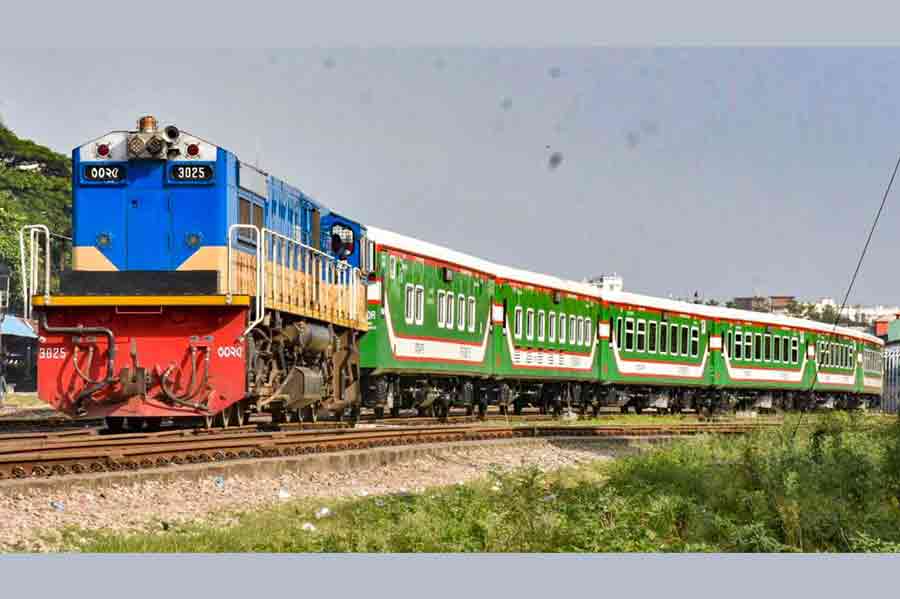
The locomotive shortage at Bangladesh Railway is growing more severe. With too few engines available, running trains on schedule has become difficult: somewhere a train waits for an engine before it can depart, somewhere an engine breaks down en route, and somewhere a train has to be cancelled altogether. Freight transport is being disrupted alongside passenger services, and the impact is falling on the railway's revenue as well.
An internal railway report shows that, compared with the same period last year, meter-gauge train cancellations and delays rose from July to September this year because of the engine shortage. In those three months, 1,958 meter-gauge trains were cancelled for want of engines. In the same period last year the figure was 1,537 — meaning cancellations rose by about 27 percent in a year.
It is not only cancellations: the number of trains delayed waiting for engines has also risen. From July to September last year, 261 meter-gauge trains ran late because engines were unavailable. In the same period this year the number climbed to 658 — a rise of about 152 percent in a year, while the total time lost waiting for engines grew about 2.8 times.
The internal report of the railway's Traffic Transportation branch says that in July–September 2026, daily availability of meter-gauge and broad-gauge engines in the eastern and western zones fell compared with the same period the previous year. The shortage is making it hard to run trains to schedule, and freight train journeys have to be cancelled every day.
According to railway data, in July 2025 an average of 78.64 meter-gauge engines were available daily. In the same month this year that fell to 70.58. In August, 68.61 were available against 78.64, and in September 70.25 against 77.03.
Broad-gauge availability has also declined. In July, August and September last year an average of 94 broad-gauge engines were available daily; in the same months this year the figures were 89, 90 and 89 respectively.
The impact of the engine shortage is most visible in Dhaka division. From July to September this year, 1,194 meter-gauge trains were cancelled in this division for want of engines. In the same period last year, 1,154 were cancelled — 40 more cancellations, a rise of about 3.5 percent.
Cancellations have also risen in Chattogram division. From July to September last year, 343 meter-gauge trains were cancelled there; in the same period this year the figure was 466.
By month, 640 meter-gauge trains were cancelled nationwide in July this year, 674 in August and 644 in September. In the same months last year the cancellations were 470, 467 and 600 respectively.
Alongside cancellations, delays while waiting for engines rose month by month: 266 meter-gauge trains were delayed for engines in July this year, 230 in August and 162 in September. In the same months last year the numbers were 65, 125 and 71.
By the railway's count, the total delay in obtaining engines for meter-gauge trains in July–September this year was 719.41 hours. In the same period last year it was 244.95 hours — meaning the total time trains spent waiting for engines rose by about 194 percent in three months.
Engines breaking down while running have also increased. According to railway statistics, from July to September last year, 92 engines — meter-gauge and broad-gauge combined — broke down across the Dhaka, Chattogram, Pakshi and Lalmonirhat divisions. In the same period this year the number rose to 140, an increase of about 52 percent in a year.
Railway officials say falling engine availability and more in-service breakdowns together are putting extra pressure on operations. When some of the scheduled engines break down, dependence on the working engines grows, making it even harder to hold the timetable. Freight is also one of the railway's important sources of income, and those involved believe that if the shortage and cancellations make it hard to maintain the freight schedule, the scope to grow that revenue also narrows.
Asked whether there is any plan to tackle the crisis, Bangladesh Railway's Additional Director General (Rolling Stock) Fakir Md Mohiuddin said the previous authorities were entirely responsible for the locomotive shortage. Because timely steps were not taken to buy necessary spare parts, engines had to be kept running with patched-up old parts — and because parts were not replaced on schedule, repaired engines do not stay in service for long.
On efforts to overcome the crisis, he said: "We are now collecting the necessary spare parts and trying to return engines awaiting repair to service. When I took charge, 67 to 69 locomotives were operational; now that has risen to 78. There is a target to make 10 more locomotives operational by December. To overcome the crisis, an initiative has been taken to buy 60 new engines under two projects. But alongside the engine crisis, there are problems in the engineering, signalling and transport departments too. All the blame is put on locomotives."
Transport expert and BUET professor Md Hadiuzzaman said: "Although there has been huge investment in railway infrastructure over the past decade, the need for locomotives, coaches and wagons was not considered in an integrated way. This is a planning failure. Besides, because of irregularities and mismanagement in locomotive procurement, the full capacity of purchased engines could not be used either. This crisis is long-standing, so a quick solution is not possible."
Overall, the railway's hopes now rest on repairing engines with newly collected spare parts and on buying 60 new engines under two projects. Whether the target of 10 more working locomotives by December is met — and how quickly the purchase process advances — will decide when passengers' suffering eases.


