Politicians' heated rhetoric is fuelling threats against MPs, Australia's federal police chief warns
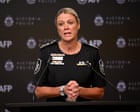
Australia's top federal law enforcement official has drawn a direct link between politicians' rhetoric and threats and abuse directed at leaders. Federal Police Commissioner Krissy Barrett said that when political discourse heats up, the reaction is seen in threats, sometimes very immediately.
The safety of elected representatives at all levels has been thrown into the spotlight after independent MP Helen Haines was allegedly deliberately attacked outside her Wangaratta electoral office. Haines remains in a serious but stable condition at the Alfred hospital in Melbourne, according to the report.
Barrett told the ABC's Insiders programme there was no doubt the threat environment had changed for politicians. ‘When I start work every morning, one of the first things I do is read a report that summarises all of the threats that have been reported to the AFP over the last 24 hours. Now, some days that report is pages and pages long.’
The commissioner said she was not interested in policing free speech or intervening in political discourse. But, she added, ‘I would challenge any Australian to read some of these threats and some of the abuse that is reported to us from federal parliamentarians and for anyone to argue that that is free speech or political discourse.’
The move from sending physical hate mail to online threats has also played a significant role in increasing the volume of worrying material. At the same time, it has highlighted the influence of inflammatory political imagery and language.
Barrett said: ‘We do see where there is particular political conflict or discourse occurring, it does have a direct correlation to what we see in terms of threats and abuse, and sometimes it's very immediate.’ In other words, the gap between speech and threats is also shrinking.
In the days since the alleged attack on Haines, past One Nation cartoons depicting political figures, including Prime Minister Anthony Albanese, being hit by cars or buses have resurfaced. The commissioner said there was ‘a reaction amongst the community’ to material such as the cartoons.
The AFP, which is responsible for protecting federal politicians and office-holders, has held a number of emergency safety briefings with parliamentarians since Monday. Those briefings make clear how suddenly concern over safety has grown.
Male and female MPs were targeted equally with threats and abuse, Barrett said, but women were more often singled out individually, often with threats of sexual violence. She highlighted that difference in particular.
Her hope is that this causes people to pause and think. ‘My hope is that this really causes people to pause and have a think about what's happening in this country and the impact of that. And if this is not the incident, then what is?’ she said.
Federal MPs from across the political spectrum have acknowledged the difficulty of balancing personal security and access to voters. Liberal frontbencher Ted O'Brien said that as a local MP he does not want to stop going to community events — open access is a cornerstone of democracy. Labor minister Catherine King said they have been saying for about five years that it is when, not if, something will happen to one of them. She no longer uses the mobile caravan she had for almost 25 years because it does not have a second exit point.