Once Roosevelt's Blue Bastion, Now Trump's Stronghold: The Transformation of California's Shasta County

Almost a century ago, Franklin Delano Roosevelt won more than 72 percent of the vote in California's Shasta County. Today the same county is known as one of the strongest bastions of Donald Trump's MAGA movement in the United States, where roughly two-thirds of voters backed Trump in 2016, 2020 and 2024.
The story begins in the Great Depression. By 1932 nearly a quarter of the US was out of work, and in California's capital people fought over temporary jobs — in early 1931, a crowd of 200 men scuffled over a handful of jobs moving heavy loads of granite, the Sacramento Bee reported.
Conditions were often worse in the remote rural communities further north, where opportunities were fewer and relief slower. Shasta County, founded in 1850 during the gold rush and built on copper mining, agriculture and timber, saw that economy collapse. Jobless men returned to the hills hoping to find gold again; one young man told a reporter in 1931 that he had dug out $18.90 the previous month — not rich, but eating, which beat being jobless and hungry.
Roosevelt promised hope and help. He travelled to 41 states during his campaign, making a point of visiting small towns and rural areas. When he stopped in Redding, the Shasta county seat, in September 1932, businesses closed and classes ended early so everyone could hear him.
Speaking to several thousand people from the back of a train, Roosevelt said he was not making the trip a political one, but to learn the conditions and needs of every section of the United States, and that the fight was not against the Republican Party but against the Republican leadership that had brought the country to its present condition.
The message resonated. Despite Republican insistence, California went Democratic, and in Shasta just over 72 percent of voters backed Roosevelt. That result is now hard to imagine: Shasta is the de facto MAGA capital of California and a centre of the US election-denial movement.
During the pandemic, the area drew national attention for its hostility to Covid restrictions. The years that followed brought more turmoil — a journalist assaulted while covering a meeting of local conservative groups, and a protester who faced jail time for holding a sign calling for an elected official's resignation during a public meeting.
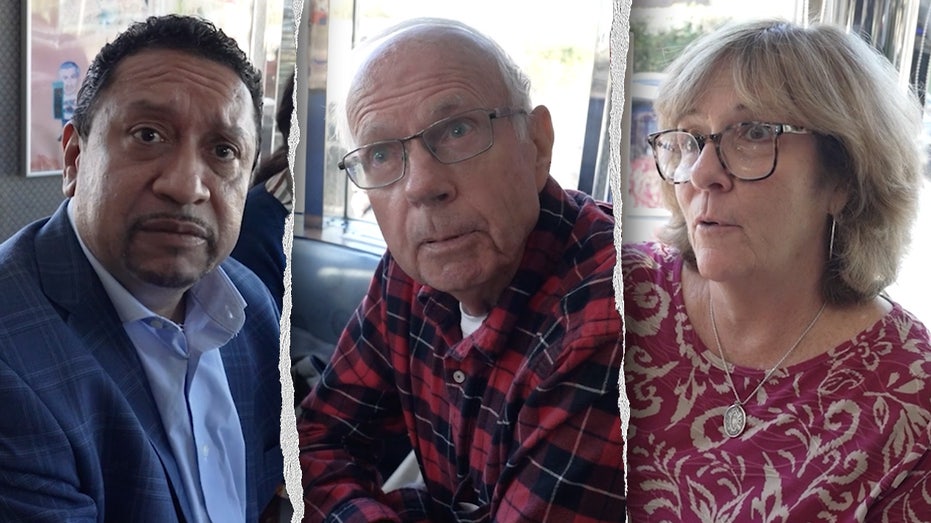
For more than a year, The Guardian has explored the political transformation that unfolded here over the 20th century. Through conversations with longtime residents, historians and political experts, the picture that emerged is of a community that veered dramatically right amid the collapse of its major industries and became a hotbed of radical conservative politics.
It is also a chapter in the story of the Democratic Party. Shasta can be seen as a case study of how Democrats have struggled to regain rural America, a crucial pillar of the base they once relied upon, even as they appear on track to win back important seats in the coming midterm elections.
The small settlement of Cottonwood is known for its rugged western beauty, a nearby fish hatchery and a right-wing militia, and stands apart for its conservatism even in a deeply Republican county. Old roadside signs promote the controversial Measure B, approved by voters in June, which would end nearly all voting by mail while requiring voter ID and a hand count; a judge has blocked it from taking effect as litigation with the state continues.
A few miles away, Pat Carr, 82, has assembled a kind of museum of a mostly forgotten history in a home office near the Sacramento River — old photos of local figures with Democratic presidents, letters from White House officials and even a Supreme Court justice, painting a portrait of a deep blue region built by Democratic policies.
Carr says that when he tries to explain that to people now, they respond that it could not have been like that, and that those who remember the heyday are almost all dead. In the 20th century, Shasta residents chaired California's Democratic Party and helped bring major infrastructure projects to the region.
The question now is whether Democrats can ever win back the rural, working-class voters they once relied upon. Shasta's story shows how industrial collapse and decades of economic change can reshape a community's politics — and how difficult that transformation is to reverse.