US Progressives Cheer Lula's Fourth-Term Win in Brazil as Voting-Hours Extension Fuels Dispute
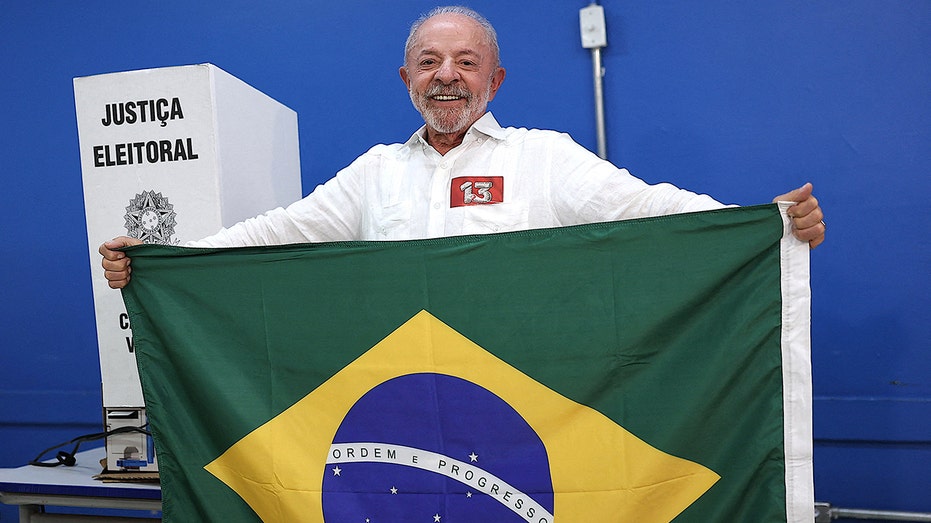
Brazilian President Luiz Inácio Lula da Silva's victory securing a fourth term sparked a social media firestorm on Monday morning, as progressives in the United States celebrated his win from afar.
"Yesterday, Brazil showed the world that the will of the people is stronger than the authoritarians who try to suppress it," Representative Alexandria Ocasio-Cortez wrote on X, congratulating President Lula and Brazil.
Progressives have framed Lula's victory as a transnational repudiation of what they regard as the core politics of the Trump administration and its allies. But questions about the election remain after a Supreme Court justice granted a last-minute extension of the country's polling hours.
In the waning hours of the election, Lula requested a two-hour extension of voting hours from the Supreme Court, citing delayed public transportation services. Less than half an hour before the polls were scheduled to close, Supreme Court Justice Christiano Zanin granted the extension nationwide, prompting an outcry from Lula's opponent, Flávio Bolsonaro.
In a statement, Bolsonaro said what happened was not normal and was frankly unacceptable, alleging that, for the first time in history, a Supreme Court justice — a former lawyer of Lula's — issued an order at the request of a former partner and changed the rules of the game in the middle of the game.
Notably, Bolsonaro's campaign also asked for an extension, citing heavy rain.
Election experts in the country told local media that the inclement weather and the polling extension could provide grounds for a legal challenge to the election. Guilherme Gonçalves, an attorney and member of the Brazilian Academy of Electoral and Political Law, told Brazilian outlet GZH there is a possibility of requesting the annulment of the election, saying the deluge that fell in Santa Catarina and Paraná caused harm and that the lack of buses and restricted public transportation in strategic cities such as Salvador and São Paulo harmed the right to vote.
Another expert, attorney Guilherme Barcelos, who holds a doctorate in constitutional law and specialises in electoral law, cast doubt on whether a legal challenge would ultimately succeed but said uncertainty over the election would continue. He said it is difficult for it to succeed, but that the Supreme Court contributed to the instability of the electoral process, which is serious, and that the election does not end today.
Several Republican figures in the United States blasted the outcome. Martin De Luca, an attorney representing some of President Donald Trump's media groups, accused Lula of benefiting from his political connections to the Supreme Court, and Donald Trump Jr. echoed that criticism in a reply to his post. Joey Mannarino, co-founder of the Overton Institute, wrote that Brazil did not have an election and claimed the country had been stolen from its people.
During his campaign, Bolsonaro built momentum on promises to increase public safety by expanding prison capacity and to drastically cut the size of government through a 25 percent reduction in government ministries. By contrast, Lula campaigned for anti-poverty programs, minimum-wage increases and expanded assistance for low-income families.
That platform drew praise from the Democratic Socialists of America (DSA), which in a press release congratulated President Lula, Vice-President Geraldo Alckmin and the coalition of progressive and leftist parties on their victory and re-election. Senator Bernie Sanders wrote on X that Lula has stood up for Brazilian workers and democracy and will continue to do so in the next four years. Representative Ro Khanna wrote that people all across the world are fighting back against extremism and that, with Lula in Brazil, they just won.