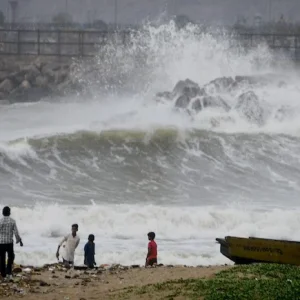
El Nino is strengthening: temperatures may stay above normal this winter, meteorologists say
El Nino is strengthening in the Pacific Ocean. According to a forecast by the World Meteorological Organization (WMO), it could reach a strong state by the end of 2026 and may remain active until February 2027.
El Nino is a natural climate process in which sea-surface temperatures in the central and eastern Pacific rise above normal. It can change atmospheric circulation and normal weather patterns; temperatures may rise in some places and rainfall patterns may change in others. Its impact, however, is not the same in every country or region.
Meteorologist Abul Kalam Mallik says El Nino is forecast to remain active until February next year. Its influence may increase the intensity of temperature and the feeling of heat, but the impact will not be the same in every city or country.
He says that, under El Nino's influence, temperatures may stay higher at various times of year outside summer and the monsoon as well. Alongside a shorter winter season, a tendency towards heavier rainfall in a short time may also appear. Which of these effects will be seen in which country, or whether several effects will occur together in one country, cannot be said with certainty.
Climate expert Ainun Nishat believes that, although global warming is scientifically proven, exactly how much hotter Bangladesh will become because of El Nino cannot be specified. He says global warmth is rising because of climate change and a long-term tendency for temperatures to rise has formed because of carbon emissions; in this situation, keeping the rate of temperature increase limited is the big challenge.
Ainun Nishat also says temperatures may be higher because El Nino is active, but exactly how hot Bangladesh will get because of it cannot be specified. There are also fears that temperatures may rise further in future because of global warming. In his words, 'When El Nino comes heat rises, when La Nina comes heat falls — everyone knows that now.'
Meteorologist Md Bazlur Rashid says a strong El Nino state has been forming since June, whose influence may fall across the whole Indian region. It may bring irregular rain in summer and above-normal temperatures. In winter, too, temperatures may stay above normal. Forecasts for October and for the October-to-December period also indicate above-normal temperatures, while rainfall may be lower in the same period.
Asked how this winter will be, meteorologist Md Tariful Newaz Kabir says temperatures in several northern districts may fall to 17 degrees Celsius in early November. By late November, a cold-wave situation may develop in parts of the north. The feeling of winter in Dhaka may increase from December, when the capital's temperature may fall to 15 degrees Celsius.
He says that over the coming months wind may blow from the north and north-west. If that airflow increases, the feeling of winter may also increase. These are, however, only possible forecasts, not certain temperatures; the actual temperature will depend on wind direction and speed, sky conditions and other weather circumstances.
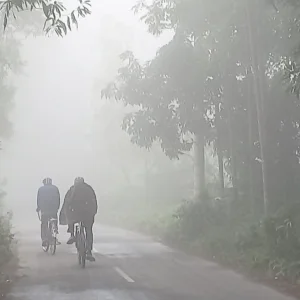
Meanwhile, temperatures have begun to fall in Panchagarh, at the foothills of the Himalayas. On Monday (26 October) at 9am, the lowest temperature recorded in Tetulia was 16.1 degrees Celsius; at the same time the previous day it was 17 degrees. Jitendranath Roy, officer-in-charge of the Tetulia Weather Observatory, said the tendency towards fog at night and dawn is increasing; as daytime temperatures stay comparatively high, it feels hot in the day and cold at night and dawn.