Fifty air defence positions now ring Putin's Valdai residence, with 15 new towers installed
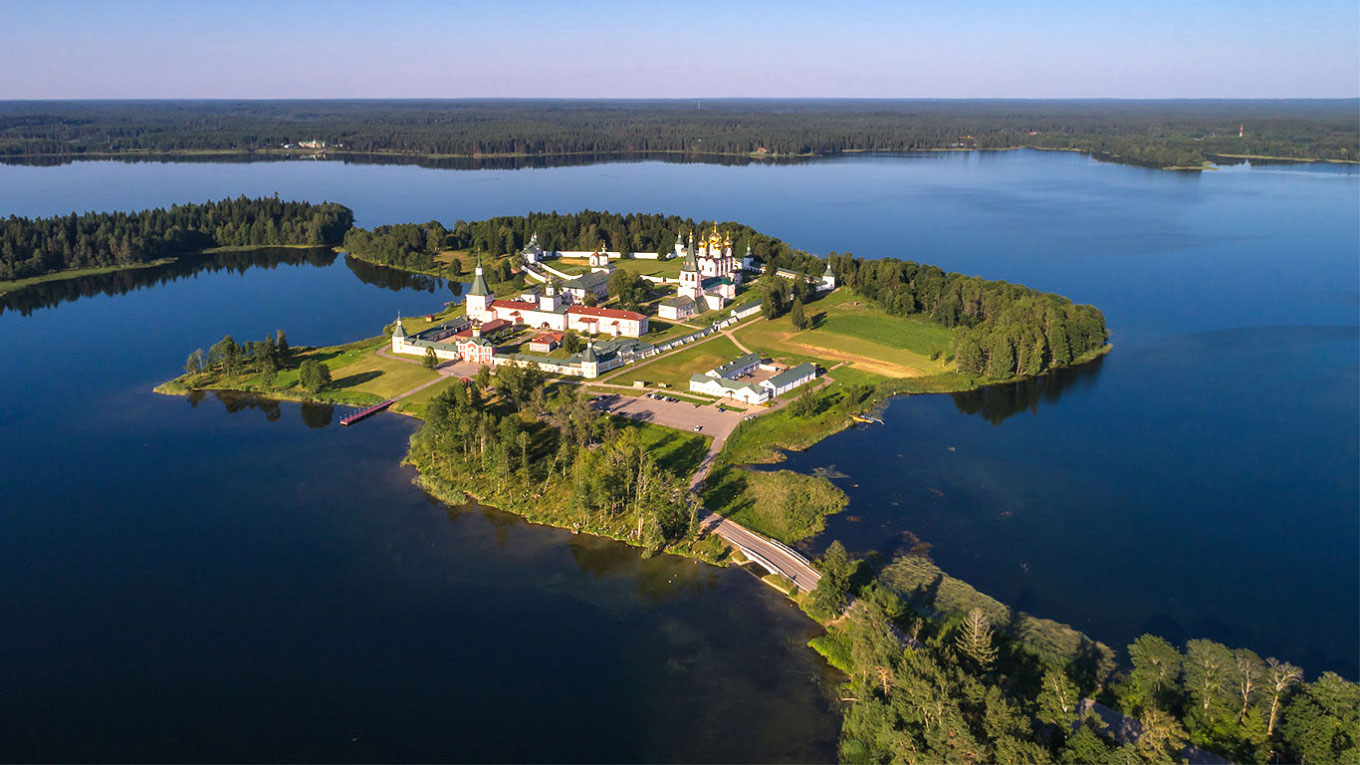
Security has been further tightened around Russian President Vladimir Putin's luxurious residence at Valdai amid fears of Ukrainian long-range drone attacks. At least 15 new air defence towers have been installed around the residence in Valdai, in Russia's northwest. With them, the number of air defence positions around the residence on the shore of Lake Valdai has risen to 50.
According to a British media report, analysis of satellite imagery shows the new defence positions have been placed within 30 miles, or about 48 kilometres, of Putin's residence. The positions are believed to hold Russia's Pantsir and Tor surface-to-air missile systems. Each system can cost up to 16 million pounds. These systems are considered among Russia's most effective defences against aerial threats, including low-flying drones.
The new defence ring includes the Khotilovo military airbase. The airbase, used for Putin's travel, is connected to his Valdai residence by a special railway line.
The defence ring also covers Lisy Island, where a research laboratory complex is located. According to the report, the complex is linked to Moscow's biological weapons research programme.
As security concerns have grown, Putin has gradually reduced his visits to his other residences. But according to the report, he has continued to visit this secluded Valdai residence in recent years. His long-time partner, former gymnast Alina Kabaeva, and their two sons live there, the report says.
Set on a densely forested peninsula between two lakes, the fortified residential complex includes a multi-storey palace, a 13,000-square-foot wooden dacha or holiday house, and several other luxurious buildings. The naturally isolated location creates an additional protective ring against drone attacks. Even so, 50 air defence positions have been deployed around the residence.
Putin's Valdai residence is believed to have an underground bunker. It is also said to hold an exact replica of his Kremlin office, intended to create confusion about Putin's real location.
A strict security perimeter also surrounds the residence. Within this boundary, flying drones, anchoring watercraft, repairing vehicles, dumping waste and operating shooting ranges are prohibited.
Last December, the Kremlin alleged that Ukraine had tried to attack the Valdai residence using more than 90 drones. Both Kyiv and the US Central Intelligence Agency, the CIA, rejected Russia's claim. After that incident, further measures were taken to strengthen the residence's security.
In June this year, satellite imagery of the area around Putin's Valdai residence was blurred on Yandex Maps, Russia's equivalent of Google Maps. Although imagery was obscured across about 1.3 square miles, satellite images of Putin's other residences in Sochi and Gelendzhik were still visible at the time.
At the same time, anti-drone nets were seen being installed over truck parking areas beside the M-10 highway, about six miles from the residence. Analysts believe the step may be part of countering the tactic used in Ukraine's 'Operation Spiderweb', in which drones hidden inside trucks were used to attack Russian military airbases.