Israeli exit polls put opposition bloc ahead of Netanyahu, with Likud largest party but no bloc near a majority
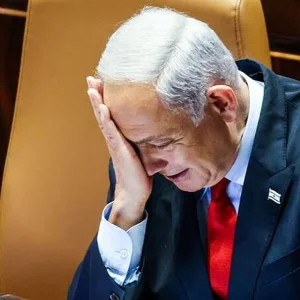
Exit polls from Israel's parliamentary election suggest the opposition bloc to Prime Minister Benjamin Netanyahu is ahead, while Netanyahu's Likud is set to be the largest single party. No side is projected to secure the majority needed to form a government on its own.
The picture emerged in exit polls published by television channels after voting ended on Tuesday, October 27. Israel's 120-seat parliament, the Knesset, requires at least 61 seats to form a government, but on the initial counts neither Netanyahu's supporting bloc nor the opposition is in a position to reach that number.
Exit polls by the three main television channels put Netanyahu's Likud at 24 to 25 seats. His main rival Gadi Eisenkot's centrist Yashar party is projected at between 21 and 23 seats.
Although Likud leads as a single party, the opposition leads in bloc terms. Different polls put the anti-Netanyahu bloc at 52 to 53 seats, while Netanyahu's bloc of right-wing and religious parties is projected at around 50 seats.
An updated Channel 13 poll put the opposition bloc down to 52 seats. In the same poll, Arab parties rose to 18 seats, while Netanyahu's supporting bloc remained unchanged at 50 seats.
The projected seats for Arab-led parties carry special importance. According to the exit polls, the parties together could win 17 to 18 seats, which was noted as a possible record number for Arab parties in Israel's parliament.
Support from those parties, known as opponents of Netanyahu, could change the government-formation calculation. However, several Jewish-led parties in the opposition camp have objected to forming a coalition government with Arab parties, so forming a government could remain difficult for the opposition even while ahead in seats.
Netanyahu's bloc also lacks enough seats for a majority. Bargaining and compromise between political parties will therefore be important in forming a government after the election.
After the exit polls suggested the opposition ahead, Yashar party leader Gadi Eisenkot expressed hope for a change from the Netanyahu government.
In a message on social media platform X, he said if the result is final it would reflect no confidence in Netanyahu and in the government in power at the time of the October 7 attack. He also said he would move to implement the people's will, replace the Netanyahu government and form a government committed to a policy of mandatory military recruitment for all, quickly.
Exit polls also projected former prime minister Naftali Bennett's BeYahad party at 12 to 14 seats.
Vote counting has begun in the Israeli election. Exit poll figures can differ from the final result, so the actual seat numbers and which side gets the chance to form a government will require waiting for the official results.
After all votes are counted, President Isaac Herzog will hold discussions with representatives of the different parties. He may then give the task of forming a coalition to the leader he considers to have the best chance of forming a government.
If no side can secure the required majority, a political deadlock could follow. In that case, the possibility of holding another election in Israel cannot be ruled out.