
Israel Election: Netanyahu's Bloc Leads but No Coalition Secures a Majority
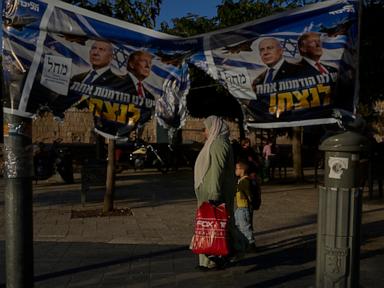
The final vote count from Israel's parliamentary election is complete. In Tuesday's election, Prime Minister Benjamin Netanyahu's bloc maintained its lead, but no coalition secured the majority needed to form a government. According to official Central Elections Committee figures released on Thursday after all votes had been counted, Netanyahu's bloc secured 53 seats in the next Knesset.
The Knesset has 120 seats, and a coalition needs the support of at least 61 to form a government. Netanyahu's bloc falls eight seats short of that number. The opposition bloc seeking to replace the premier won 48 seats. That bloc is led by Gadi Eisenkot. So although the voting is over, who will form Israel's next government remains uncertain.
Despite some claims of electoral interference, the Election Committee says the Knesset elections were conducted lawfully, adding there is no basis for claims of systematic interference with the integrity of the vote. Dean Livne, the acting director general of the committee, said on Wednesday that there was "no basis for allegations of election theft," as reported by Israel's Kan radio station.
Opposition leaders also condemned the prime minister's remarks, maintaining that the elections in Israel were free and fair and there was no evidence of election fraud. The Israeli police said they will investigate any credible allegations of wrongdoing.
After this result, the arithmetic of government formation now leans toward the Arab-Israeli parties. The two coalitions led by Netanyahu and Eisenkot may both need the backing of the Arab-Israeli parties to have any chance of a majority in the Knesset. Yet both Netanyahu and Eisenkot have previously ruled out forming a coalition with the Arab parties. In his post-election speech, Netanyahu suggested that any government that included Arab parties would "endanger Israel."
Arab party leaders, however, have indicated willingness to work with the anti-Netanyahu opposition. The Arab-led Joint List — a collection of three parties which between them were on course to win 12 seats as of Wednesday — said in a statement that they were ready for "political cooperation to oust the Netanyahu government." The statement said: "The Joint List will work with all its strength to bring an end to Netanyahu's rule. We are ready for political cooperation to establish an alternative government, which will present a true alternative and commit itself to a true change of the current government's racist policy."
Mansour Abbas, the leader of the United Arab List — also known as Ra'am — which was projected to win seven seats, said he had been in touch with representatives of both the Netanyahu and Eisenkot coalitions. His party's position could therefore become important in the government-formation talks.
The path to building a majority for the Netanyahu bloc is slim because it cannot form a coalition with the Arab Israeli parties due to the likely possibility it would lose the settler parties. Eisenkot's opposition party, however, does have a path to a majority with the backing of the Arab Israeli parties.
Eisenkot, meanwhile, said on Wednesday night that he had undertaken "a long day of meetings, conversations, and preparations to realize the will of the voter." In a post to X he wrote: "We are focused on the heavy task entrusted to us — bringing change to Israel."
With all votes counted, the coalition negotiations will now determine who becomes Israel's next prime minister. Neither of the two main blocs reached the 61-seat mark on its own, so the position of the smaller parties now carries the greatest weight.


