Anti-corruption chiefs from 46 Islamic states meet in Baku, call for global asset-recovery coalition
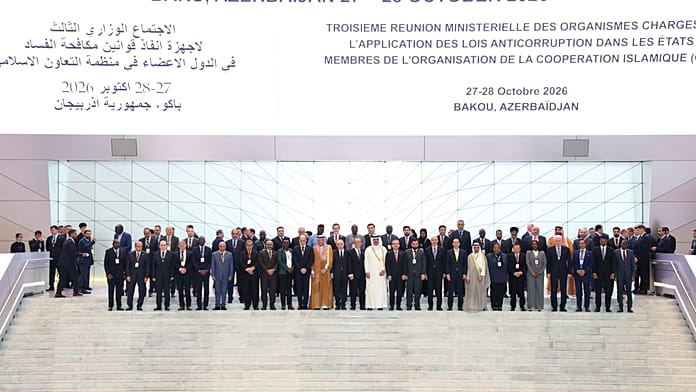
Law enforcement heads from Islamic states have gathered in Baku, Azerbaijan, for the Third High-Level Meeting of the Heads of Anti-Corruption Law Enforcement Agencies of Member States of the Organisation of Islamic Cooperation (OIC). Cross-border financial crime, artificial intelligence and international asset recovery framed the agenda of the summit.
At the core of the summit was the implementation of the Makkah al-Mukarramah Convention. According to the OIC, the landmark treaty is the first multilateral anti-corruption law enforcement agreement tailored specifically for Islamic Cooperation member states, establishing a unified legal foundation to track illicit financial flows across borders.
Tugay Rahimli, Special Assistant to the Prosecutor General of Azerbaijan, said the event brought together more than 250 participants from 46 member and service states as well as eight international organisations. He said the main objective was to facilitate international cooperation among member states, exchange information and best practices, and enhance joint efforts to recover assets obtained through crime.
Rahimli also pointed to a key outcome of the meeting: the election of Azerbaijan to chair the bureau for the next two years. Kamran Aliyev, Prosecutor General of Azerbaijan, said the Makkah al-Mukarramah Convention was first adopted in 2022 in the city of Makkah in Saudi Arabia and is a new platform for fighting corruption at a regional level.
The agreement operates under a framework incorporating 57 nations, with the intention of bypassing lengthy diplomatic channels and allowing law enforcement agencies to share intelligence quickly, conduct joint investigations, and trace, freeze and return stolen state funds to their countries of origin. Aliyev said Azerbaijan has joined international and regional conventions against corruption and has implemented all provisions of the conventions into its legislation.
Malaysia's experience featured prominently at the summit. Abd Halim Bin Aman, Chief Commissioner of the Malaysian Anti-Corruption Commission, detailed his agency's multi-year effort to trace and repatriate stolen funds following the 1Malaysia Development Berhad (1MDB) case. He revealed that the agency has brought back about 33 billion Malaysian ringgit worth of losses, around 75% to 80% of the funds held outside the country.
Originally established in 2009 as a state-owned strategic development fund, 1MDB became embroiled in one of the world's largest financial scandals. According to the US Justice Department, more than $4.5 billion belonging to 1MDB was misappropriated through a criminal scheme between 2009 and 2015 and laundered through major financial institutions worldwide, including in the United States, Switzerland, Singapore and Luxembourg. The Justice Department said it repatriated an additional $156 million in misappropriated 1MDB funds to the people of Malaysia, bringing the total returned to approximately $1.4 billion.
Bin Aman also shared his views on what typically slows down such international matters. "Bureaucracy is always being an obstacle to any investigation," he said. He said the summit provides a necessary platform to share legislation and best practices to speed up investigations irrespective of legal backgrounds.
Ivica Bošnjak, Deputy Minister of Security for Bosnia and Herzegovina, outlined the structural and geographical pressures facing his country. He said Bosnia and Herzegovina is complicated and complex in its political structure, and therefore the organisation of the entire security system is complex, with national authorities coordinating 16 police agencies and a whole series of other law enforcement agencies. While the state has adopted extensive legal regulations and action plans, he said much still needs to be done to refine several crucial laws and operational strategies to tackle cross-border financial crime effectively.
Imed Hazgui, President of the High Authority for Administrative and Financial Control in Tunisia, said the meeting brings together about fifty Islamic states interested in developing cooperation in the fight against corruption. He warned that terrorist groups and organised crime groups are increasingly using developed technologies to commit their crimes, hide the necessary means and escape sanctions. He urged member states to integrate advanced digital tools and artificial intelligence into their law enforcement strategies to keep pace with these threats.