
Communist Party meeting in Beijing expels 33 senior members, promotes General Zhang Shengmin
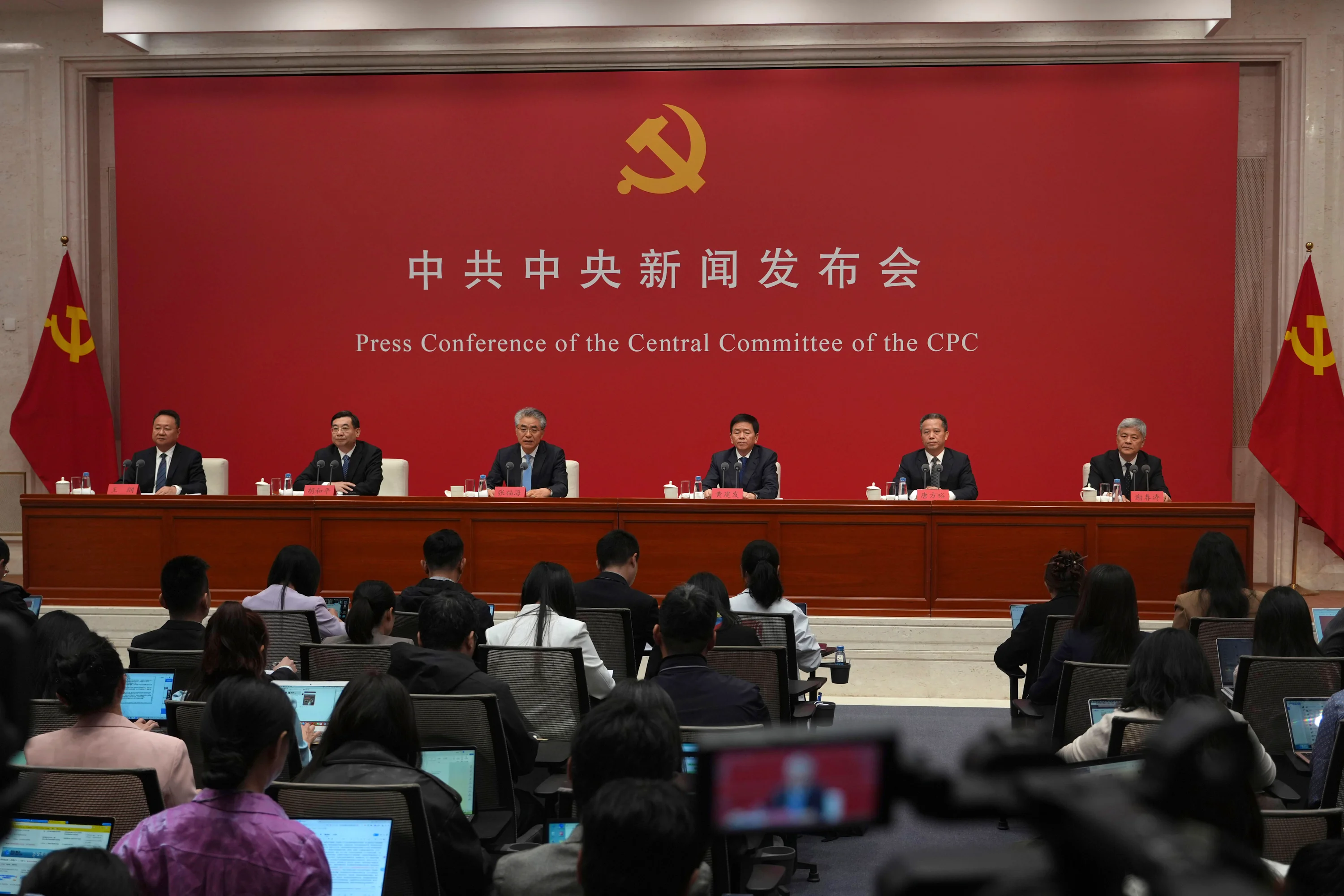
China's ruling Communist Party has concluded its most important meeting of the year, confirming the expulsion of 33 senior party members, as leader Xi Jinping's anti-corruption campaign continues to widen.
The political meeting, known as the fifth plenum, began on Monday and wrapped up on Thursday. Its focus was on anti-corruption and party discipline.
Of the 376 full and alternate central committee members originally named in 2022, only 279 attended—more than a quarter absent. Many of them are believed to be under investigation.
Among the 33 expelled members are Zhang Youxia, formerly China's most senior military general, and Liu Jianchao, a senior Chinese diplomat previously tipped to be the next foreign minister.
According to Neil Thomas, senior fellow on Chinese politics at the Asia Society Policy Institute, China's military leadership ranks have almost completely been purged in the last three or four years.
However, one man not only survived the purges but has been elevated—General Zhang Shengmin. A key player in Xi's anti-corruption campaign, he was promoted at the meeting to the Politburo, which consists of more than 20 of the party's top officials. His promotion, according to Thomas, reinforces the importance of anti-corruption work in the military.
Joseph Torigian, a professor of Chinese studies at American University in Washington, D.C., says the meeting also sends another signal amid wide speculation that Xi will seek a fourth term in office next year. He says it is Xi setting up for the next party congress by ensuring that everybody is on the same page as him.
Thomas says Americans should also pay attention, because it affects the US calculus on how willing China would be to use force over Taiwan, the South China Sea and disputes with the US. In his reading, the focus of the fifth plenum suggests Xi is unlikely to take that risk until he feels more comfortable with the party he leads.
Xi's anti-corruption campaign started when he came into power in late 2012. Zhang Fuhai, Deputy Secretary of the Central Commission for Discipline Inspection, told reporters on Friday that since then 7.9 million individuals have been punished, including over 960 senior officials.
Zhang Fuhai said the fight against corruption remains serious and complicated, and that eradicating the breeding ground for corruption remains a formidable task.
Xi has also complained about excessive formalities and bureaucracy, which, according to Torigian, is party language for going through the motions—having lots of meetings but never actually achieving anything. At the same time, there will be more regular reporting from discipline inspectors to central authorities to add scrutiny on local officials.
But Thomas warns that, to avoid attracting the attention of the discipline system, local officials may play things really safe, leading to more inertia and less experimentation, which may end up having the opposite effect to what Xi intended.
Few political watchers believe Xi will pick a successor at the next party congress, according to Torigian, and nobody knows exactly what he will do when he is ready to step down.
Full decisions from the meeting, and perhaps deliverables, are expected to be published in the coming days.


