Three Extra Years for LDC Graduation: Delivering on Promises Is the Big Test, Says CPD
Bangladesh has received three extra years to graduate from the list of least developed countries (LDCs). The extra time creates an opportunity to carry out the economic reforms the country needs and to raise its competitiveness, but the benefits will not come from plans and promises alone, according to the private research organization Centre for Policy Dialogue (CPD). In its view, delivering on promises will be Bangladesh's big test over the next three years.
The United Nations General Assembly decided on 29 October to extend the preparatory period for Bangladesh's LDC graduation by a further three years. As a result, Bangladesh will graduate on 24 November 2029 instead of the previously scheduled 24 November 2026.
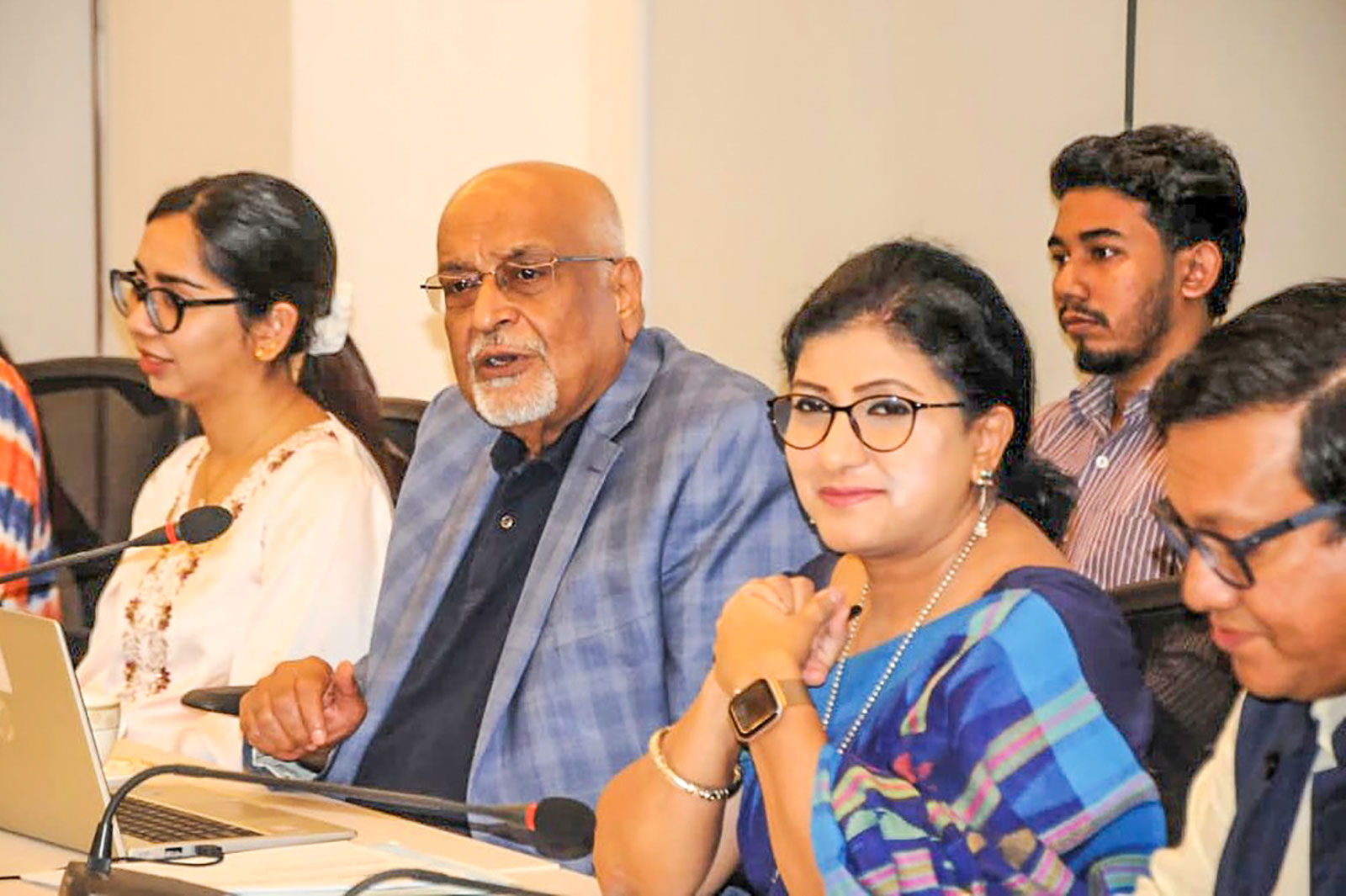
CPD gave this reaction on Sunday at a press conference and media dialogue titled "Bangladesh's LDC Graduation: The UN Decision and Our Observations," held at the organization's office in Dhanmondi in the capital. The dialogue said reform implementation will require political leadership at the government's highest level and coordination among ministries, along with regular tracking of progress and accountability for each task.
Speaking as the keynote discussant, CPD distinguished fellow Dr Debapriya Bhattacharya said the UN decision to extend the time was exceptional for Bangladesh, so the country will have to show exceptional success over the next three years to use the opportunity. At the same time, it will have to complete graduation preparations, maintain macroeconomic stability and meet the challenge of restoring investment and growth.
Dr Debapriya said the extra time for LDC graduation is directly linked to implementing the government's promises. The prime minister himself wrote to the UN secretary-general asking for more time. As a result, responsibility for implementing the set steps over the next three years now also rests with the government's political leadership; it is no longer only the work of the bureaucracy or a few ministries.
In his view, Bangladesh must try to achieve three goals together over the next three years. First, complete the necessary preparations for LDC graduation. Second, restore macroeconomic stability by controlling inflation, keeping the exchange rate stable, lowering interest rates, raising revenue and reforming the banking sector. Third, raise private investment, employment and economic growth. These goals cannot be viewed separately; if they are not implemented in a coordinated way, progress on one can be held back by another.
Dr Debapriya identified public financial management, energy, social protection and the supply system as the four most important reform sectors for graduation preparation. Effective reform in these areas, he said, would lower production costs, raise productivity and create room for new sectors to grow by reducing export dependence on ready-made garments. He said that if reforms are not completed, the country's credibility will be questioned, while effective implementation would make the path out of the LDC category smooth and sustainable.
Dr Debapriya also stressed building political consensus for reform implementation. He proposed that the transition reform programme be discussed in parliament, kept on the cabinet's regular agenda, and that each ministry's responsibility be specified with accountability ensured. For this, he advised building an integrated management structure under the prime minister's direct supervision alongside technical-level working groups, arguing that graduation preparation is not only a matter for the finance and commerce ministries but is linked to energy, technology, roads, shipping and other ministries and divisions.
Dr Debapriya also proposed creating a dashboard to regularly publish progress on implementing the government's promises. He said the public should be told which ministry or agency is responsible for each promise, within what time it is to be implemented and how much progress has been made. He also said an initiative has been taken to form an all-party caucus of members of parliament; according to him, the Speaker's office has issued a notice on forming the caucus with 10 MPs.
Dr Debapriya urged a realistic plan for gradually exiting the trade and financial benefits Bangladesh has received as an LDC. He said it must be made clear from the next budget in which sectors those benefits will be reduced and in which sectors support will newly be increased. At the same time, he said, there must be coordination among the government's action plan, the five-year plan, the three-year budgetary framework, the annual development programme and various sector-based plans; without it, implementation and accountability will be hard to ensure. He said the government, parliament, the private sector, development partners, experts and the media should all be involved in this work.
Drawing on past experience, Dr Debapriya said Bangladesh has shown more skill in making promises than in implementing them. That history must not repeat itself this time.
Another CPD distinguished fellow, Professor Mustafizur Rahman, advised using the extra time for LDC graduation as an opportunity for structural change in the economy. As new promising sectors, he mentioned labour-intensive industry, semiconductor assembly, the service sector and an economy centred on the elderly population. In his view, rather than trying to hold on to existing trade benefits, Bangladesh should prepare for the post-graduation economy, where carbon taxes, labour rights, gender equality and environmental standards are becoming increasingly important. As economic partnership and free trade talks advance with the European Union and other countries, new conditions will also come — and preparation to meet them must begin now.
CPD executive director Dr Nazneen Ahmed said maintaining macroeconomic stability, the pace of investment and the continuity of development activities is essential in graduation preparation; the three are interlinked and cannot be viewed separately. She said the goal of graduation cannot be limited to gaining international recognition — a competitive economy must be built in which new investment and jobs are created and ordinary people also benefit from development. For this, she said, it is more important to implement the government's ongoing reforms on time and effectively than to take up new programmes; only then can graduation preparation move forward. CPD additional director Dr Towfiqul Islam Khan was also present at the press conference and media dialogue.