
Tk 8,300 Crore SPM Project Moves Towards Launch as BPC Signs Five-Year Deal With Indonesia's Pertamina
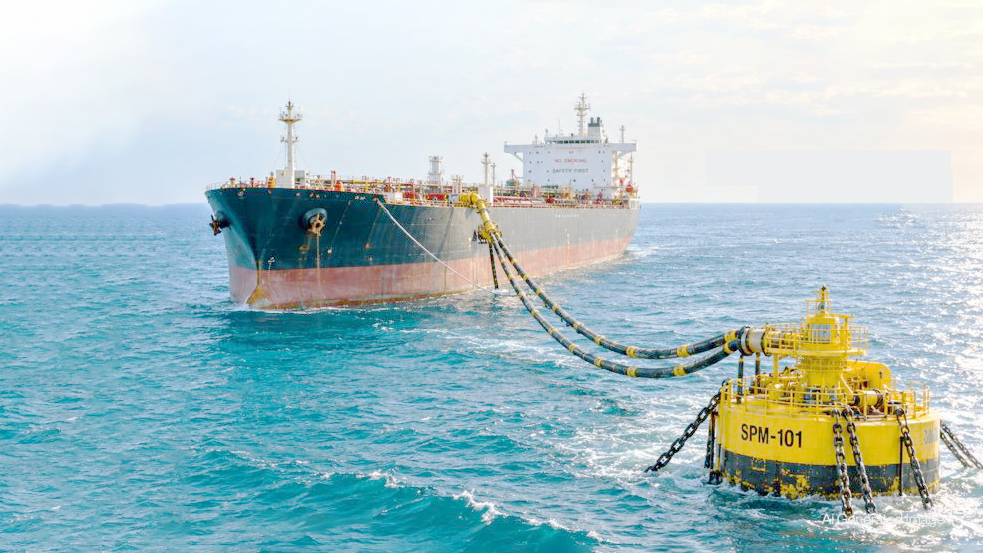
The Tk 8,300 crore Single Point Mooring (SPM) project, whose construction was completed nearly two years ago, has not yet been launched commercially. Finally, Bangladesh Petroleum Corporation (BPC) has signed a five-year contract with Indonesia's state-owned PT Pertamina Trans Kontinental to operate and maintain it. This has paved the way for unloading oil through pipelines from large ships in the deep sea.
BPC officials say the project's commercial operations could start in the first week of January. BPC has estimated that if launched at full capacity, it will save about Tk 700 to 800 crore a year.
The contract was signed on Thursday at BPC's liaison office in Dhaka. BPC Chairman Dr Md Rafiqul Islam was the chief guest. Indonesian Ambassador Listiawati was present. Director (Planning) Muhammad Asadul Haque signed the contract on behalf of BPC. President Director Harris Abdi Sembiring Meliala signed on behalf of PT Pertamina Trans Kontinental. Representatives of the Energy Division and BPC officials were also present.
Under the contract, the Indonesian company will operate and maintain the SPM installation for the next five years. The total value of the five-year contract is about Tk 1,946 crore. Earlier, on 23 September, the Cabinet Committee on Government Purchase approved the proposal to award the work to the company. BPC Secretary Shahina Sultana said the contract was formally signed on Thursday and the company will start field-level work soon in accordance with the contract.
Until now, oil had to be transferred from large ships to smaller ships at the outer anchorage of Chattogram port and brought to the coast. This method costs more time and money. The SPM project's goal is to unload oil directly from large oil tankers through pipelines to reduce this time and cost.
Once the project is launched, a large oil tanker (mother tanker) in the deep sea of the Bay of Bengal will connect to a floating buoy. From there, oil will go through a pipeline to tanks built at Kalarmarchhara in Maheshkhali. Crude oil will then be sent by pipeline to Eastern Refinery in Chattogram. There is also a designated pipeline for storing and distributing refined diesel.
BPC General Manager (Planning and Development) AKM Naim Ullah said it would be possible to start SPM's commercial operations in the first week of January. The project has built a floating mooring, a pumping station, a tank farm and about 220 kilometres of pipeline. There are separate pipelines for transporting crude oil and diesel.
According to BPC's estimate, the conventional method takes 10 to 12 days to unload 1 lakh tonnes of crude oil. The same amount of oil can be unloaded through SPM in just 48 hours. It will take 28 hours to unload 60 to 70 thousand tonnes of diesel. This will reduce ship waiting time; the use of lighterage ships and transport costs will also decrease. BPC hopes to save Tk 700 to 800 crore a year.
BPC implemented the project with Chinese financing. Construction was done by China Petroleum Pipeline Engineering Company Limited. The cost was initially estimated at Tk 5,000 crore but later rose to Tk 8,298 crore. Construction and trial operations were completed in March 2024. However, there was a delay in commercial preparations, including appointing an operator. As a result, the benefits of the investment were not being realised. This delay held back the project's commercial benefits for nearly two years.
PT Pertamina Trans Kontinental is a marine transport and logistics company of the Pertamina Group, Indonesia's state-owned energy company. They have experience in operating and maintaining ships, maritime transport, ports and offshore infrastructure.
However, even if SPM is launched, its full capacity cannot be utilised right away. The annual capacity of the crude oil pipeline is about 45 lakh tonnes. On the other hand, the current annual refining capacity of Eastern Refinery, the country's only state-owned refinery, is only 15 lakh tonnes. So full use of the pipeline is not possible now. When Eastern Refinery's second unit (ERL-2) is launched, crude oil refining capacity will increase by another 30 lakh tonnes. Then the opportunity to use oil brought through SPM will increase. However, implementing the second unit will take more time.


