World Bank warns of further rises in world food and fuel prices, pressure likely on Bangladesh
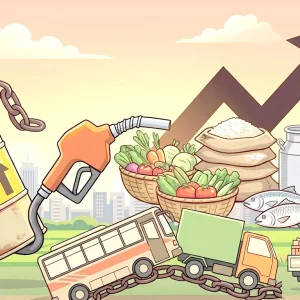
Food and fuel prices in the world market have risen significantly. The prices may rise further in the last two months of this year, and the pressure may continue throughout next year. That could increase inflationary pressure in import-dependent economies like Bangladesh.
The World Bank's Commodity Markets Outlook report, published on 28 October, said commodity prices in the world market could rise by an average of 23 percent in 2026. The main reasons cited were a 32 percent rise in fuel prices because of the Middle East conflict, disruption to grain transport and weather risks created by a strong El Niño.
The report said food prices could rise by about 10 percent in 2026, and by a further 7 percent in 2027. Over the two years together, the rise in food prices could reach about 18 percent.
The World Bank fears that if these crises appear together, inflation and food insecurity will increase further in vulnerable economies. However, the organisation gave no specific forecast of how much food inflation or domestic market prices could rise in Bangladesh. How much impact Bangladesh faces will depend on commodity prices in the international market, import costs, the exchange rate and how much of the extra cost is passed on to consumers.
Food inflation in South Asia rose to 5.8 percent in the third quarter of 2026. Between 2010 and 2019, the average food inflation rate in the region was 5.6 percent. In other words, the current rate has exceeded even the long-term average. The World Bank says forecasts of rising grain and edible oil prices could increase inflationary pressure further in the region.
In the third quarter of this year (July-September), rice prices were 24 percent higher than a year earlier. El Niño-related weather concerns in South and Southeast Asia created this pressure in the rice market. Under the World Bank forecast, rice prices could rise 10 percent in 2026 and a further 12 percent in 2027. For the first time in a decade, world rice production is feared to fall this time.
Wheat prices, meanwhile, could rise 28 percent in 2026 and a further 14 percent in 2027. Grain prices rose 9 percent in the third quarter of this year, and were 25 percent higher than a year earlier. Wheat prices rose 13 percent in the same period, and are now 40 percent higher than in the same period last year. In October, the overall food price index in the world market was 12 percent higher than a year earlier.
The World Bank has forecast that fuel prices could rise 32 percent in 2026. That would end a trend of falling prices for three consecutive years. The average price of Brent crude oil could reach 91 dollars per barrel this year. In 2025 the price was 69 dollars. However, the forecast also mentioned that it could fall to 79 dollars at some point in 2027.
World oil supply is feared to fall by 5.2 percent in 2026. Excluding the Covid pandemic period in 2020, that would be the biggest supply fall in more than four decades. With supply from the Gulf region limited because of the Middle East conflict, the price of liquefied natural gas (LNG) in Asia reached almost three times its pre-conflict level in mid-October.
Urea prices rose at the start of this year. They may rise by up to 14 percent towards the end of the year, although a 12 percent fall is forecast in 2027. When fuel and fertiliser prices rise, the cost of agricultural production and goods transport also rises. For Bangladesh, which depends on imported fuel and agricultural inputs, this change in the world market is therefore important.
Metal prices, on the other hand, could set a new record in 2026. The World Bank has forecast an overall 25 percent rise in metal prices this year. Aluminium, copper and tin prices have already reached record highs. Demand for these metals has risen with increased investment in renewable energy, electric vehicles and data centres. Overall, metal prices could fall 3 percent in 2027. Demand for precious metals as a safe investment is rising. Because of geopolitical and policy uncertainty, prices of these metals could rise 40 percent in 2026.
In its discussion of tea production, the report mentioned Bangladesh by name. It said El Niño could reduce tea production and quality in South Asia, with some regions of Bangladesh and India particularly at risk. However, there is no supply shortage in the global tea market for now. With production rising in northern India and Bangladesh, there is enough tea in the market. The report gave no specific forecast of how much tea production in Bangladesh could fall. The World Bank forecasts tea prices could rise 4 percent in 2027 and 2 percent in 2028.
Overall, the World Bank forecasts world commodity prices could fall 7 percent in 2027. But geopolitical conflict and weather shocks could overturn that forecast. If high fuel prices, attacks on grain ships in the Black Sea and an extremely strong El Niño appear together, the average Brent crude price could reach 105 dollars per barrel in 2027. In that situation, food prices could be 12 percent higher than forecast, grain prices could rise 20 percent, and food prices could exceed even the 2022 high.
The World Bank fears such a situation would push more people into extreme poverty. To support at-risk populations, preserve governments' fiscal capacity and ensure working capital for businesses and farms, the World Bank Group has kept 50 to 60 billion dollars of support ready under various existing arrangements. Of that, 25 billion dollars is set aside as advance financing.
Ayhan Kose, the World Bank's deputy chief economist and director of the Prospects Group, said: 'Commodity markets have been hit by several big shocks at once. Higher fuel costs and trade barriers are raising the prices of various commodities. This could put inflation, food insecurity and economic growth at further risk.'
He added: 'Protecting the poorest people and supporting low-income countries already under pressure from debt should now be the main priority.'