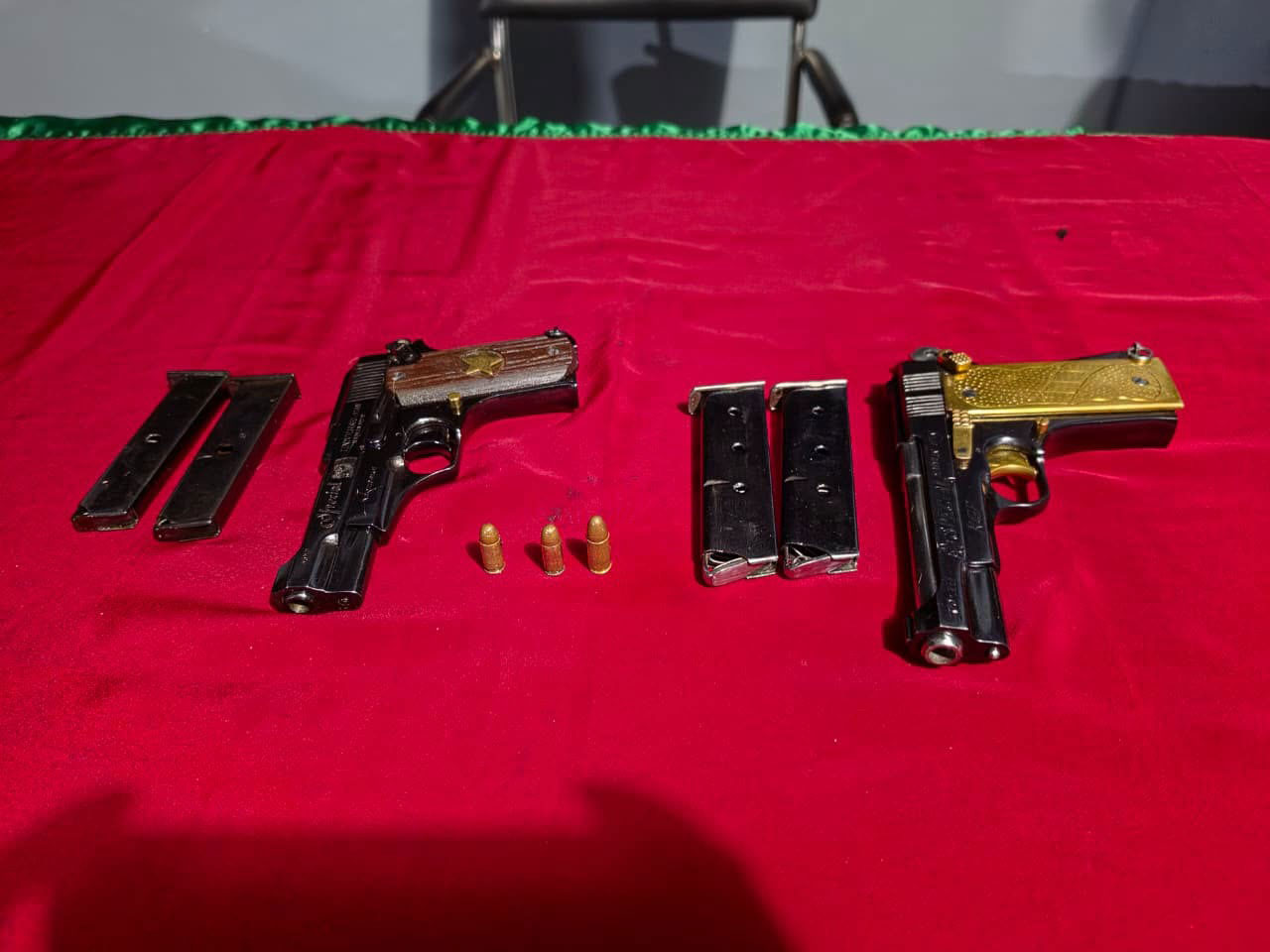
1,309 looted firearms still missing after two years, along with 257,113 rounds of ammunition

Despite various initiatives including joint drives, arms recovery and arrests of criminals to control the country's law and order situation, public safety concerns have not eased. A total of 1,309 firearms looted from various police stations and law enforcement installations during the political changeover on 5 August 2024 have still not been recovered. Also missing are 257,113 rounds of ammunition.
Meanwhile, evidence has been found that some of the looted weapons have been used in various crimes including murders and robberies. As a result, fears that these weapons remain in the hands of criminal gangs are making the security situation more complicated.
On the other hand, law enforcement agencies have recovered a large number of weapons and ammunition and arrested thousands of people in drives against illegal arms, drugs and criminal gangs. But people's sense of insecurity has not gone away amid incidents of snatching, extortion, murder, violence against women and children and organised crime. Cases of several important crimes have also increased.
According to Police Headquarters, as of 26 August 2026, 4,454 looted firearms have been recovered. A total of 394,895 rounds of ammunition have also been recovered. However, 1,309 firearms and 257,113 rounds of ammunition are still missing.
The missing weapons include 109 China rifles, 30 China SMGs, three LMGs, 203 pistols of 7.62mm, 442 pistols of 9mm, 384 shotguns of 12 bore, 128 gas guns, seven tear gas launchers and two signal pistols.
A senior official of Police Headquarters said operations by law enforcement agencies to recover the looted weapons and ammunition are continuing. Looted weapons and ammunition are being recovered in drives at various places in the country at various times. Drives are conducted by identifying suspects and the possible locations of weapons on the basis of intelligence information. Often looted weapons change hands and move from one place to another, making them difficult to recover. Even so, the forces remain active on the matter and the drive will continue until the remaining weapons and ammunition are recovered, he said.
The government has taken a coordinated initiative to recover the looted weapons. Home Minister Salahuddin Ahmad has said a special unit has been formed with several intelligence agencies. The SRB has been given the responsibility of leading the nationwide arms recovery drive. The Special Branch of police and the Anti Terrorism Unit are collecting intelligence and exchanging information among various agencies.
The government has also announced financial rewards for informants to ensure public cooperation in recovering weapons. It has been announced that up to 200,000 taka will be given for information on heavy weapons, 50,000 taka for information on pistols, revolvers and shotguns, and 10,000 to 20,000 taka for information on other looted firearms, tear gas shells and sound grenades. The government has also assured that informants' identities will be kept secret.
Earlier, the then interim government set a deadline of 3 September 2024 for surrendering looted weapons. As many weapons were not surrendered within the set time, a joint drive began the next day, 4 September. In the first nine days of the drive, 144 firearms were recovered and 64 people were arrested.
Even after long-running drives, it has not been possible to identify the location of all the weapons. One main reason is weapons changing hands and being moved from one place to another. Work is under way to collect full information on which weapon is with whom, where it is kept, or whether any weapon has crossed the border into another country. Those concerned think that coordination of information by installation and unit and intelligence surveillance need to be strengthened further for recovering the weapons.
Alongside recovering looted weapons, law enforcement agencies have also conducted special drives this year against illegal arms, drugs and criminal gangs. These drives give importance to identifying and arresting criminals and recovering crime materials. Initiatives have also been taken to strengthen preventive activities by analysing the types of crime.
The government has spoken of various initiatives taken to improve the law and order situation. Home Minister Salahuddin Ahmad has said criminals are being arrested and brought under the law within 24 to 48 hours of a crime being committed, or even less. He spoke of improvement in the law and order situation. At the same time, he mentioned that more time will be needed to meet public expectations.
A national opinion survey by the International Republican Institute (IRI), published in August 2026, gave a picture of public opinion on police activities. In the survey, 45 percent of respondents expressed satisfaction with police activities. On the other hand, 52 percent expressed dissatisfaction. This result has brought to the fore the need to improve the quality of police services, ensure accountability and increase public engagement.
The issue of reform to strengthen public trust in the police further and to increase the force's efficiency and accountability has also become important. The Police Reform Commission, formed in September 2024, submitted its report in January 2025. It recommended forming an independent commission to oversee the police, ensuring members' accountability, strict policies on the use of force, use of body cameras and GPS, preventing corruption and strengthening training.
Professor Dr Muhammad Umar Farooq of the Department of Criminology and Police Science at Mawlana Bhashani Science and Technology University said drives and arrests alone are not enough to ensure lasting security. Identifying the sources and suppliers of looted weapons, stopping the financing of criminal gangs, bringing criminals to justice regardless of political identity and transforming the police into a politically influence-free and accountable institution are essential. In his view, the force's professionalism, intelligence capability, use of technology and building effective relations with the public are extremely important in controlling crime. At the same time, implementing the Police Reform Commission's recommendations can further improve the force's efficiency and quality of public service.