In Satkhira, Saddam earns Tk 4 lakh a year from rooftop bee boxes, and 80 others have taken up beekeeping

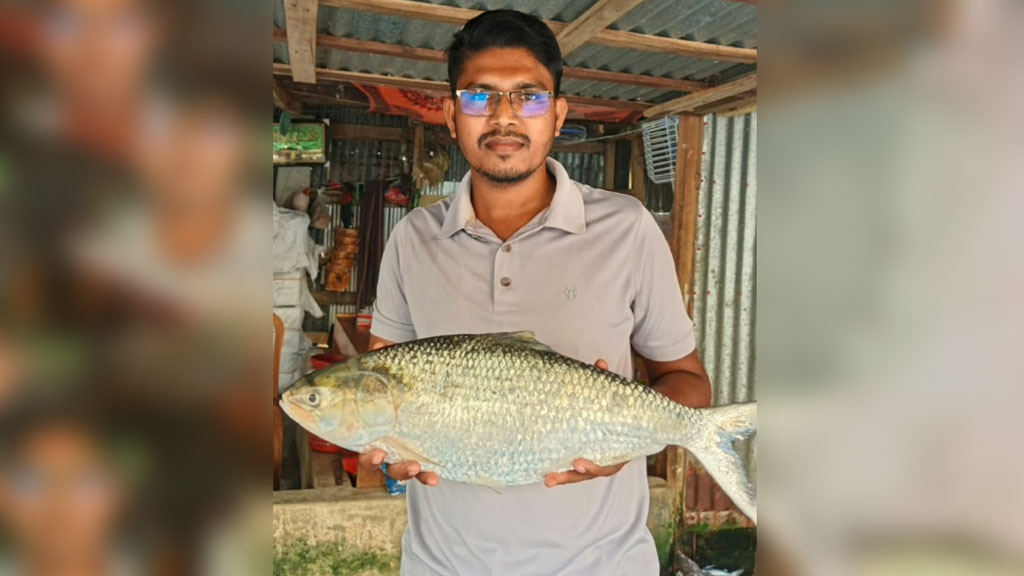
Saddam Hossain of Chupria village in Satkhira Sadar upazila has been keeping bees for nearly 10 years and earns Tk 350,000 to 400,000 a year from it. Small wooden boxes placed on the rooftops of houses, on mosque cornices and on the roofs of various institutions are home to the bees, and honey is collected from them naturally.
Saddam now has around 200 bee boxes across the district. He has placed them beside houses, institutions and mosques, as well as next to jujube (kul) orchards. After collecting honey from the combs, he bottles it cleanly and sells it.
Saddam works mainly with stingless bees. These bees, which nest in tree hollows and crevices, are reared by him in wooden boxes. With approval from BSCIC, he has named his enterprise ‘Moumachhi Kuthir’.
Saddam Hossain said: ‘I have been keeping bees for 10 years. I work mainly with stingless bees. I now have 200 bee boxes. They are placed across the district beside houses, institutions, mosques and jujube orchards. I collect the honey, bottle it and sell it. It brings in Tk 350,000 to 400,000 a year.’
Inspired by his initiative, others have also come forward. Around 80 people have already collected bee boxes from him and started beekeeping at their own homes and institutions. Ten young people are currently training under him.
Saddam said: ‘My aim is to bring pure honey to every home. People do not know about pure honey. The market is flooded with adulterated honey. Yet if a home has one bee box, family members can themselves collect honey made naturally from different flowers.’
Alongside beekeeping, Saddam also wants to spread bees for the sake of the environment. In his view, bees move from flower to flower and cause pollination, which raises crop production. But he often faces obstacles when placing boxes beside jujube orchards, because a section of jujube growers believes the bees will harm their fruit.
On this, Saddam said: ‘Jujube orchard owners often do not allow bee boxes beside their orchards. That is a mistaken idea. Bees protect the balance of the environment and also help crop production through pollination. Farmers need to be made aware of this. Those concerned should take steps so that beekeepers are not harassed.’
Gourab Das, deputy manager of BSCIC Satkhira, said Saddam works with stingless bees and has also placed a bee box on the roof of the BSCIC office itself. In his words, Saddam's initiative has brought about a revolution in beekeeping in Satkhira, and as a successful beekeeper he is an example to follow.
Gourab Das said there are currently around 600 BSCIC-registered beekeepers in Satkhira, who are supported with loans and training. A new project is being taken up to expand beekeeping in coastal Satkhira, which is at risk from climate change; it will work on training, motivation and public awareness for beekeeping.
On the obstacles to placing boxes in jujube orchards, Gourab Das said many orchard owners refuse boxes out of the mistaken belief that flowers will be damaged or no jujube will grow. He believes the administration and the agriculture department should step forward to explain this to farmers.
Jamal Uddin, additional deputy director of the Satkhira Khamarbari, said bees are friends of flowers and crops. Mustard and jujube growers sometimes harm beekeepers without understanding, even destroying bee boxes. Sub-assistant agriculture officers working at field level have been instructed to inform farmers about the importance of bees.
Jamal Uddin also said that from mustard and jujube flowers alone, honey worth more than Tk 20 million is collected in Satkhira every year. Beekeepers profit from it, employment is created, and farmers also benefit because pollination raises crop production.
Alongside the potential of beekeeping, the production and marketing of adulterated honey has become a cause for concern. Adulterated-honey traders have been caught in administration drives at various times. The BSCIC official advised informing the administration when specific information about adulterated honey sales is available.
Many people, including government officials, have bought honey after watching it being collected from the comb with their own eyes and tasting it. One of them is Mizanur Rahman, officer-in-charge (OC) of Kalaroa police station. He said: ‘I had never seen honey being collected from a comb with my own eyes. Pure honey is delicious to eat too. Because it is free of adulteration, I collected honey with the comb from Saddam Hossain for my family members.’
Saddam's dream is to place one bee box in every home in Satkhira. People would then be able to collect pure honey for their own families, and he hopes it would also bring positive change to the spread of bees, to employment and to agricultural production.