Leaders Cling to 1.5-Degree Goal at Antalya Summit as UN Says Warming Will Reach 1.8 Degrees at Best

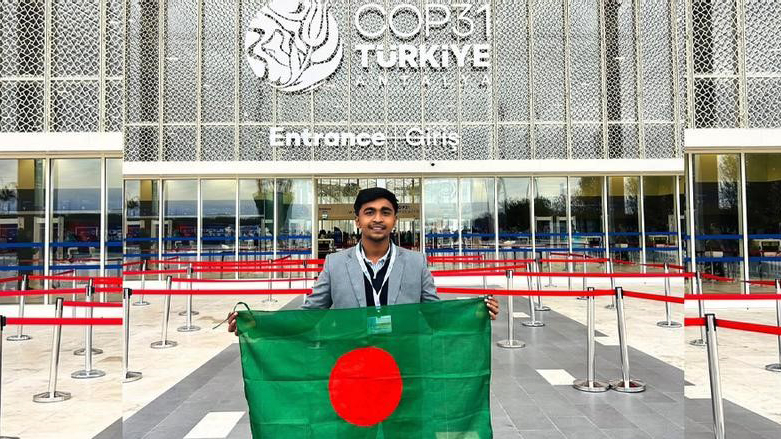
World leaders at the COP31 climate summit in Antalya, Turkey, are holding on to the goal of limiting global warming to 1.5 degrees Celsius, even though the United Nations and many scientists have already said the target can no longer be achieved.
The Antalya summit resumes climate negotiations after the UN told the world that global warming would soon exceed 1.5 degrees, effectively burying the emblematic Paris Agreement goal that has guided COP negotiations for more than a decade.
The UN said last month that even if countries drastically cut warming emissions right now, the best possible scenario would be a global temperature rise of 1.8 degrees. If they also deployed carbon capture technologies at large scale to clean the atmosphere, it would theoretically be possible to return to 1.5 degrees, even after that threshold had been passed.
In reality, greenhouse gas emissions keep rising, and the carbon capture technologies needed to reverse the trend have not yet proved themselves at large scale.
Leaders are nevertheless trying to keep the goal alive. European Commission President Ursula von der Leyen told fellow leaders on Wednesday: 'We are on track to exceed the 1.5-degree goal, and every fraction of a degree counts. We must therefore redouble our efforts.'
Marshall Islands President Hilda Heine said on the same occasion that the fight for the 1.5-degree goal must be shown not to be over. In her words, overshoot means waves eroding their coasts and floods destroying cities, schools and hospitals; it destroys their land and oceans.
Even before negotiations began, Denmark's climate minister Samira Nawa told Politico that her country's priority at COP31 was to make sure the 1.5-degree goal remained at the heart of global climate ambition.
According to scientists, the goal was not set arbitrarily. It corresponds to the level the planet can withstand before heat trapped in the atmosphere triggers dangers of exponentially greater scale. In the Paris Agreement, countries committed to limit warming to below 2 degrees and, ideally, to 1.5 degrees; the International Court of Justice last year recognised that second goal as the primary one.
Johan Rockström, the prominent climate scientist who directs the Potsdam Institute for Climate Impact Research, said he does not support the political message of holding on to 1.5 degrees, but on the other hand does not want to give it up. In his view, the critical scientific risk is that leaders would end up saying, 'Well, let's drop it and aim for 2 degrees instead,' which would be a grave mistake.
A group of developed and particularly vulnerable countries known as the High Ambition Coalition has called for a credible response to exceeding climate limits to be one of the main outcomes of COP31. Christiana Figueres, who led the UN climate programme when the Paris Agreement was adopted, said this anchor cannot be abandoned given the moral responsibility towards the people who contributed least to warming and suffer most from it.
But promises have not turned into action. UN Secretary-General António Guterres told world leaders in his opening speech on Wednesday that leaders, particularly those of developed countries, cannot keep increasing fossil fuel production while claiming commitment to the 1.5-degree goal.
Australia, which is co-hosting COP31 with Turkey, is increasing investment in coal and natural gas, even as its climate and energy minister Chris Bowen urges leaders gathered in Antalya to act with 'urgency, solidarity and determination.' Turkish President Recep Tayyip Erdoğan said that with every minute that passes without meeting the Paris Agreement goals, the risks and costs faced keep rising; two days earlier he had celebrated the discovery of two new oil fields.
UK climate minister Katie White, reacting to the UN findings, said exceeding 1.5 degrees does not mean giving up. But the next day her own ministry approved a major natural gas project in the North Sea. The United States — the largest emitter in world history — has withdrawn from the Paris Agreement and no longer takes part in COP negotiations.
Barbados Prime Minister Mia Mottley said on Wednesday that cutting methane emissions by nearly half by 2030 could avoid nearly 0.3 degrees of warming by the 2040s and save 250,000 lives every year. In her words, that would give the time needed to get back to the 1.5-degree goal.