
Detention of Japanese journalist Yuki Imai in Russia deepens Tokyo-Moscow tensions
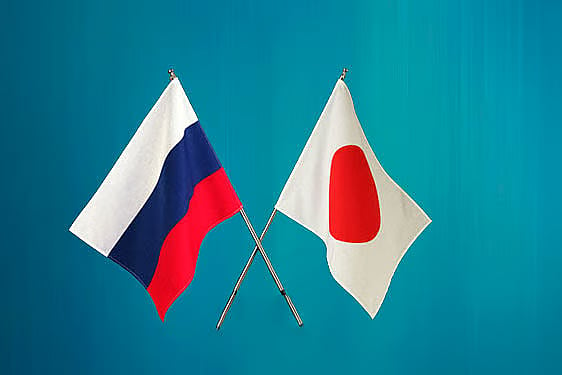
Japanese journalist Yuki Imai, detained while reporting on the Russian Far Eastern island of Sakhalin and later taken to a prison in Moscow, has seen no guarantee of release more than a month after his detention. The case has added new complications to already bitter relations between Japan and Russia, while the Japanese government continues diplomatic efforts.
Imai, 34, worked at the Yuzhno-Sakhalinsk bureau of the Japanese newspaper Hokkaido Shimbun. On 13 October, Russia's Federal Security Service (FSB) detained him in Sakhalin on suspicion of espionage. According to a lawyer appointed by the newspaper in Russia, he is now being held at Moscow's Lefortovo detention centre.
His current detention order expires on 12 December, but it could be extended. There is no clear information on how far the investigation has progressed or when a trial might begin.
Hokkaido Shimbun initially withheld his name for his safety. Seeing no prospect of release, the newspaper changed its position and, on 12 November, disclosed his identity with the consent of Imai and his family. Instead of staying silent for safety, it is now seeking public support to strengthen the call for his prompt release.
The FSB alleges that, on the instructions of Japanese intelligence, Imai was gathering information on soldiers and volunteers taking part in the Ukraine war. Hokkaido Shimbun has denied the allegation, saying Imai was doing ordinary reporting and that it does not gather information on government instructions. Japanese Prime Minister Sanae Takaichi has also denied that the Japanese government engaged in espionage in Russia.
Kimihiro Nakamura, director-general of the European Affairs Bureau of Japan's foreign ministry, took the initiative for consular contact with Imai. Following that, officials from the Japanese embassy in Moscow were able to meet him on 26 October and reported that he had no health problems. The newspaper's lawyer has also delivered food and clothing to him several times and confirmed that he is well.
Tokyo has raised the issue in diplomatic talks as well. On 30 October, on the sidelines of the G20 summit in the United States, Japanese Foreign Minister Toshimitsu Motegi met Russian Foreign Minister Sergey Lavrov and called for Imai's immediate release and humane treatment.
It was the first formal meeting between the two countries' foreign ministers in almost five years, but it produced no progress on the demand for Imai's release.
Japan says it will keep trying. On 12 November, Chief Cabinet Secretary Minoru Kihara said his country would use every opportunity to press strongly for Imai's release. Japan has no plan, however, to lift quickly the sanctions imposed on Russia over its invasion of Ukraine.
The calls for release are not limited to the government. Marking one month since the detention, several Japanese media organisations issued separate statements demanding his immediate release and that his safety be ensured.
The Japan Newspaper Publishers and Editors Association said freedom of newsgathering, publication and expression is the foundation of democracy and that obstructing such work is unacceptable. The Japan Commercial Broadcasters Association called the detention unjust, the National Press Club of Japan urged the government to make every diplomatic effort to secure his safety and release, and the Foreign Correspondents' Club of Japan also demanded his prompt release.
Earlier, on 4 November, the World Association of News Publishers strongly condemned the criminalisation of journalism in Russia and called on the Russian authorities to release Imai immediately.
Another journalist's experience has also come into focus. Wall Street Journal reporter Evan Gershkovich was detained by the FSB on espionage charges while reporting in Yekaterinburg in March 2023. Although the United States declared him wrongfully detained, he was later sentenced to 16 years in prison, and was freed in August 2024 through a multinational prisoner exchange. According to media reports, if convicted in an FSB espionage case, Imai could face 10 to 20 years in prison.
Older disputes between the two countries are also resurfacing in their talks. According to the Russian foreign ministry, Lavrov has said Japan must abandon its 'unfriendly policy' before full dialogue can begin. After Russia's invasion of Ukraine, Tokyo imposed sanctions on Russia and expressed support for Ukraine, steps Moscow considers 'unfriendly'.
The two countries also have a long-standing dispute over four islands, known in Japan as the Northern Territories and in Russia as the Kuril Islands. The islands have been under Russian control since Soviet forces seized them in 1945, while Japan claims them as part of its territory. Because the dispute remains unresolved, the two countries have still not signed a peace treaty since the Second World War.
Japanese Prime Minister Takaichi and Russian President Putin may both attend the APEC summit in Shenzhen, China, next week. Whether they will hold bilateral talks, or whether those would bring any progress on Imai's release, is not yet clear. Attention now turns to 12 December, when Imai's detention order will either be extended or he may be released and allowed to return home.

