13.1 Million People Living With Diabetes in Bangladesh: Health Minister Urges Early Detection and Promises Support for an Institute
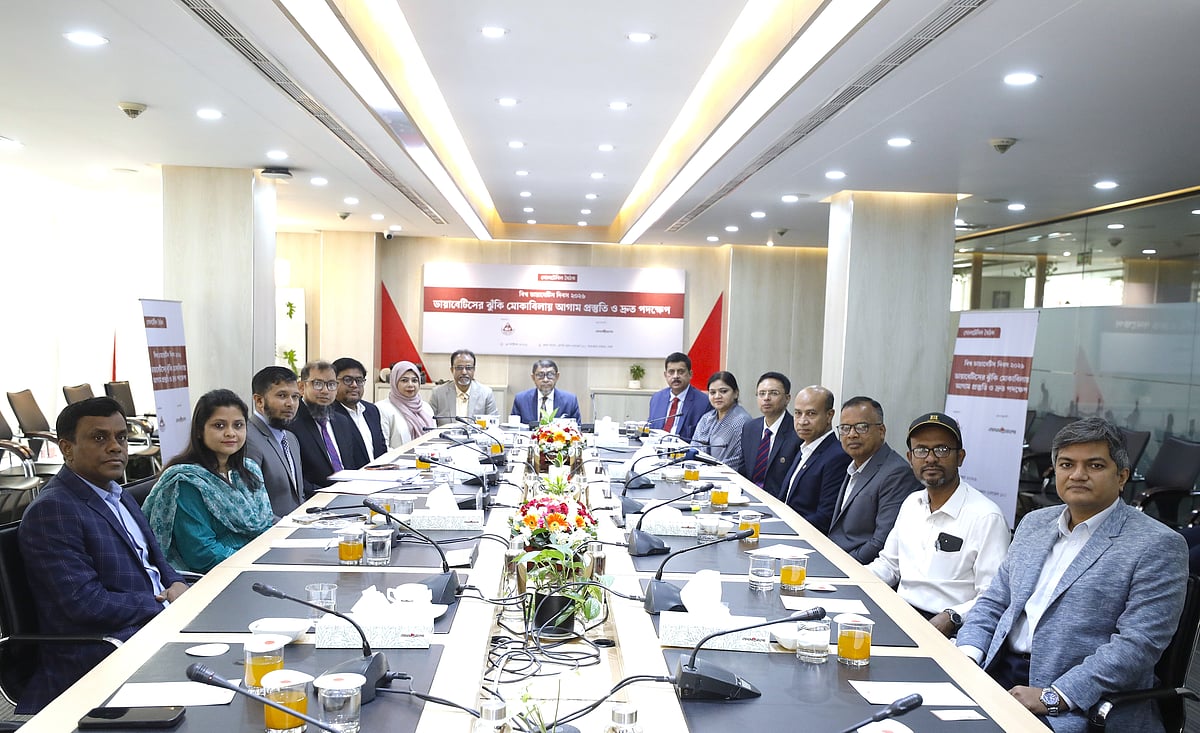
The number of people living with diabetes in Bangladesh is about 13.1 million, roughly 7.5 percent of the total population. Health and Family Welfare Minister Sardar Md Sakhawat Hossain has said there is no alternative to advance preparation, early detection and swift action to tackle the risk of this disease.
The minister said diabetes in Bangladesh is no longer only a silent killer; most people are now affected by the disease, yet a lack of awareness remains. It was once thought that diabetes was hereditary, but people are now being diagnosed even when neither their parents nor their grandparents had it, and many hard-working people are also developing the disease.
Highlighting the complications of diabetes, he said the disease can destroy the kidneys. If high blood pressure is present alongside diabetes, a stroke can occur without any pain. He also noted that he had learned about these matters more closely after joining the health ministry.
He also offered a note of hope. In his view, diabetes can be kept largely under control by following personal discipline and doctors' advice. If patients become aware before the disease reaches a complicated stage and follow medical advice, many risks can be reduced. For that reason, people in whom diabetes or its risk is observed need to be identified quickly and given necessary care.
On the proposal to establish a diabetes and endocrine institute, the minister said he had heard about it for the first time that day. As health minister, he assured his full cooperation, said he would do whatever he could regarding necessary approvals and financial support, and asked those concerned to begin the work.
At the same time he cautioned that buying machines alone would not be enough; skilled manpower must also be provided. Spending a large sum at once only on equipment is no solution; the manpower needed for medical services and effective management must also be ensured.
The minister also said he travels around villages and towns and sees people's suffering up close. According to him, he finds five out of every ten people suffering from serious illness, most of them poor and unable to afford treatment.
It was noted in the discussion that once diabetes develops, it generally stays for life. A specific action plan is therefore needed to manage such a large number of patients, and taking advance steps is very important in this regard.
The discussion also raised the issue of creating specialist posts for diabetes treatment at district and upazila level, which is being considered with importance. A standard setup is currently under final consideration at the ministry. If it is implemented in revised form, posts will be created according to how many diabetes specialists or endocrinologists are needed in each place.
It was further noted in the discussion that metabolic and endocrine diseases must also be tackled alongside diabetes, yet there is no specialised institution for these diseases at government level. While there are specialised institutions for diseases including heart disease and chest diseases, that gap remains for diabetes and endocrine diseases.
Participants in the discussion included Professor Dr Nazmul Hossain, director general of the Directorate General of Medical Education, the head of the endocrinology department at BIRDEM and president of the Bangladesh Endocrine Society, along with professors and specialist physicians in endocrinology, and the national sales manager of Square Pharmaceuticals PLC.