Round-the-Clock Health Centre Opens in Remote Bara Modak of Thanchi, 70km from the Upazila Town
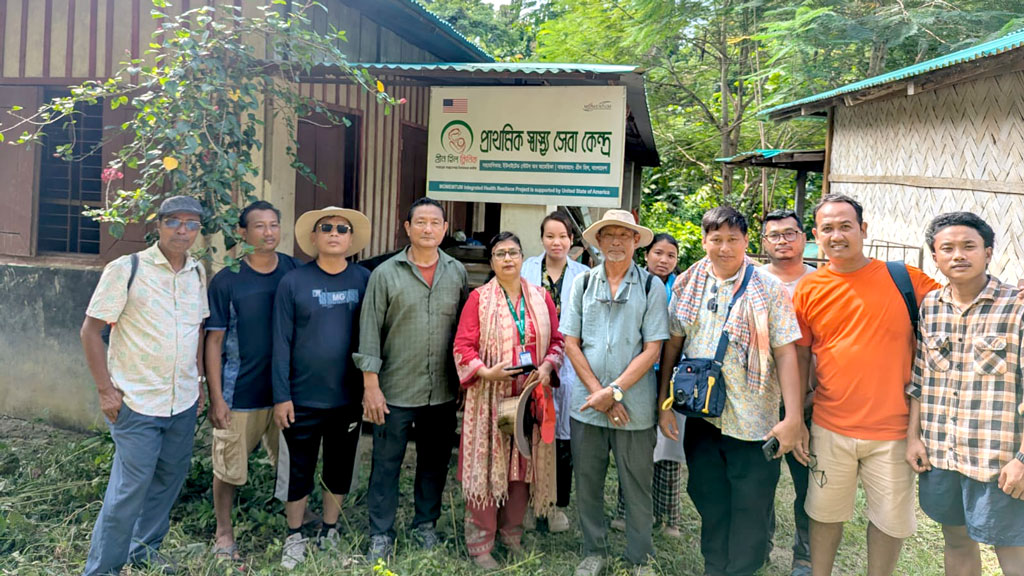
A primary healthcare centre has opened in the remote Bara Modak area of Thanchi upazila in Bandarban, near the Myanmar border. Set up jointly by the upazila health department and the NGO Green Hill, the centre has begun providing round-the-clock primary treatment and maternal health services.
The area lies about 70 kilometres from the Thanchi upazila headquarters by river. Because of the difficult hill and river routes, taking patients to hospital in an emergency was hard, and local residents had long suffered especially over childbirth complications, heavy bleeding and emergency care for newborns.
More than 10,000 people live in about 60 villages in the Bara Modak and Chhoto Modak areas. With no healthcare centre nearby for such a large population, treatment for diarrhoea, malaria, typhoid and measles, and health services for mothers and children, had been in crisis for a long time.
On 13 October, a national daily published a report on the healthcare crisis in Bara Modak. The matter then came to the attention of senior officials of the Directorate General of Health Services, and the upazila health department and Green Hill jointly moved to set up a healthcare centre there.
The centre has been set up by renovating the abandoned hostel of Bara Modak Bazar Government Primary School. Necessary furniture, medicines and medical supplies have already been delivered. Green Hill has appointed two trained midwives to serve pregnant and new mothers, and they are running the centre.
Since the centre began operating, the two midwives have already helped a pregnant woman from the neighbouring Prusangong Para who had complications during childbirth. She was later sent to the district headquarters hospital for better treatment, where she gave birth through a normal delivery. Green Hill bore the cost of her travel to hospital.
Green Hill executive director Jatan Kumar Chakma said the centre will be run under the Momentum Integrated Health Resilience project, with technical support from the international organisation JSI Research and Training Institute and financial support from the US State Department. In the first phase it will provide health check-ups for pregnant women, normal deliveries, maternal health services and treatment for children. Patients with complications will be referred to hospital, and their travel costs will be borne where needed.
Sailumong Marma, director of the Green Hill project, said that besides Bara Modak, people of Bulupara, Andharmanik, Chhoto Modak and several areas of the remote Tindu union will also benefit from the centre.
Green Hill adviser and former civil surgeon Uday Shankha Dewan said it is essential to reduce maternal and child deaths in the hill region and bring people of remote areas under healthcare. He said the published report inspired them to take the initiative; without it, the deprivation of healthcare in the border area would not have come to their notice. A project proposal was later submitted to an international donor agency and approved.
Thanchi Upazila Health and Family Planning Officer Md Wahiduzzaman Murad said malaria, typhoid, diarrhoea and various other diseases are prevalent in the remote Myanmar-border area, about 70 kilometres by river from the upazila headquarters. Reaching timely treatment and vaccination for pregnant women, new mothers and children involves much hardship and expense in travel.
Wahiduzzaman Murad also said that, considering this situation, the initiative to set up the centre jointly with Green Hill was taken on the basis of the published report, and the centre has already started operating. A senior official of the Chattogram division health department will formally inaugurate the centre on Thursday morning.