
Greenpeace Boulders in the North Sea May Delay £12bn Norfolk Windfarm Project
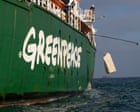
Giant offshore windfarms in the North Sea may face unexpected obstacles after Greenpeace activists dumped about 15 tonnes of boulders onto the seabed off the Norfolk coast as part of a campaign against seabed trawling.
Greenpeace created the boulder barrier to safeguard harbour porpoises by dropping giant stone blocks, each weighing up to 2 tonnes, onto the sea floor to prevent bottom trawling.
Most of the boulders were dropped onto the site earmarked for one of the UK's biggest planned windfarms, the Norfolk Vanguard project, posing an additional challenge for the developers.
Greenpeace began dumping the boulders without consent from the marine authority days before the prime minister told the Cop31 summit that the UK would invest £1bn of public money in the Vanguard West and Vanguard East windfarms, in what is believed to be the biggest investment of its kind in UK history.
The Guardian understands that Greenpeace checked the seabed for existing cables, pipelines or shipwrecks, but was not aware of the plans to build the Vanguard East windfarm.
The underwater barrier, in one of the most heavily trawled areas of the southern North Sea, was timed to coincide with the premiere of the BBC's Blue Planet III documentary, narrated by Sir David Attenborough. Some boulders bear the signatures of Simon Pegg and Benedict Cumberbatch, who have voiced marine conservation documentaries and agreed to support the campaign.
The boulders are likely to be removed within months, however, after renewable energy developers agreed a £12bn deal alongside the UK government to begin building the offshore windfarm next year. Industrial fishing activities, including bottom trawling, are also likely to move elsewhere to avoid the construction area.
The offshore wind developer, the German utility company RWE, is in talks with Greenpeace to verify the exact placement of the boulders so it can update the seabed surveys it began last summer, and is investigating any potential impact on construction or undersea cables.
A spokesperson for RWE described its communication with Greenpeace as constructive and said the company would continue to investigate the precise implications for the Norfolk Vanguard East project.
Will McCallum, the co-executive director of Greenpeace UK, said any suggestion the boulders would cause a genuine obstacle was absurd. He said energy companies routinely move naturally occurring boulders from the seabed before building windfarms in the North Sea, some of them 10 times heavier than those Greenpeace placed, and that while the windfarm is awaited, the boulders will provide an essential barrier to destructive bottom trawlers decimating the seabed in the protected area.

