Forensic audit finds GDP was inflated, growth overstated by up to 1.3 points in some years
During the ousted Awami League government's time in power, the size of the country's economy and its growth were inflated in official statistics, a forensic audit commissioned by the current government has found, according to an expert committee. In some fiscal years, gross domestic product (GDP) growth was shown up to 1.3 percentage points higher than it was, the committee's report said.
The expert committee, led by Bangladesh Institute of Development Studies (BIDS) Director General Dr A K Enamul Haque and Dhaka University economics professor Dr Atanu Rabbani, reviewed data from seven sectors and found this pattern of overvaluation. According to the committee, inconsistencies in production, revenue collection and data from various government agencies used in compiling GDP had reached an extreme level.
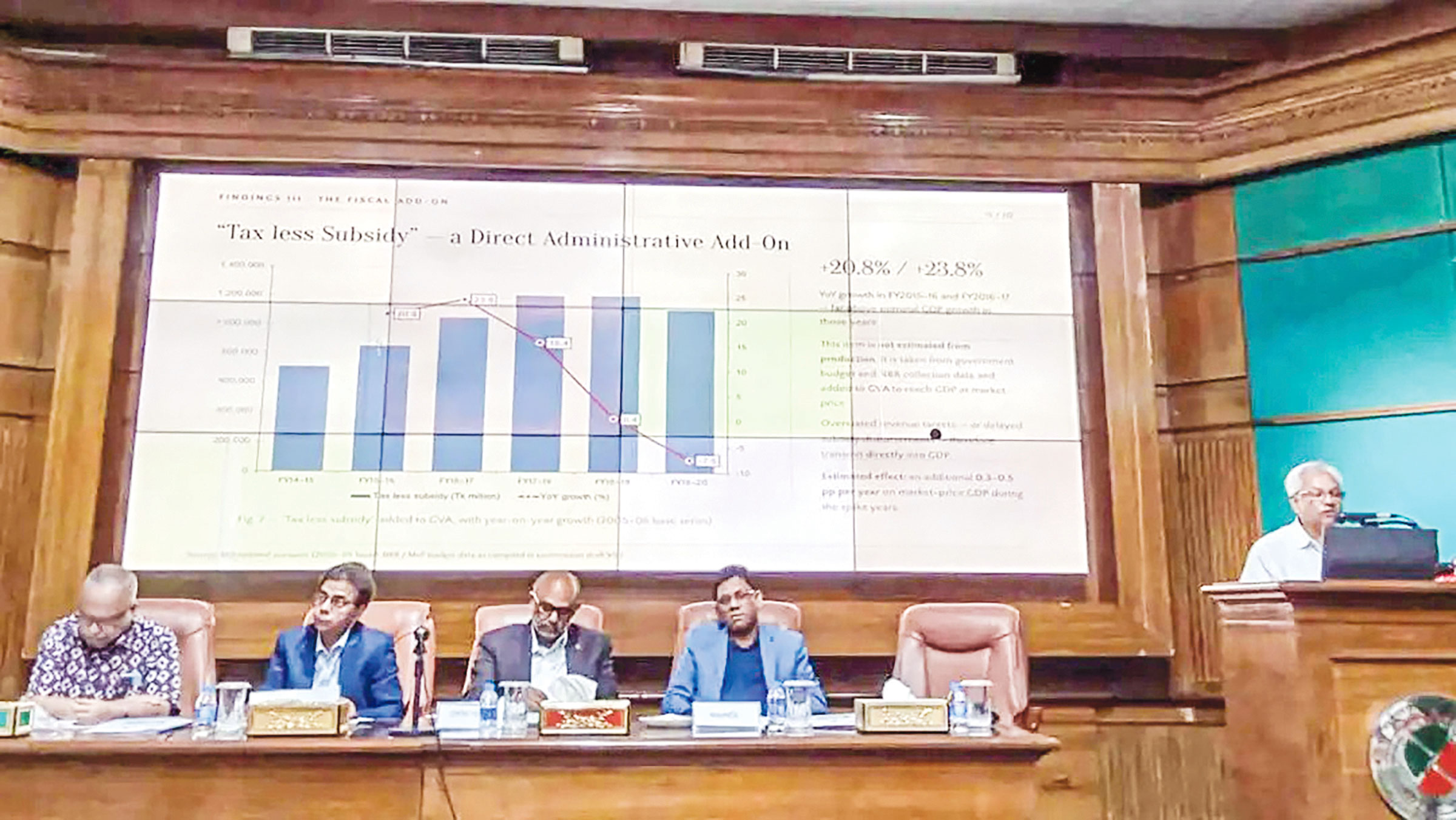
The preliminary forensic audit report was presented on Saturday at a seminar at the Bangladesh Bureau of Statistics (BBS) office in Agargaon in the capital. BIDS Director General A K Enamul Haque presented the report. The seminar was told that overvaluation of data had been identified in seven sectors.
The chief guest, the prime minister's finance and planning adviser Dr Rashed Al Mahmud Titumir, said GDP growth had been inflated to serve political interests and to present a positive picture of development. In his words, "Statistics is not a political tool of any government. It is the people's asset."
According to the report, the trend began in the 2014-15 fiscal year and was not limited to one or two sectors. In the Awami League government's final years, a section of economists had already expressed doubts about official claims that GDP growth had reached the 8 percent range; their main objection was the reliability of the data used to measure growth. After the change of power, the current government took the initiative to forensically audit GDP statistics to verify the accuracy of past calculations.
The audit identified the use of secondary data obtained from various institutions as a major weakness in the growth calculations. About 60 percent of GDP data was collected from BBS's own surveys, while the remaining about 40 percent relied on data from institutions including the National Board of Revenue (NBR) and the investment board. Without adequate arrangements to verify these secondary sources, inconsistencies entered the calculations, with the impact greater in industry and services.
Analysing manufacturing data, the committee found average real GDP growth was 6.27 percent from 2010-11 to 2013-14, rising to 7.39 percent in the next five years, from 2014-15 to 2018-19. Growth therefore rose by 1.13 percentage points, and about 41 percent of that extra growth came from manufacturing. Yet the committee found major inconsistencies in the production growth calculations of several subsectors of that very sector.
The cement industry was cited as an example. In making cement from imported clinker, real value addition was not calculated properly and changes in inventories were not adjusted in production accounts. As a result, cement industry growth was shown at 61.6, 51.7 and 45.9 percent respectively for three consecutive years.
An abnormal picture was also found in shipbuilding. Growth in the sector was shown at 242.4 percent in 2014-15, and it remained 97.6 percent the following year. Experts believe such figures may have been produced by counting one large shipbuilding order, or one company's production, as the production of the entire subsector.
Not only production volumes, but in places the effect of rising product prices was also mixed with production growth, the report said. In industries such as cement and pharmaceuticals, higher prices raised the monetary value of output, but confusing that price rise with real production growth added extra growth to GDP accounts. Differences were also found among export data from the Export Promotion Bureau, Customs and Bangladesh Bank, and inconsistencies were found in NBR revenue data.
The BIDS review also found limitations in the sample used to prepare the industrial production index, reliance on estimates without directly verifying small and cottage industry production, incorrect adjustments in construction data, and practices such as preparing the next year's accounts by following the previous year's trend. In some cases, data from only two companies was used to measure production in large industries.
To move out of this situation, BIDS proposed 10 reforms to the statistical system. They include regularly updating industrial surveys, changing the old 2005 base year, coordination among agencies' data, and ensuring technical verification before using secondary data. It also recommended checking consistency with related sectors such as electricity, gas and transport as production rises, and considering the income method to verify GDP accounts. To restore trust in official statistics, the institute also stressed BBS's professional independence, modern data collection methods and keeping the accounting process open.
Special guests at the seminar were Bangladesh Economics Association president Dr Mahbub Ullah and Bangladesh Statistical Association president Dr Syed Shahadat Hossain. BBS Director General Md Shamimul Haque and Statistics and Informatics Division joint secretary Dr Dipankar Roy also spoke at the event.