
19 years after Sidr the coast is still unprotected: 72 km of embankment at risk in Barguna, cracks in Bagerhat's new dam
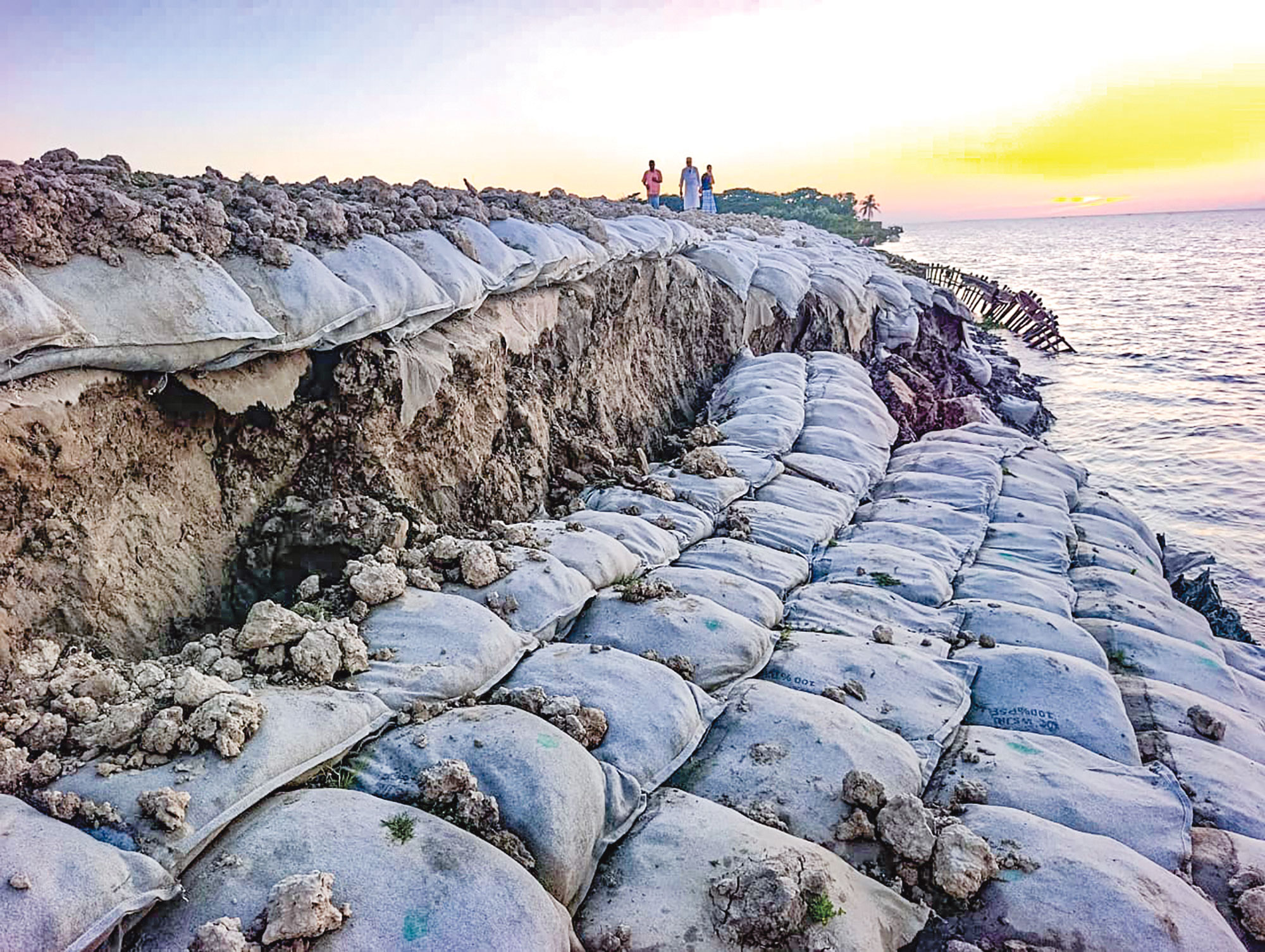
Nineteen years after the devastating Cyclone Sidr of 15 November 2007, safety on the coast has still not been assured. In Barguna, 72 kilometres of embankment remain in a risky condition, while in Bagerhat cracks and erosion have appeared in an embankment built at a cost of hundreds of crores of taka. In places, concrete blocks are collapsing. As a result, every disaster season brings back the fear of losing lives and homes.
Even after so many years since Sidr's devastation, the expected permanent and sustainable embankment has not been built in Barguna's river and seashore areas. After Sidr, the coastal people's main demand was a high and strong embankment. That demand remains unmet after all this time. Instead, embankments are breaking in various places and tidal water regularly enters localities.
According to the Barguna Water Development Board (BWDB), the district has a total of 805 kilometres of embankment under 22 polders. Of that, at least 72 kilometres are the most at risk: 26 kilometres in Sadar, 18 in Patharghata, 11 in Betagi, 7 in Bamna, 5 in Amtali and 3 in Taltali.
Sources at the Deputy Commissioner's office said Cyclone Sidr killed 1,345 people in Barguna district and left 156 missing. The storm killed 30,499 cattle and 658,259 poultry birds. All 213,461 families in the district suffered losses to some degree, and 77,754 families were left homeless.
Sidr's fury hit Naltona village in Barguna Sadar upazila the hardest. A storm surge about 20 feet high submerged the whole village in moments. Many people were swept away by the surge before they could understand what was happening. More than fifty bodies were recovered from this village alone.
Aslam Khan of Nishanbaria village in Sadar upazila still shudders remembering that terrible night of 15 November 2007. He survived Sidr but lost his wife and child. He said: 'For 19 years we have been dreaming of a sustainable embankment, but it has still not been realised. Nobody wants to hear about our suffering.'
Environmental activists have demanded the quick construction of sustainable embankments to ensure the safety of coastal people. Barguna environmental activist Arif Rahman said the Water Development Board needs to take effective steps now to ensure the safety of people who live in constant fear of disaster.
BWDB executive engineer Abdul Hannan Pradhan said it would cost about Tk 90 crore per kilometre to permanently protect embankments with concrete blocks. Because such a huge amount of money is needed, a shortage of allocations has made it difficult to move the work forward.
Sharankhola upazila of Bagerhat was the worst affected by Sidr. In Southkhali union of that upazila alone, more than 800 people died and several thousand were injured. According to government figures, Sidr's fierce winds and storm surge killed 908 people in Bagerhat district, and more than one and a half lakh houses, trees and roads were damaged.
Nasima Begum, a resident of Bogi village in Sharankhola upazila, said: 'In the fierce storm, wind and surge, we lost everything. In our family alone, 13 people died, including my mother, father and son.' They buried her son eight days after Sidr.
After Sidr, the people of Sharankhola and Morrelganj had one demand: a sustainable embankment. Reflecting that demand, a sustainable embankment was built with World Bank financing at a cost of Tk 350 crore, from Morrelganj to Bogi-Gabtala in Sharankhola upazila. But within three years of its completion, cracks have appeared at several points of the Sharankhola section — Bogi, Gabtala, Southkhali, and Amtala and Fasiatala in Morrelganj — and blocks of the embankment are collapsing into the Baleshwar river. At least 15 kilometres of the sustainable embankment are now at risk. Local people allege they have been put at risk because sand was used instead of soil during construction. They have demanded that the risky sections be repaired to protect their homesteads.
Local resident Riyadul Islam said: 'After losing everything, we wanted one sustainable embankment. But ever since the work was completed, there has been erosion and big holes at various places in the embankment. This has happened mainly because sand was put inside the embankment.'
BWDB executive engineer Joyonto Pal said: 'When the embankment was built, there was a setback of at least 200 to 500 metres — char or high land — between the river and the embankment. But because of the Baleshwar's erosion, the river has now come right up to the embankment.' He said a feasibility study has been carried out to find a way to permanently stop the Baleshwar's erosion. Once the report is received, a new proposal will be made for river training and erosion prevention, and if implemented, it will bring a permanent solution to river erosion and embankment protection.
