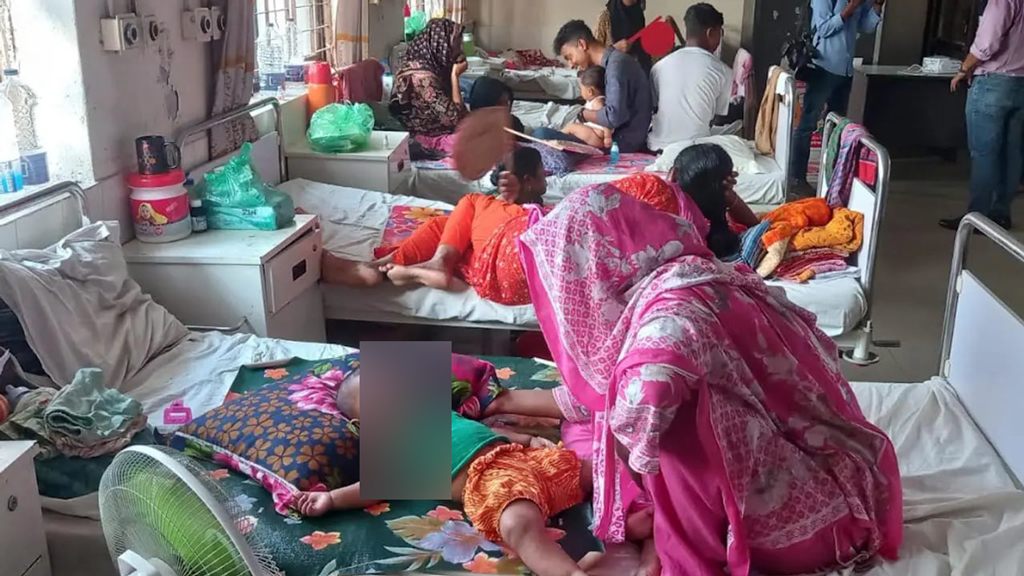
Health sector corruption is a failure of governance, Health Watch report finds 40 percent of doctors absent
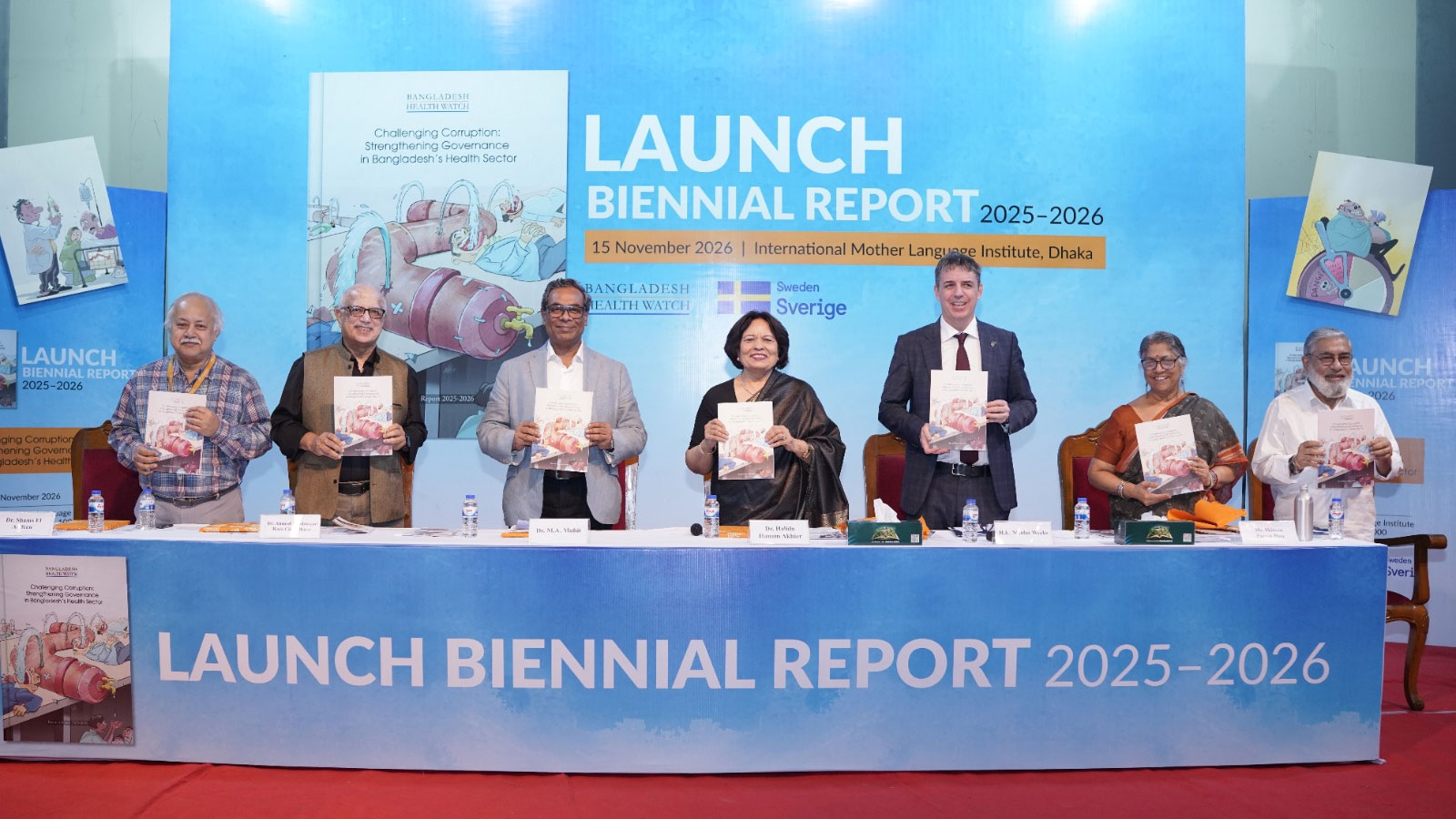
Corruption in the health sector is not only individual misconduct but the result of weak governance, lack of accountability and institutional failure, a Bangladesh Health Watch report has found.
The findings were presented on Sunday at the publication ceremony of Bangladesh Health Watch's biennial report 2025-2026 at the International Mother Language Institute in the capital.
The 191-page report, titled 'Challenging Corruption: Strengthening Governance in Bangladesh's Health Sector', was edited by Bangladesh Health Watch convener Ahmad Mostak Raja Chowdhury and Shamsul El Arefin, senior scientist emeritus at the International Centre for Diarrhoeal Disease Research, Bangladesh (icddr,b).
According to the report, surprise inspections at urban and city-centred government health facilities found about 40 percent of doctors absent from their workplaces.
In some remote health centres, the absence rate exceeded 70 percent, the report said.
The report said doctors receive commissions of 20 to 50 percent in exchange for sending patients to diagnostic centres. By the authors' estimate, commissions worth about Tk 1,861 crore a year may change hands at the large institutions alone.
Irregularities in government procurement also feature in the report. It said the Central Medical Stores Depot (CMSD) suffered a loss of Tk 459 crore, equipment was supplied there at up to 18 times the fair price, and medical equipment worth Tk 283 crore is lying unused.
The report also mentioned various irregularities patients face in getting treatment. Illegal payments to brokers and for beds and discharge papers, and sending patients to private clinics, are raising the cost of treatment.
Political influence and nepotism in human resource management also came up in the report. Such influence plays a major role in the recruitment, transfer and promotion of the ministry's more than 180,000 staff. In addition, 172 complaints of medical negligence were filed with the Bangladesh Medical and Dental Council (BMDC) from 2010 to May 2025, of which 79 are awaiting disposal.
Speaking as chief guest, State Minister for Health and Family Welfare Dr M A Muhit said, 'Corruption is not limited to financial irregularities or tender manipulation; influencing policy to benefit a special group during policymaking is also corruption. So instead of only identifying and punishing offenders, structural change must be brought to the whole system. Decentralisation of power, institutional accountability and checks and balances must also be ensured.'
Swedish Ambassador to Bangladesh Nicolas Weeks, speaking as special guest, said merit must be assessed in recruitment and promotion, and a transparent procurement system and independent regulatory bodies must be ensured.
The report recommended banning commission-based referrals by law, making disclosure of financial relations between doctors and the pharmaceutical industry mandatory, merit-based recruitment and promotion, and publication of government procurement information. It also called for a specific legal framework for medical negligence, an independent regulatory system, and mandatory incident reporting and death reviews in hospitals.