Netanyahu and Eisenkot blocs talk unity government without Arab parties, with little progress
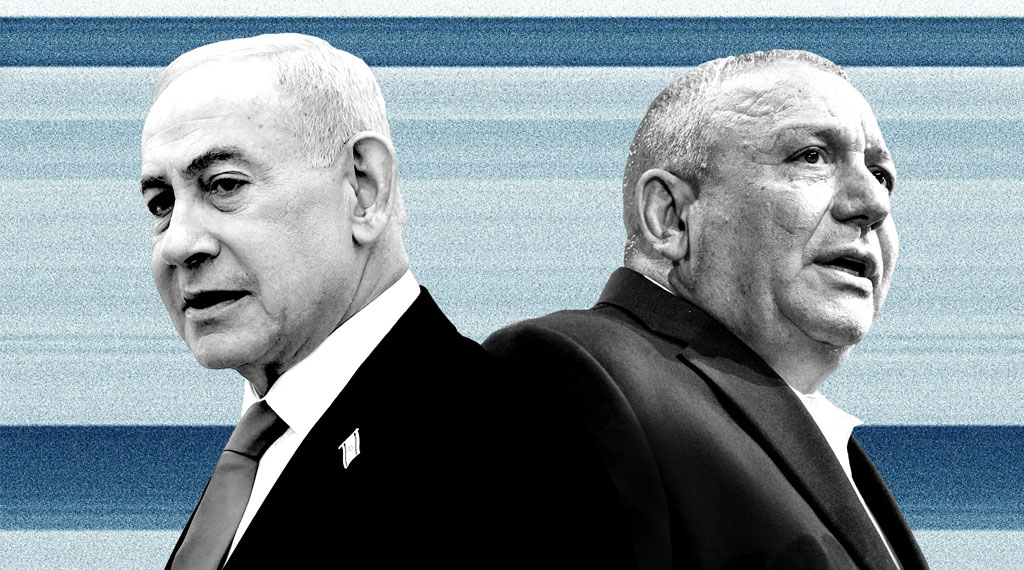
Talks have been held between Prime Minister Benjamin Netanyahu's Likud party and Gadi Eisenkot's Yashar party on the possibility of forming a national unity government in Israel that would exclude Arab-led parties. The atmosphere of the meeting was positive, but there was no significant progress on forming a government.
Israeli media outlet The Times of Israel reported that the talks are effectively deadlocked because of the two sides' entrenched positions on the post of prime minister.
Representatives of Yashar and Likud met for about an hour on Sunday. In a joint statement afterwards, they said the talks were held in a 'working atmosphere' and that contact between the two sides would continue.
Likud, however, stated its position that no party in Netanyahu's coalition would be excluded. On the other side, several parties in Eisenkot's bloc oppose talks with Netanyahu on forming a government.
Naftali Bennett's B'Yachad party is in favour of considering a unity government with Netanyahu. Its condition, however, is that under any power-sharing agreement, Eisenkot would serve first as prime minister.
Bennett prefers forming a government with Likud over a coalition with Arab-led or ultra-Orthodox Jewish parties. But he will not go with Likud while leaving the other partners of his bloc behind.
Yisrael Beiteinu leader Avigdor Lieberman, by contrast, has described the talks as a trap laid by Netanyahu. In his view, the main goal is to end Netanyahu's political era; he has no objection to cooperating with Likud in a post-Netanyahu period. The Democrats party also opposes the unity government talks.
Netanyahu's close associates have assured Eisenkot that the party of his far-right ally Itamar Ben-Gvir, Otzma Yehudit, would be kept out of a possible coalition, Israel Hayom reported. The report said the United States has also demanded that the party not be kept in government. Publicly, however, Netanyahu remains firm on forming a government with his Haredi and far-right nationalist allies.
Meanwhile, talks on government formation between Eisenkot's bloc and the ultra-Orthodox United Torah Judaism (UTJ) have reportedly advanced. A Channel 12 report, citing a senior UTJ leader, said the two sides are in daily contact and that there has been significant progress.
UTJ chairman Yakov Asher, however, denied the claim, saying reports of an exchange of draft agreements or dramatic progress are baseless.
The Shas party is concerned about a possible understanding with UTJ. Its chairman, Aryeh Deri, fears that even if UTJ supports an Eisenkot-led government, it will not be able to secure guarantees for passing a law on the military conscription of Haredi men. Deri has said Shas will stay with Netanyahu and will hold no talks with Eisenkot's bloc.
In the talks with Netanyahu, Yashar is seen pushing forward a proposal to replace current Knesset Speaker Amir Ohana with Matan Kahana as the new speaker. Likud requested that the process be delayed, but Yashar rejected that request. A vote on the matter is due on Tuesday.
Analysts say that even without an agreement with Netanyahu, Eisenkot may use the attempt to form a unity government to present his own political position. His remaining options would then include a coalition with Haredi parties including UTJ, or forming a minority government with the support of the Arab-led Ra'am and Joint List.