EC to hold dialogue with all parties before December 10 ahead of Union Parishad elections
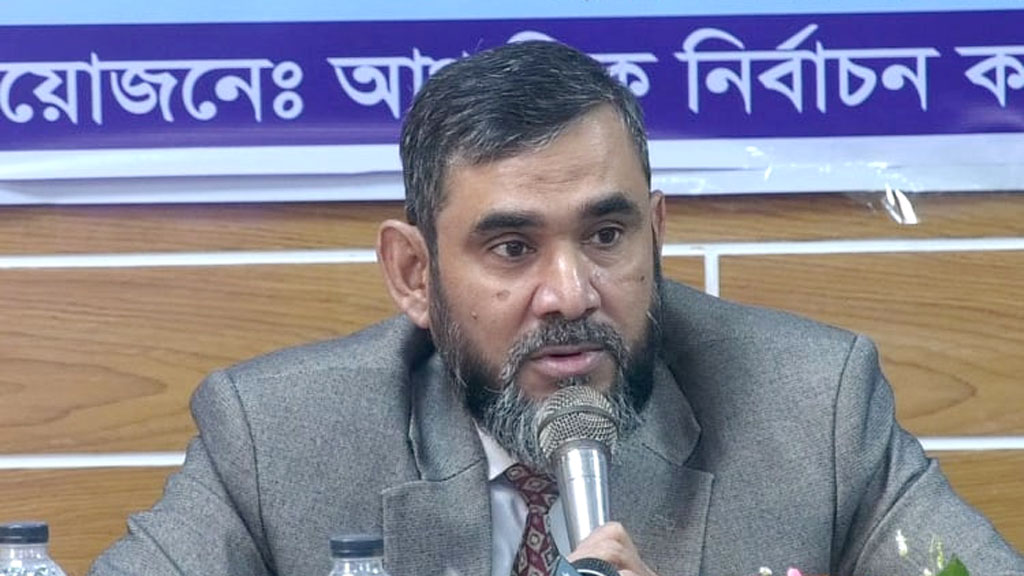
The Election Commission (EC) plans to hold a dialogue with political parties in December ahead of the Union Parishad (UP) elections, and intends to complete the talks before December 10. Just as it consulted the parties before the national election, the commission wants to hold similar discussions before the local government elections.
Election Commissioner Brigadier General (retd) Abul Fazal Md Sanaullah announced this to journalists on Monday (November 16) after the commission's 14th meeting at the Election Commission Bhaban in the capital. He also answered journalists' questions on other issues discussed at the meeting.
Sanaullah said the dialogue was discussed at the commission meeting. Parties will be invited in order of registration over three days at the end of this month or the beginning of December.
'In particular, before starting the local government elections, that is the UP elections, we will hold a dialogue with all political parties just like the national election, and this dialogue will be held before December 10,' he said. The talks will discuss holding the local government elections smoothly, he added.
The commission has already planned to hold the UP elections in five phases: around 1,050 unions in the first phase, 1,100 in the second, 1,000 in the third, close to 800 in the fourth and about 350 in the final phase. District election officers will announce the schedule within 50 days either side of the first phase's likely date of January 21, and a detailed list of which union votes when will be published on the website by Thursday.
Sanaullah said the number of unions in the fifth phase has deliberately been kept small, so that unions whose elections are stuck due to legal complications or other reasons can be adjusted into that phase later.
Asked whether the coming elections would be held under existing law despite the commission's recommendations to amend election laws, Sanaullah said the election will be held under whichever law is in force on the day the schedule is announced. 'On the day — the day the schedule is announced, the law that exists on that day will govern the election,' he said.
He said no demand for army deployment in the local government elections has yet come to the commission from any political party. Army deployment was discussed in connection with the national election, he noted, adding that forces will be deployed wherever needed.
Asked whether the law and order or political situation would affect the local government elections, Sanaullah said: 'We do not think it will have any effect on the local government elections. Local government elections will rather help keep law and order good in some cases.' Necessary measures will be taken considering the adequacy and effectiveness of law enforcement agencies to hold a fair vote, he added.
The commission meeting also discussed ongoing problems with National Identity Card (NID) services and smart card printing. Sanaullah said the smart card printing software has had a problem for the past four or five days, but no NID service is closed because of it. 'NID card printing is not stopped, smart card printing is not stopped. There has been a software problem there for the last four or five days, and its nature is being determined,' he said. Work to fix the problem is under way and it is expected to be resolved at any time; anyone whose NID is approved can print it from the website and laminate it for use.
The non-renewal of the NID service contract and a past audit objection were also discussed. Sanaullah said the contract was not renewed after it expired and an audit objection remains unresolved, with some work currently running without a contract while the commission discusses a solution. The problem began on July 1, 2017, he said. The commission has decided that all future work will be done under contract, and he remarked that the NID service, being a national service, cannot be kept closed.
The Election Commission will hold a workshop on NID services the day after tomorrow, where making the service easier and more citizen-friendly, and resolving problems faced by service seekers and within and outside the commission, will be discussed. Journalist representatives will also take part, and 10 of the commission's 12 RFED members are expected to attend.
The meeting also discussed the disposal of Electronic Voting Machines (EVMs). EVMs will no longer be used in elections, and the commission reviewed the progress of the committee formed to decide how the stored machines will be disposed of. Sanaullah said the work will start from Gazipur, where the largest number of EVMs is stored. First, the number and condition of EVMs at various field levels will be assessed, and disposal will then be arranged according to the committee's recommendations. Environmental concerns and financial losses will be considered after the committee's recommendations arrive. He also noted that EVMs are under discussion or investigation by the electoral reform commission, an inquiry commission and the Anti-Corruption Commission.
Questions were also raised about Tk 23 crore owed to a firm in connection with EVMs. Sanaullah replied that the previous commission had stopped the payment on a specific ground, and the current commission does not want to change that decision without fully knowing its reasons and the complete state of the matter.