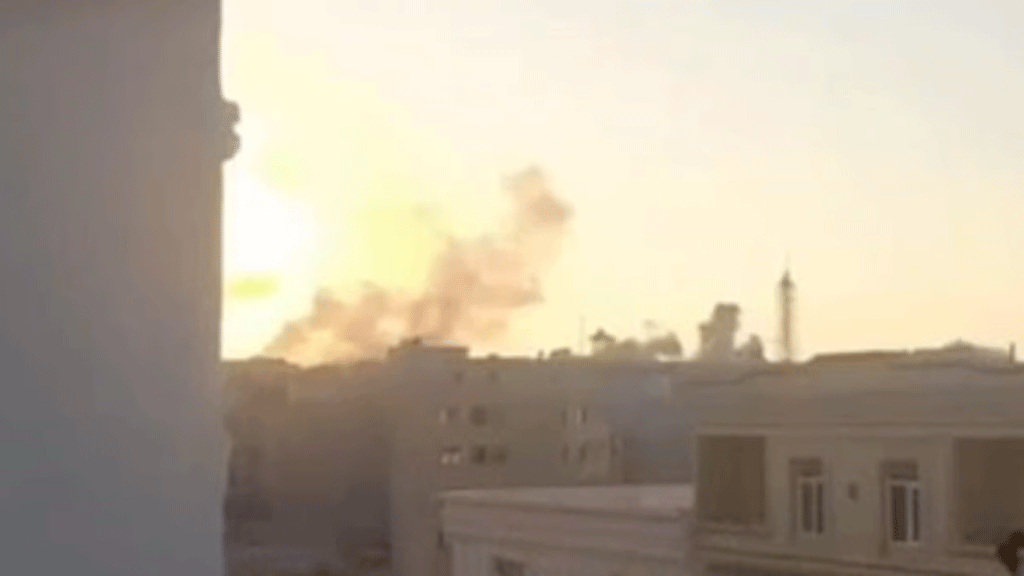
Renewed Oromia-Somali border violence in Ethiopia's Moyale displaces thousands, with up to 50,000 fleeing into Kenya

Fighting involving police and armed groups affiliated with Ethiopia's Oromia and Somali regional administrations has disrupted daily life and trade in the border town of Moyale, in the southern Borana Zone.
The violence, which escalated in Moyale in October, has spread to surrounding areas including the neighbouring districts of Arero and Wachile, leaving communities insecure and uncertain when normal life will resume.
The disruption has affected livelihoods across several parts of the zone, particularly the livestock trade, a major source of income for rural communities, and residents have reported interruptions to business activities and transport services.
A resident of Moyale town, who asked not to be named for security reasons, told Al Jazeera that people remained fearful as tensions persisted between forces affiliated with the two regional administrations.
The resident said gunfire, especially at night, had heightened personal safety concerns, while violence had restricted movement around the town and made routine activities increasingly difficult, affecting businesses, livestock keepers and transport operators.
According to the Armed Conflict Location and Event Data project (ACLED), the latest escalation began on October 18, when Somali regional police clashed with ethnic Oromo militia members following the opening of a Somali regional administration office and the raising of its flag in a disputed locality of Moyale.
ACLED's East Africa senior analyst, Jalale Getachew Birru, reported that a 13-year-old Oromo girl was killed during the confrontation, though accounts of how she died differ: some said she was caught in crossfire, while others claimed she was killed after trying to remove the flag.
Members of the Ethiopian National Defence Force intervened and stopped the initial fighting, according to ACLED. The following day, Oromo residents demonstrated against the office opening and the girl's death, blocking the main road and forcing businesses to close.
Elders and security officials from both sides later agreed to remove the Somali regional flag and suspend the office's opening, but the agreement did not prevent further confrontations. ACLED reported that Somali residents also demonstrated against the arrangement on October 20, closing the main road and disrupting transport services.
Fighting escalated again on October 22, when Somali regional police clashed with Oromia regional police and Oromo militia members in several locations in Moyale, and ACLED also reported clashes involving Oromo and Somali militias in parts of Arero and Wachile districts.
The violence is rooted in longstanding disagreements over administrative boundaries, political representation and access to land and natural resources, which have repeatedly fuelled tensions between Borana Oromo and Somali communities along the regional border.
A security official familiar with the situation in Moyale told Al Jazeera that clashes were continuing and that attempts to broker an agreement between representatives of the two regional administrations had failed, saying resolving the crisis required direct and immediate involvement by the federal government.
The crisis has also drawn attention beyond Ethiopia's borders. On November 9, Kenya's Prime Cabinet Secretary Musalia Mudavadi said he had spoken with his Ethiopian counterpart and urged the government in Addis Ababa to help restore stability so that people who had fled into Kenya could return home.
Reporting by Kenya's The Star newspaper said Mudavadi put the number of Ethiopians who had crossed into Kenya at approximately 40,000 at the time, and that the Ethiopian government had assured Kenya it would work towards restoring normality.
On October 28, the United Nations refugee agency (UNHCR) said local authorities estimated that up to 50,000 people had crossed into Kenya since October 22 to escape the fighting, and that registration and verification were continuing, meaning the figure remained provisional.
Many of those arriving in Kenya were women and children, according to UNHCR, which identified food, drinking water, emergency shelter, sanitation and healthcare as urgent needs.
The historical background includes a referendum organised on October 24, 2004, to determine the administration of 463 small communities along the Oromia-Somali regional border, according to Ethiopia's National Election Board. Research by Boku Tache, published in a doctoral thesis at the Norwegian University of Life Sciences in 2008, found that the referendum was conducted in Liban and parts of Arero, while the Moyale case remained unresolved.
Cameron Hudson, a political and security analyst and former director for African affairs at the US National Security Council, said the crisis reflected wider challenges facing Ethiopia's federal system and its management of regional disputes. He said federal forces were already preoccupied with security challenges elsewhere, and pointed to a perception among Somali communities that Prime Minister Abiy Ahmed and his Prosperity Party favour the Oromo, Abiy's ethnic group.
Hudson told Al Jazeera that the federal government is ultimately responsible for addressing violence, even along regional borders. With the territorial dispute unresolved and the two regional administrations yet to reach a lasting agreement, uncertainty continues over when affected communities will be able to return to normal life.