Golam Kibria's 'Tree Hospital' in Gaibandha: Diseased Saplings Treated Free of Charge
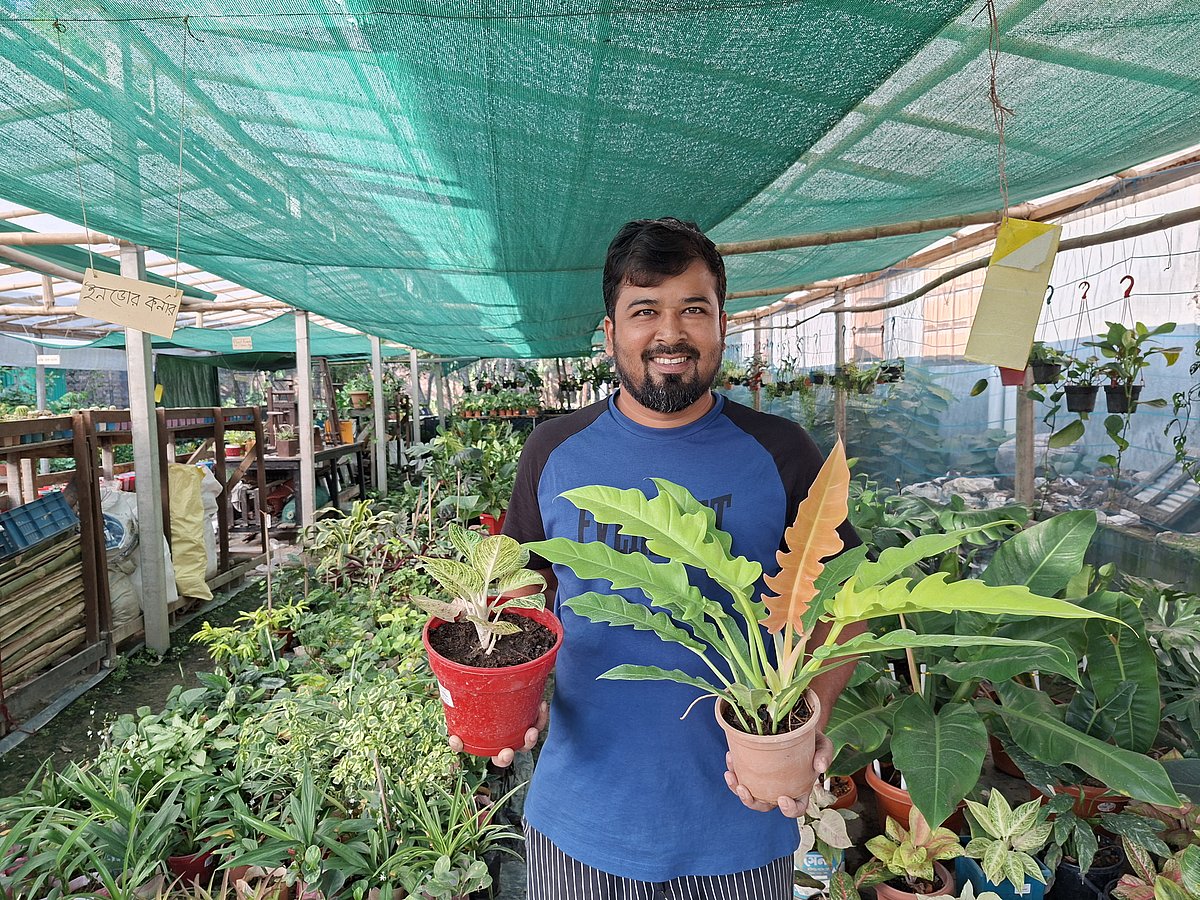
In the Shapla Mill area of Gaibandha town, entrepreneur Golam Kibria's (37) 'Farmers Market and Nursery' is known locally as a 'tree hospital'. Buyers and farmers get diseased saplings and plants treated there free of charge.
When a sapling bought from Kibria becomes diseased or weak, buyers bring it back to his nursery. He keeps the sick sapling with him and cares for it, applying pesticide and fertiliser, until it recovers. Once it is healthy, he phones the owner and returns it. Not only his own buyers come; people from across the district bring diseased plants, and farmers come for advice on crop care.
Kibria's nursery holds about 30,000 saplings. Indoor plants, flowers, fruit, orchids, cacti, succulents, timber, medicinal and aquatic saplings predominate. His monthly income from the nursery is about Tk 40,000.
Visiting the nursery beside the Gaibandha-Palashbari road last Saturday afternoon, workers were seen caring for saplings while treatment of affected plants was under way in a room beside it. Kibria was busy at times selling saplings and at times treating diseased plants.
Kibria's home is in Arazi Jamalpur village of Jamalpur union in Sadullapur upazila of Gaibandha. He is the youngest of seven sisters and three brothers. His wife Tanzina Afrin is a homemaker; they have two daughters.
After a bachelor's degree with honours in accounting and a master's in marketing management, Kibria also earned a postgraduate diploma in the same subject from the Bangladesh Institute of Management (BIM) in Dhaka. He worked at a multinational company for six years.
Leaving his job, Kibria started the nursery in 2020 at Shapla Mill, renting 20 decimals of land for Tk 5,000 a month. He began with about 3,000 saplings; there are now about 30,000. Buyers come from the district town and various upazilas. Three workers are employed at his nursery, working for a daily wage of Tk 700.
Kibria says ornamental plants are usually the ones that fall sick most often. Crop diseases in the field are also increasing because of climate change. He advises on the care of all kinds of plants affected by fungal and bacterial diseases and insect attacks.
Kibria has also built a small agricultural library at the nursery, with books on agriculture, fisheries and livestock. He says he treats plants by reading agriculture books. Farmers from different parts of the country send him photos and videos of plant problems on WhatsApp, and he tries to offer solutions after seeing them.
Farmer Shahjahan Mia (55) of Chapadah village in Gaibandha Sadar upazila often comes here for advice. He says when disease appears in his paddy and rabi crops, he comes to Kibria and applies pesticide in his fields on his advice.
Shahana Begum (50) of Gaibandha town had bought a philodendron sapling from this nursery. When the plant was close to dying a few days later, it recovered after seven days of care by Kibria. College teacher Sakhawat Hossain of Samitir Bazar village in Fulchhari upazila also had disease appear in an aglaonema sapling he bought, and the disease cleared after treatment at Kibria's nursery. Businessman Shah Alam of the same village also reported his sick pothos sapling recovering.
Md Asaduzzaman, deputy director of the district Department of Agricultural Extension, said Kibria has become self-reliant through the nursery. He is being given advice and necessary support, he said.
In 2020 Kibria also planted a fruit orchard on seven and a half bighas of ancestral land in his home village Arazi Jamalpur. On one and a half bighas he grows dragon fruit organically. Dragon cultivation cost him about Tk 400,000 this year and he has so far sold dragon fruit worth Tk 450,000. He also grows malta on five bighas and oranges on one bigha; he sold Tk 100,000 worth of malta this year, though the oranges have not fruited yet. By his calculation, after costs, selling the three kinds of fruit brings him about Tk 25,000 a month.
Kibria plans to expand the nursery further in future. He says a young unemployed person who spends the time they would spend chasing a job on an enterprise instead can benefit far more than from a job — and that he himself is proof of it.