Officials linked to banned Awami League are under surveillance, says information adviser

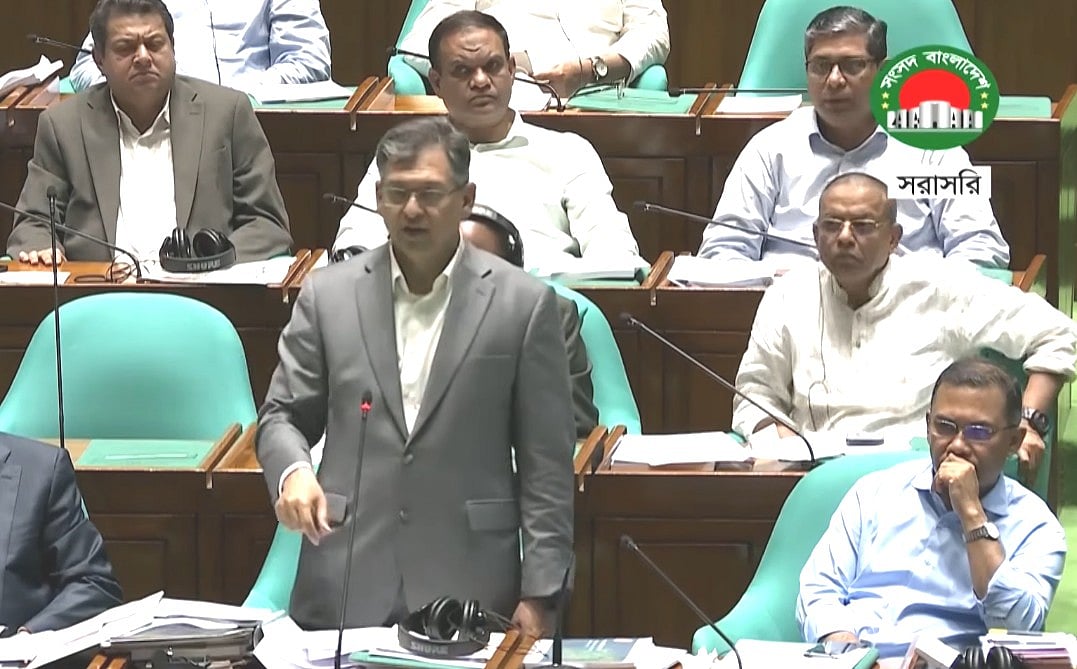
Government officials linked to the Awami League, whose activities are banned, are under ongoing surveillance, Prime Minister's Information and Broadcasting Adviser Dr Jahed Ur Rahman has said. He gave the information on Tuesday, November 17, in reply to journalists' questions at a press conference on the progress of various government activities.
He noted that because the Awami League was in power for a long time, many officials at various levels of government were linked to the party or had political closeness to it, which is not a problem. But if someone remains politically linked to a party while serving as an employee of the republic, that is a matter of concern, he said.
The government has its own surveillance system and various means in this regard, he said. Asked about the arrest of a superintendent of police on allegations of contact with the Awami League and about surveillance of government officials, Jahed Ur Rahman said how the surveillance is conducted cannot be disclosed because state security is involved.
In this context he said: 'Because the Awami League was in power for many years, many people are or were involved with them. That is not the problem. They are employees of the republic, and they are working. But if they are involved while remaining employees, that is actually a very alarming thing.' The government is considering the matter seriously, he said, adding that the government has its own system, various means and capacity, and can collect the real information if it wants.
Those involved in the recent violence in Gopalganj will be arrested, he said, adding that those seen holding weapons in photos and video footage will be identified, arrested and brought to justice. The matter has been discussed in parliament and the information minister and state minister have also spoken on it, he said.
He said the government will not tolerate any sabotage in the country. As even normal political activity in the name of the Awami League is currently banned, holding processions, rallies or meetings is illegal, and the government will in no way accept brutality and violence, vandalism and arson in various places, and attacks on the homes of BNP leaders and activists.
The adviser said: 'Those whose pictures have been seen — you have seen joint forces have been there since yesterday — they will be arrested and they will certainly face trial.' On the recently discussed 'non-fugitive Awami League' on social media, he said those staying in the country who are joining such activities at the instigation of fugitive Awami League leaders are inviting danger for themselves, because such activities are criminal offences and the persons concerned will have to bear the responsibility.
Stressing caution in the use of force by law enforcement, Dr Jahed Ur Rahman said police have the right to use force, but what matters is that it is not more than the situation requires. Because excessive force was criticised in the past, the government does not want a repeat of that situation, and expects police to carry out their duties using force proportionately and as needed.
Asked about government preparations around the Awami League's November 19 programme, the adviser said the government does not think such a programme will have much impact in Dhaka or create a major problem across the country. The government's position on the previous programme had also been given in an earlier briefing, he noted.
In reply to a question about the withdrawal of the superintendent of police and deputy commissioner in the Gopalganj incident and the earlier withdrawal of an on-duty police officer in the Gulshan incident, Jahed Ur Rahman said where negligence or failure in duty is seen, steps are taken to give responsibility to a more capable and sincere officer. Withdrawal does not mean the officer concerned deliberately failed; rather, where there has been some kind of failure, it is acknowledged and a solution is sought by giving responsibility to a more capable officer.
On allegations of a passive police role during the violence in Gopalganj, he said police are an essential institution in an independent and democratic country and a modern state must have police. But work must be done so police can carry out their duties with minimum force and minimum casualties. Noting that the situation on the first day in Gopalganj was so violent that more force might have been needed, he said the way the situation was later brought under control was part of the government's strategy and the government moved in the right direction in managing the situation. Even the government's critics are praising the management of the Gopalganj situation, he said.