
Netanyahu's bloc loses Knesset speaker post as opposition's Kahana wins 66 votes
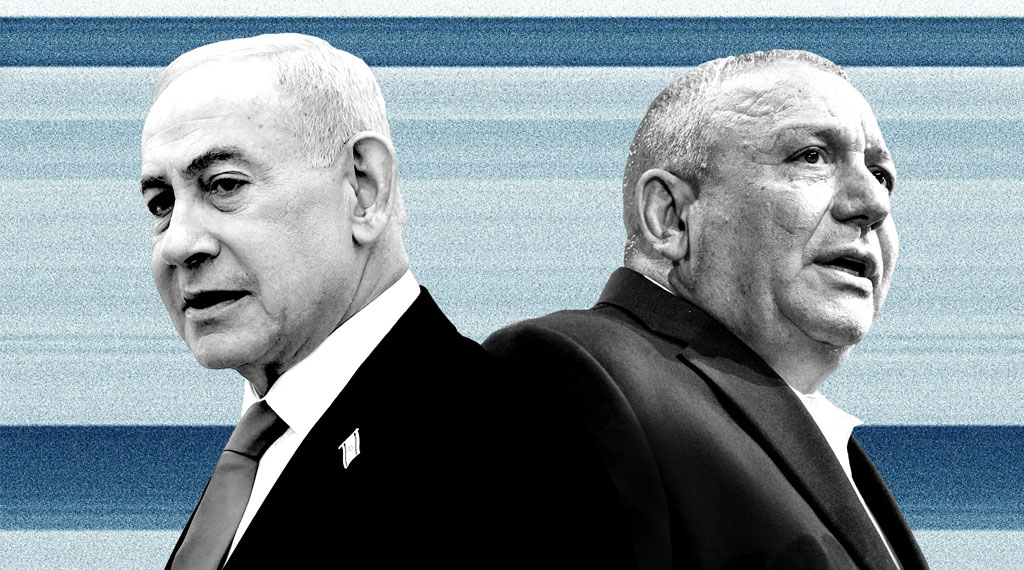
Prime Minister Benjamin Netanyahu's political position has weakened further after opposition candidate Matan Kahana was elected Speaker of Israel's parliament, the Knesset, in a vote held on Tuesday local time.
CNN reported that Matan Kahana, a leader of Gadi Eisenkot's Yashar party, has been elected the Knesset's 26th Speaker. He succeeds Amir Ohana of Netanyahu's Likud party.
According to the Knesset spokesperson, 66 lawmakers voted for Kahana. Ofir Katz, the Likud candidate and the ruling coalition's whip, received 52 votes.
The speaker election was not a head-to-head contest between the candidates. Lawmakers voted separately on each candidate.
After losing its Knesset majority in the 27 October election, this was the first major step by Eisenkot's opposition bloc to establish control of the legislature. In the 120-seat parliament, Netanyahu's coalition of right-wing and ultra-conservative parties holds 53 seats, while the opposition holds 67.
Of the opposition's 67 seats, 48 belong to four Jewish parties. The remaining 19 seats were won by two Arab parties, the Joint List and Ra'am — a record total for Arab parties in the country's parliamentary history.
Earlier this month, President Isaac Herzog tasked Eisenkot with forming the next government. He has up to another four and a half weeks to form a new government to replace Netanyahu. Internal differences within the opposition bloc over government formation, however, remain unresolved.
In the meantime, Eisenkot's bloc has taken control of the Knesset's plenary sessions, important posts and the legislative agenda. It wants to use those powers to increase oversight and control over Netanyahu's caretaker government until a new government takes office.
Eisenkot described Kahana's appointment as a 'proper democratic step', saying the election reflected the view of the overwhelming majority who voted for change.
Netanyahu and his allies tried to block Kahana's victory and to question the election. They alleged that Kahana was elected in reliance on the support of Arab parties, although in the past Netanyahu and his allies have also sought Arab lawmakers' support on various parliamentary matters.
During the vote, members of Netanyahu's coalition shouted 'shame' at each Arab lawmaker who voted for Kahana. After the vote, the Likud party condemned the result, calling it 'one of the lowest moments in Knesset history'.
Eisenkot plans to form a minority government with the 48 members of the four Jewish opposition parties, which he has called a 'national emergency government'. Under the plan, the Arab parties would not join the government directly but would ensure its majority in parliament in exchange for various concessions and benefits.
Opposition leader Avigdor Lieberman, however, opposes that plan. He is not willing to join a government dependent on Arab parties' support, and instead favours talks with Shas and United Torah Judaism (UTJ), the two ultra-conservative parties long allied with Netanyahu.
UTJ, which represents Ashkenazi ultra-conservatives, refused after the election to recommend Netanyahu for prime minister and has also kept the door open to informal talks with Eisenkot's bloc. In the speaker vote, however, it did not support Kahana and voted for the Likud candidate. Shas, meanwhile, remains loyal to Netanyahu.
Former prime minister Naftali Bennett could also play an important role in the government-formation calculations. Reports say he favours forming a unity government with Netanyahu's Likud rather than an alliance with Arab or ultra-conservative parties. Netanyahu has set the condition that he must remain prime minister in any talks — a condition Eisenkot has rejected.
In all, Netanyahu has come under further pressure after losing the speakership and key parliamentary control, but the opposition bloc has yet to reach agreement on forming an alternative government to replace him.

