
Russian Tu-95 bombers in Vietnam's Da Nang ahead of Trump-Xi-Putin meeting, most significant deployment in over a decade
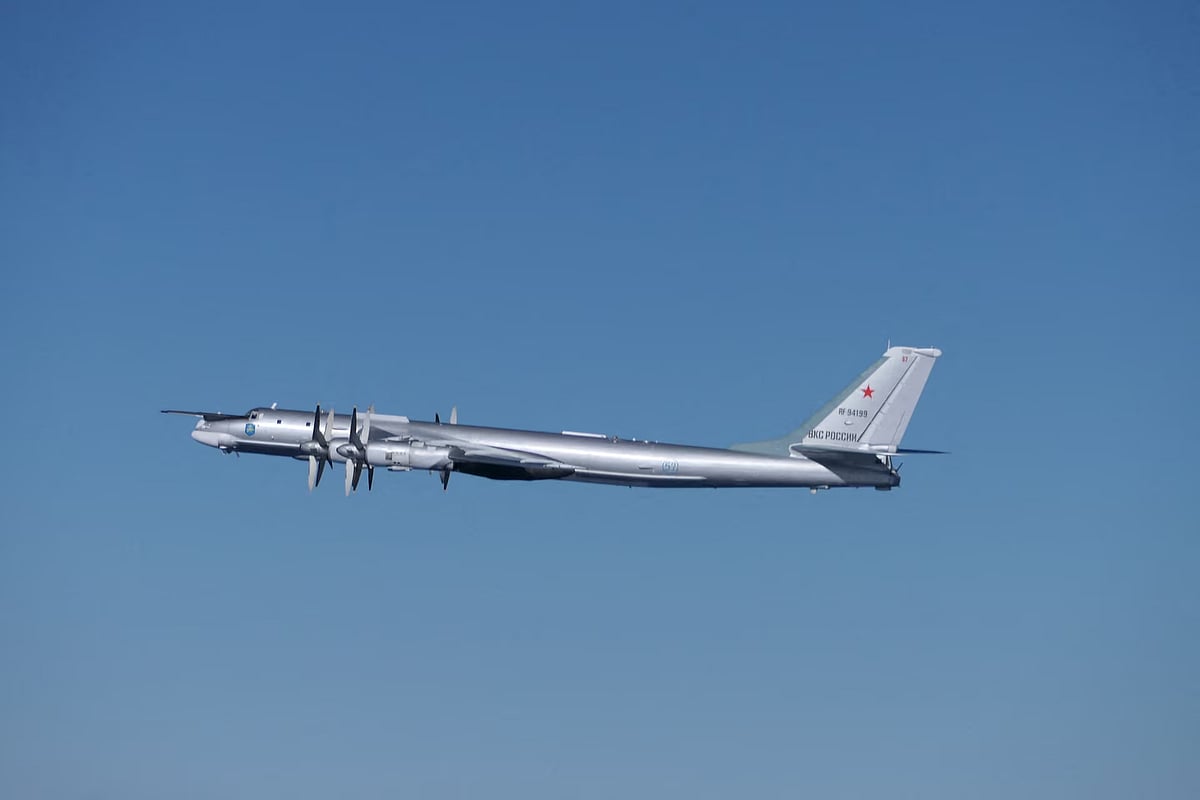
Moscow has sent military aircraft to East Asia ahead of a meeting of the presidents of the United States, China and Russia. Analysts say this is probably Russia's most significant military aircraft deployment in the region in more than a decade, through which the country is showing its ability to project military power in distant regions.
Two Russian Tu-95 strategic bombers were at Da Nang airport in Vietnam on Wednesday. With them were two long-range tanker aircraft capable of refuelling other planes in the air. The Tu-95 is known to Nato as the Bear.
On Tuesday, as the Russian military aircraft flew south from Russia's Far East region, the air forces of Taiwan and Japan became alert to their movements.
The aircraft flew that route just before Russian President Vladimir Putin arrived in the southern Chinese city of Shenzhen to attend the 33rd APEC summit. At exactly this time, US President Donald Trump and leaders of various countries were in the Philippine capital Manila to attend an ASEAN meeting.
Ian Storey, a security researcher at Singapore's ISEAS-Yusof Ishak Institute, said the clear purpose of the deployment is to remind regional countries that Moscow can project military power in Southeast Asia even while the war in Ukraine continues.
According to Storey, the last known deployment of Russian strategic aircraft in Vietnam was in 2014. At that time Hanoi had given Russian warships and aircraft priority use of the country's Cam Ranh Bay base and Da Nang airbase. Moscow had a base at Cam Ranh during the Cold War, and US forces built airbases at Cam Ranh and Da Nang when the Vietnam War was at its peak.
Storey said Russia deployed refuelling aircraft to Da Nang in 2014. Those supported Tu-95 flights near Guam in the Pacific, where the United States has an important air and naval base. He knows of no such deployment since then. He believes the activity may have been suspended after the administration of then US President Barack Obama objected to Hanoi.
According to military attaches, some Tu-95 aircraft are capable of carrying nuclear weapons. These aircraft are also sometimes used for intelligence gathering and surveillance.
Nguyen The Phuong, a Vietnam security specialist at Australia's University of New South Wales, said Moscow last year requested restarting the old arrangement, but Hanoi was initially hesitant. According to Phuong, the apparent purpose of this deployment is refuelling, but it signals a change in Hanoi's position and could open the way for more Russian aircraft deployments in future.
Vietnam's foreign ministry, Russia's defence ministry and the Russian embassy in Hanoi did not immediately respond to Reuters requests for comment on the matter. The US State Department also did not comment on requests regarding the Russian aircraft flights near Japan and Taiwan.
Chieh Chung, a researcher at Taiwan's defence ministry research institute, the Institute for National Defense and Security Research, said this is not the first time Russian military aircraft have been seen near Taiwan. Such incidents also occurred in 1986 and 2010, and both times they were Tu-95 aircraft. Chieh said Moscow chose the time before Thursday's US-China-Russia summit for this politically significant flight, and showing close China-Russia cooperation before the meeting could also be its purpose.
China and Russia have close political and military relations. Moscow has repeatedly supported Beijing's territorial claim over Taiwan, and China's air and naval forces operate around Taiwan every day. Huang Chih-wei, deputy chief of the general staff of Taiwan's military, told reporters in the capital Taipei on Wednesday that the Russian aircraft flights have created a threat to the peaceful and stable situation in the Asia-Pacific region.

